Donald Trump has publicly asserted that King Charles III would have supported U.S. military objectives regarding Iran, a claim that highlights a growing rift between the White House and the British government. Speaking as the King concludes a four-day state visit to the United States today, April 30, 2026, the U.S. president positioned the British monarch as a figure sympathetic to his administration's foreign policy trajectory.

The core tension lies in the refusal of the current British administration to permit U.S. forces to utilize RAF bases for operations against Iranian targets. While Trump characterizes this refusal as a failure of leadership by Prime Minister Keir Starmer, he simultaneously frames the British monarch as a potential ally in his campaign against Tehran's nuclear program.

Strategic Divergence and Diplomatic Friction
The rhetoric from the U.S. president underscores a deliberate attempt to drive a wedge between the ceremonial head of state and the elected British government. Key points of the current friction include:
Read More: US May Cut Troops in Germany After Trump-Merz Iran War Row

Military Access: The U.K. government maintains its decision to restrict the use of its facilities for offensive actions in the Middle East, citing national interests.
NATO Stability: Trump has openly questioned the value of NATO membership, citing insufficient allied support for his administration’s regional posture.
Ideological Alignment: Trump contrasts King Charles's personal character—which he describes as a "great representative for his country"—against the policy opposition provided by Starmer.
| Actor | Stance on Iran Conflict | Relationship with U.S. Admin |
|---|---|---|
| Donald Trump | Aggressive / Interventionist | Aggrieved by lack of support |
| Keir Starmer | Restrained / Diplomatic | Strained due to policy dissent |
| King Charles III | Neutral / Constitutional | Exploited as symbolic leverage |
The Limits of Symbolic Diplomacy
While Trump continues to leverage the monarch’s visit to bolster his domestic and international messaging, the reality of the British constitution imposes rigid constraints. The King functions as a politically neutral figure, obligated to remain above party conflict. By attributing specific military or strategic views to the monarch, the U.S. president is projecting personal political desires onto an office explicitly designed to abstain from such debates.
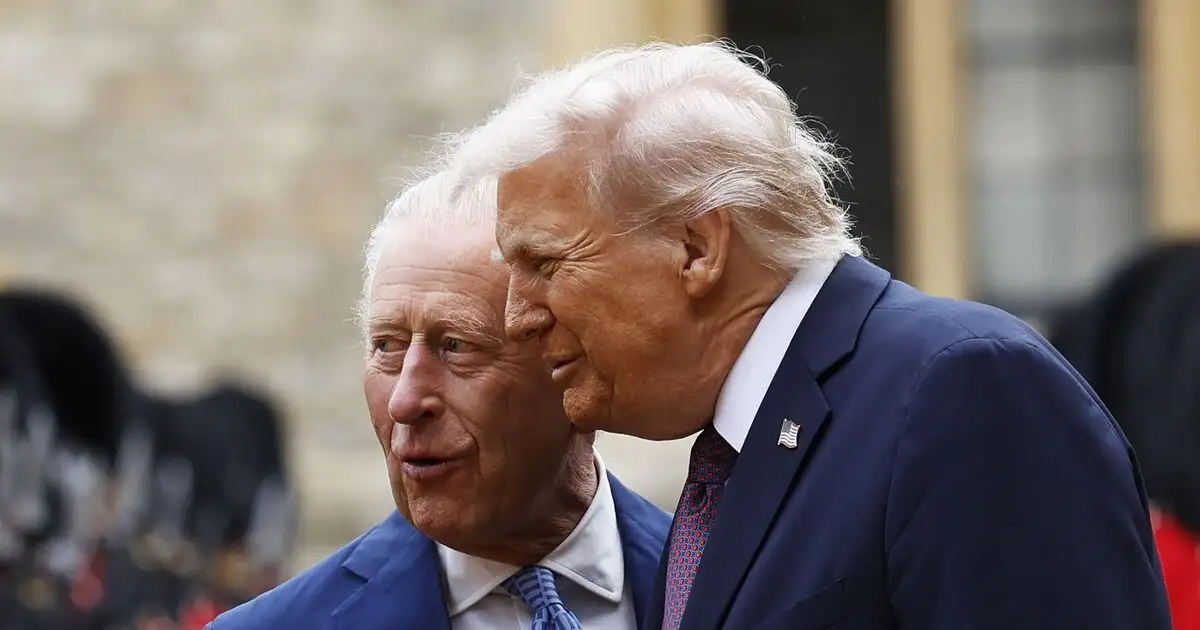
The state visit, which saw the King attending events at the 9/11 Memorial in New York City yesterday and continuing engagements today, has functioned as a backdrop for this friction. As global energy prices remain sensitive to instability in the Strait of Hormuz, the rhetorical pressure applied by the U.S. leader appears aimed at normalizing more hawkish, unilateral military interventions among traditional Western partners.
Read More: Mark Latham ordered to pay $100,000 for homophobic tweet