


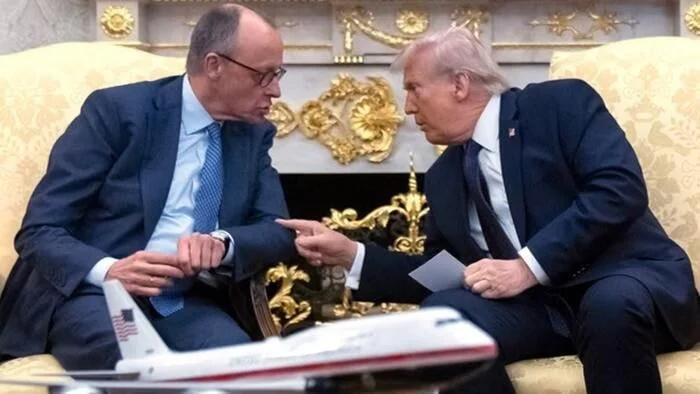
President Donald Trump has indicated the United States is considering a pullback of its military forces stationed in Germany, a move that could significantly reshape the continent's security landscape and strain NATO's cohesion. This potential troop reduction stems from a deepening public dispute with German Chancellor Friedrich Merz concerning the ongoing conflict with Iran and its diplomatic fallout.
The core of the dispute revolves around Chancellor Merz's recent criticisms of the US handling of the Iran war, specifically stating that Iran was "humiliating" the United States at the negotiating table and that Germany and Europe were suffering the consequences of the conflict. Trump, in turn, has lashed out, asserting that Merz "doesn’t know what he’s talking about" and accusing the German leader of, in effect, tolerating the idea of Iran acquiring nuclear weapons. Trump has also implied that Germany's perceived lack of support is contributing to its economic struggles.
Read More: Supreme Court Weakens Voting Rights Act Protections for Minority Districts

Escalating Rhetoric and Geopolitical Stakes
Trump's statements, broadcast via social media platforms, directly challenge Merz's assessment of the negotiations and the US military's role in the region. The US President has further warned that if Iran were to obtain nuclear weapons, the "whole World would be held hostage." This exchange follows reports suggesting Washington is exploring punitive measures against allies perceived as not fully supporting the US-Israeli war in Iran or contributing to efforts in the Strait of Hormuz.
US Military Presence: The United States has maintained a substantial military contingent in Germany since the conclusion of World War II, serving as a cornerstone of NATO's presence in Europe.
NATO Implications: Any significant reduction in US forces would undoubtedly spark intense debate within the North Atlantic Treaty Organization, particularly among Eastern European members who advocate for a robust American military footprint on the continent.
Past Precedents: During his previous term, Trump had initiated plans for a considerable troop drawdown from Germany, although these were later suspended under the Biden administration.
Background: A Shifting Alliance and Economic Pressures
The current friction between Washington and Berlin surfaces as Germany grapples with economic stagnation, a situation Chancellor Merz has publicly attributed to external factors, including the Iran war and perceived overregulation from Brussels.
Concurrently, reports indicate that Germany is deepening its military cooperation with the US by embedding a senior American officer into its army command structure, an effort described as aiming to "further deepen German-American cooperation and optimize joint operational capability within NATO." This simultaneous move toward closer military integration alongside escalating political tensions paints a complex picture of the transatlantic relationship.
Read More: US Officials Visit Venezuela to Boost Oil and Mining Deals
The dispute over Iran has also contributed to broader strains within US-European relations, with several NATO countries reportedly hesitant to fully commit to the US-led military actions in the region. This situation echoes past instances where Trump has questioned the value and structure of the NATO alliance, further fueling concerns about the future of US engagement with its European partners.


