Donald Trump has publicly expressed strong disapproval of Supreme Court justices who voted against his administration's imposition of tariffs. The former president labeled some of these justices as an "embarrassment" and "a disgrace to our nation." This commentary follows a Supreme Court decision that blocked his tariffs, ruling they were an overreach of executive authority.

Judicial Review and Presidential Power
The Supreme Court's decision on tariffs marked a significant test of executive branch powers. President Trump's tariffs, enacted under an emergency economic powers law, were struck down by a 6-3 vote. This ruling underscored the court's role in reviewing the scope of presidential actions.

"The Supreme Court’s ruling on tariffs is deeply disappointing, and I’m ashamed of certain members of the court, absolutely ashamed for not having the courage to do what’s right for our country." - Donald Trump
Trump's Public Reaction
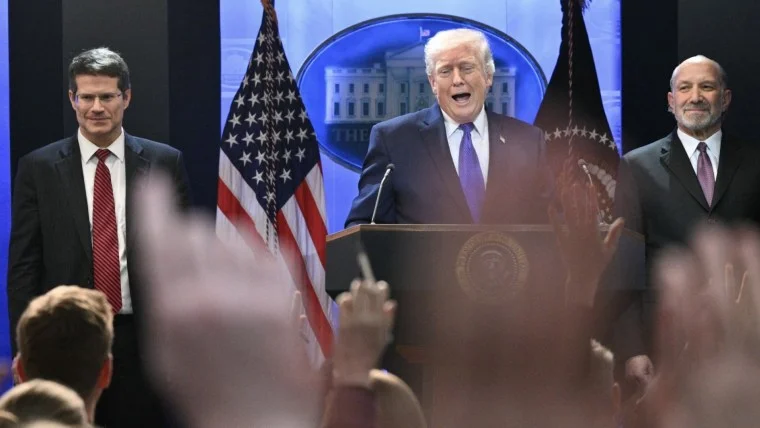
Following the court's decision, Mr. Trump voiced his discontent through public remarks and social media. He specifically criticized justices for not siding with his administration's policy. His comments suggested a view that certain justices, particularly those he appointed, should have demonstrated personal loyalty to his agenda.
Read More: Bill Kelty Says Labor Tax Plan Not Big Enough for Young Workers

Trump described the dissenting justices as "very unpatriotic and disloyal to the Constitution."
He expressed shame regarding their decision, stating they lacked the courage to "do what's right for our country."
Some reports indicate Mr. Trump singled out specific appointees, though the exact justices were not always explicitly named in public statements.
Judicial Independence and Accountability
The core of the disagreement lies in differing interpretations of judicial duty. While Mr. Trump appears to expect loyalty from his appointees and views unfavorable rulings as a sign of inadequacy, the court's function is generally understood to be an independent assessment of the law.

Trump's Perspective: Seeks validation for his policies, viewing opposition as a failure of courage or loyalty.
Judicial Perspective: Upholds the law and the Constitution, making decisions based on legal principles rather than political pressure.
Historical Context of Presidential Criticism of the Court
Criticism of the Supreme Court by presidents is not unprecedented in American history. For instance, President Thomas Jefferson was known to express his views on the court's decisions. Presidential commentary on judicial rulings has, at times, been sharp.
Implications of the Ruling and Trump's Response
The Supreme Court's ruling has implications for the limits of presidential authority in implementing economic policy. Mr. Trump's vocal reaction raises questions about the nature of the relationship between the executive and judicial branches, particularly concerning presidential appointments to the bench.
The court's decision reinforced the principle that presidential powers are subject to judicial review.
Mr. Trump's strong language has drawn attention to the dynamic between presidential expectations and judicial independence.
The Supreme Court blocked President Trump's tariffs in a 6-3 decision, leading him to criticize justices as an "embarrassment" and "disgrace."
Trump expressed shame and called the dissenting justices "unpatriotic and disloyal to the Constitution."
His remarks suggest an expectation of loyalty from his judicial appointees, clashing with the principle of judicial independence.
Sources Used:
AOL (via Fox News): https://www.foxnews.com/media/why-trump-wrong-call-dissenting-republican-justices-embarrassment-voting-against-his-tariffs
Context: Reports on Trump's angry reaction to the Supreme Court ruling against his tariffs.
NBC News: https://www.nbcnews.com/politics/donald-trump/trump-calls-supreme-court-justices-disloyal-unpatriotic-tariffs-rcna259948
Context: Details Trump's strong condemnation of the Supreme Court justices after the tariff ruling.
The New Republic: https://newrepublic.com/post/206869/trump-attacks-supreme-court-justices-blocked-tariffs
Context: Covers Trump's public statements and social media posts attacking the conservative justices who ruled against his tariffs.
Associated Press: https://apnews.com/article/supreme-court-trump-tariffs-gorsuch-barrett-kavanaugh-0b00e69f6230f4b1c90d49a4fe97c6ce
Context: Examines Trump's reaction to the Supreme Court's tariff decision, focusing on his disappointment with his own appointees.
Time: https://time.com/7380123/donald-trump-supreme-court-tariffs-press-conference/
Context: Reports on Trump's personal attacks on justices after the Supreme Court struck down his tariffs, questioning their authority.
NPR: https://www.npr.org/2026/02/21/g-s1-110961/supreme-court-tariffs
Context: Discusses Trump's shift in tone following the Supreme Court's invalidation of his tariffs, contrasting it with previous interactions.
The Washington Post: https://www.washingtonpost.com/national-security/2026/02/20/live-updates-supreme-court-tariffs-ruling-trump/
Context: Provides live updates on the Supreme Court ruling against Trump's tariffs and his subsequent denunciation of the justices.