Tension Over India's Stance and Foreign Policy
Recent claims by former US President Donald Trump, suggesting he influenced India to halt "Operation Sindoor" through trade pressure, have ignited a sharp political dispute within India. Opposition parties, notably the Congress, are demanding clarity from the Indian government, particularly External Affairs Minister S. Jaishankar and Prime Minister Narendra Modi. They question the official narrative on the ceasefire and the extent of foreign influence on India's military actions. The government, while acknowledging international outreach, maintains that the decision to cease hostilities was India's, influenced by Pakistan's overtures and its own strategic assessment. The debate highlights differing views on national sovereignty, diplomatic maneuvering, and the interpretation of international engagements.
Background: Operation Sindoor and International Claims
Operation Sindoor was initiated by India on May 7, 2025, in response to a terrorist attack in Pahalgam on April 22, 2025, which resulted in the deaths of 26 civilians. India conducted airstrikes targeting terror infrastructure in Pakistan and Pakistan-occupied Jammu and Kashmir. The operation concluded with a ceasefire agreement on May 10, 2025.
Read More: Indian Shooter Aishwary Pratap Singh Tomar Wins Gold
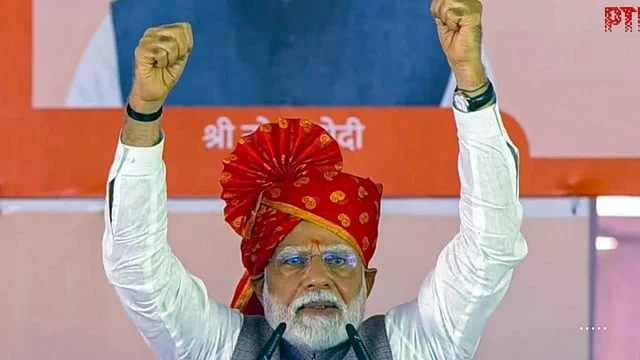
This period saw Donald Trump repeatedly asserting that his administration brokered the ceasefire. He claimed to have applied trade and tariff pressure on Prime Minister Narendra Modi to end the hostilities. These claims were reiterated in various interviews and public statements.
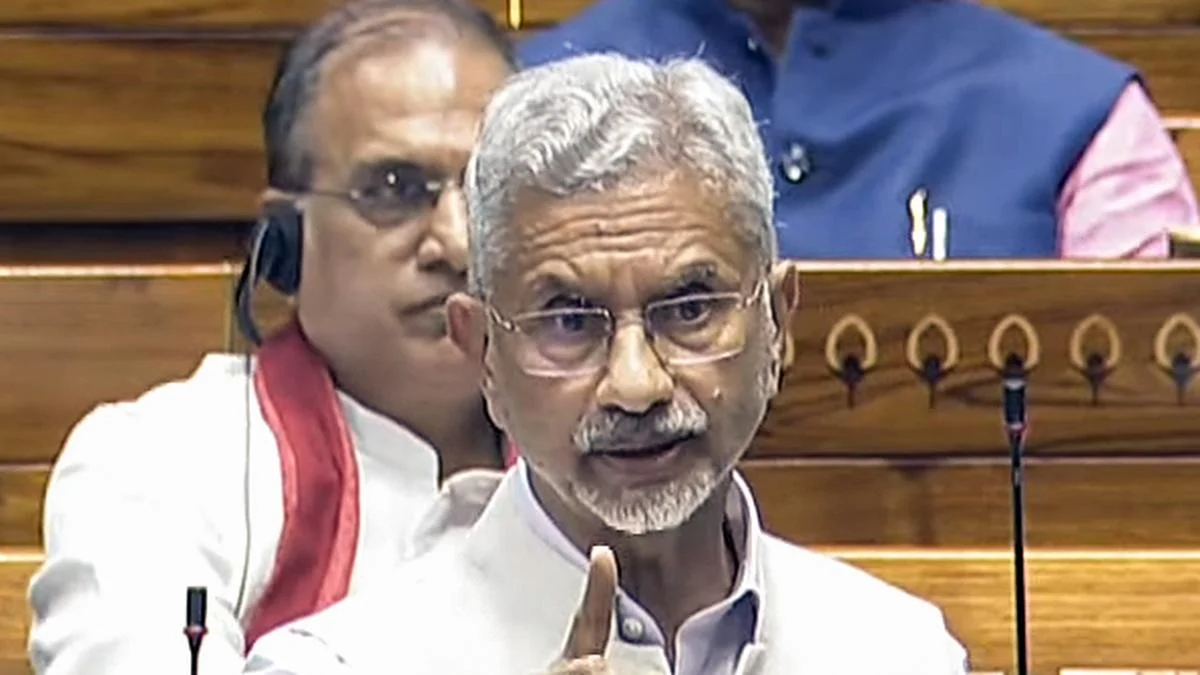
The Indian government, represented by External Affairs Minister S. Jaishankar, has offered a different account. While acknowledging that "many countries reached out" between May 7 and May 10, Jaishankar stated that the understanding for a ceasefire was reached after Pakistan's "desperate attempts to seek an end to hostilities." He also asserted in Parliament that there was no direct linkage between the India-Pakistan ceasefire and US trade policies. Furthermore, Jaishankar noted the absence of a direct call between Prime Minister Modi and President Trump between April 22 and June 17, 2025, a period during which Trump claimed significant mediation.
Read More: ICC Wants Cricket Leaders to Talk During India-Pakistan Match
Opposition's Scrutiny and Government's Defense
The Congress party has been at the forefront of questioning the government's narrative. Leaders like Pawan Khera and Rahul Gandhi have accused the government of "surrendering" India's position and even "pre-informing" Pakistan about Operation Sindoor, a charge vehemently denied by the ruling Bharatiya Janata Party (BJP).
Allegations of Government's Role
Pawan Khera has been particularly vocal, accusing EAM Jaishankar of "leaking Operation Sindoor to Pakistan" and calling the government "Sindoor ka saudagar" (merchants of Sindoor), implying a deal was struck.
Khera also questioned Prime Minister Modi's "silence" over Trump's repeated claims, suggesting that the Prime Minister has not rejected these assertions, which implies an acceptance of Trump's role. He has stated that this is the eighth time Trump has claimed credit for stopping Operation Sindoor.
The Congress leaders imply that the government's actions during the operation amounted to "spying" rather than diplomacy, and that India's inability to bring alleged terrorists like Hafiz Saeed and Masood Azhar to justice stems from prior notification to Pakistan.
Government's Counter-Narrative
The BJP has retorted strongly, accusing the Congress of mirroring Pakistan's propaganda and being "in favour of Pakistan."
Union Minister Pralhad Joshi accused Rahul Gandhi of misrepresenting facts regarding the MEA's statements.
The Ministry of External Affairs (MEA) has issued clarifications, stating that Congress leader's remarks were an "utter misrepresentation of facts." The MEA clarified that Jaishankar had stated Pakistan was warned during the initial phase of Operation Sindoor, not after its launch.
EAM Jaishankar has consistently maintained that while international actors were involved in facilitating communication, the understanding for a ceasefire was initiated by Pakistan's own appeals and India's decisive military posture. He emphasized that "terror and talks are not possible together."
Conflicting Accounts of Mediation and Influence
The core of the dispute lies in the conflicting accounts of how the ceasefire was achieved and the degree of external influence.
Read More: India Says US Trade Paper Changes Match What Was Agreed
Trump's Version: Trade Pressure as Leverage
Donald Trump claims he "applied trade and tariffs pressure" on Prime Minister Modi to cease hostilities.
He has stated that he told Indian officials, "you’re gonna be charged like India and Pakistan."
Trump has also mentioned facilitating the understanding through trade negotiations.
He claims to have stopped the "brief war" between India and Pakistan that started on May 7, 2025, adding that five aircraft were shot down during the conflict.
India's Version: Pakistan's Overtures and Broader International Engagement
EAM Jaishankar stated that the understanding was reached after Pakistan's "desperate attempts to seek an end to hostilities" due to Indian forces targeting its air bases.
Jaishankar also noted that the United States was not alone; "many other countries reached out" between May 7 and May 10, 2025.
In Parliament, Jaishankar explicitly refuted any linkage between the ceasefire and US trade, stating, "This is our position."
He has consistently articulated India's stance on cross-border terrorism: "terror and talks are not possible together."
Analysis of Statements and Evidence
The available information presents a complex picture where official Indian statements are contradicted by claims from a former US President, with opposition parties amplifying these contradictions.
Read More: Ships in [Name of Waterway] Have Close Call; Nations Blame Each Other
Trump's claims: These are recurrent and specific about using trade as leverage. However, the lack of corroboration from Indian official sources regarding trade being the decisive factor raises questions. His statements are not subjected to the same level of public scrutiny within India as those of its own officials.
Jaishankar's statements: These are consistent across multiple public forums, including Parliament. He acknowledges international engagement but frames it as a consequence of Pakistan's actions and broader diplomatic efforts, not a unilateral US intervention driven by trade. His assertion that there was no direct call between Modi and Trump during a critical period challenges the timeline of Trump's alleged direct mediation.
Opposition's allegations: These seem to be driven by a political imperative to challenge the government's foreign policy decisions and national security posture. The claim of "pre-informing" Pakistan, if substantiated, would be a severe indictment, but currently rests on interpretative claims made by Congress leaders rather than concrete evidence. The MEA's counter-claim of misrepresentation suggests a deliberate effort to frame Jaishankar's remarks.
The central tension is whether India's decision to engage in a ceasefire was a sovereign strategic choice influenced by Pakistan's overtures and military realities, or if it was a capitulation to external pressure, specifically from the US under President Trump.
Read More: India's January Inflation Rate is 2.75% with New Measuring System

Expert Perspectives
"The situation underscores the perennial challenge for any Indian government: balancing national security imperatives with the dynamics of international diplomacy. When external powers claim credit for actions that have significant national security implications, it inevitably leads to domestic political scrutiny."— Unnamed Foreign Policy Analyst (general observation based on common geopolitical dynamics)
"The Indian government's position, as articulated by Minister Jaishankar, has consistently been that while international channels were active, the impetus for de-escalation came from Pakistan's attempts to manage the fallout of India's retaliatory strikes. The absence of direct, high-level communication claimed by Jaishankar challenges the narrative of direct US presidential intervention through trade threats."— Geopolitical Commentator (analysis based on provided statements)
Conclusion and Future Implications
The repeated claims by Donald Trump regarding his influence over India's Operation Sindoor ceasefire have created a significant political friction point within India. Opposition parties are leveraging these claims to question the Modi government's foreign policy and national security decisions, demanding transparency and accountability from External Affairs Minister S. Jaishankar and Prime Minister Narendra Modi.
Read More: India and US Agree on Trade Deal After Tariff Fights
While Jaishankar has publicly clarified India's stance, emphasizing Pakistan's role in seeking an end to hostilities and downplaying the direct impact of US trade policy, the opposition remains unconvinced. Their persistent questioning highlights a lack of public trust in the government's narrative on this matter.
The divergent accounts raise fundamental questions about:
The nature of diplomatic engagements during a crisis.
The extent to which external powers can influence India's strategic decisions.
The government's communication strategy in managing international perceptions versus domestic political realities.
Moving forward, the political debate is likely to persist, with opposition parties continuing to press for a more definitive refutation or explanation from the Prime Minister's office. The credibility of India's foreign policy and its assertiveness on the international stage will remain under scrutiny.
Sources Used:
The News Mill: "Pawan Khera criticises Jaishankar after Trump reiterates claim on stopping Op Sindoor" - Published 51 minutes ago. https://thenewsmill.com/2026/02/pawan-khera-criticises-jaishankar-after-trump-reiterates-claim-on-stopping-op-sindoor/
News18: "‘Congress In Favour Of Pakistan’: BJP Retorts To 'Sindoor Ka Saudagar' Jibe At S Jaishankar" - Published May 19, 2025. https://www.news18.com/politics/congress-in-favour-of-pak-bjp-slams-pawan-khera-for-sindoor-ka-saudagar-jibe-at-eam-ws-l-9343284.html
Free Press Journal: "Not Just US, Many Countries Reached Out': EAM Jaishankar On Donald Trump's India-Pakistan 'Ceasefire' Claims (Video)" - Published (Date not specified in snippet). https://www.freepressjournal.in/india/not-just-us-many-countries-reached-out-eam-jaishankar-on-donald-trumps-india-pakistan-ceasefire-claims-video
The Hindu: "India-Pakistan ceasefire had no linkage with US trade: Jaishankar in Parliament refutes Trump’s claims" - Published July 29, 2025. https://www.thehindu.com/news/national/ceasefire-had-no-linkage-with-us-trade-jaishankar-in-parliament/article69866620.ece
New Kerala: "Jaishankar Clarifies India-Pakistan Ceasefire Trump Mediation Claims" - Published May 22, 2025. https://www.newkerala.com/news/o/not-us-many-countries-reached-out-jaishankar-trumps-india-pak-294
Economic Times: "'Sindoor ka sauda hota raha': Congress leader Pawan Khera slams EAM Jaishankar, PM Modi" - Published May 19, 2025. https://economictimes.indiatimes.com/news/politics-and-nation/sindoor-ka-sauda-hota-raha-pawan-khera-on-jaishankar-modi/articleshow/121265811.cms?from=mdr
Moneycontrol: "Congress takes 'Sindoor ka Sauda' jab at PM Modi, cites Trump's claims on mediation" - Published May 19, 2025. https://www.moneycontrol.com/news/india/congress-takes-sindoor-ka-sauda-jab-at-pm-modi-cites-trump-s-claims-on-mediation-13032329.html
The Shillong Times: "Not just US, many countries reached out: Jaishankar on Trump’s India-Pak ‘ceasefire’ claims" - Published May 22, 2025. https://theshillongtimes.com/2025/05/22/not-just-us-many-countries-reached-out-jaishankar-on-trumps-india-pak-ceasefire-claims/
India Today: "Sindoor ka saudagar: Congress steps up attack on S Jaishankar despite fact-check" - Published (Date not specified in snippet). https://www.indiatoday.in/india/story/sindoor-ka-saudagar-congress-steps-up-attack-on-s-jaishankar-despite-fact-check-operation-sindoor-2726967-2025-05-19
ANI News: "Pawan Khera questions PM Modi's "silence" over Trump's claims of brokering cessation of hostilities" - Published May 22, 2025. https://aninews.in/news/national/general-news/pawan-khera-questions-pm-modis-silence-over-trumps-claims-of-brokering-cessation-of-hostilities20250522090346/
Business Standard: "Pawan Khera questions PM Modi's silence on Trump's ceasefire claims" - Published May 22, 2025. https://www.business-standard.com/politics/pawan-khera-questions-pm-modi-s-silence-on-trump-s-ceasefire-claims-1250522002221.html
India Today: "Narendra is not India, India is not Narendra: Congress's 'surrender' jab at PM" - Published June 4, 2025. https://www.indiatoday.in/india/story/congress-narendra-surrender-pm-modi-jab-pakistan-ceasefire-donald-trump-2735528-2025-06-04
Economic Times (Video): "Congress’ Pawan Khera alleges EAM Jaishankar of leaking Operation Sindoor to Pakistan" - Published (Date not specified in snippet). https://economictimes.indiatimes.com/news/politics-and-nation/congress-pawan-khera-alleges-eam-jaishankar-of-leaking-operation-sindoor-to-pakistan/videoshow/121264378.cms?from=mdr
Read More: Nationwide Strike Had Small Effect in Most Places
)