Mixed Responses Emerge Amidst Trade Union Protests
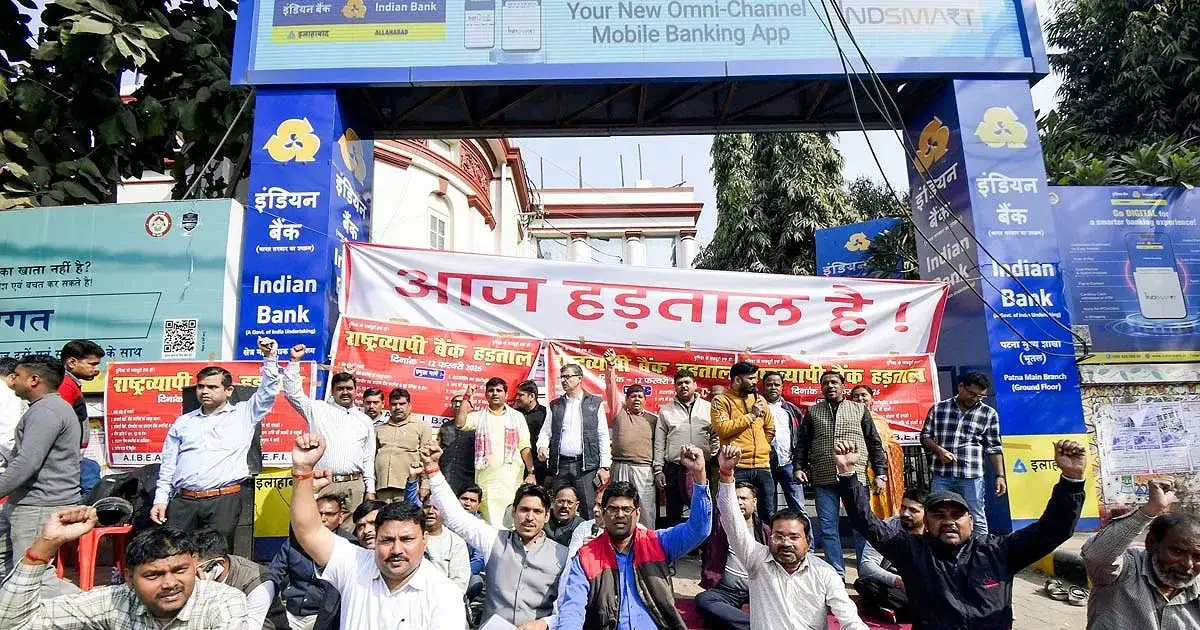
A nationwide strike called by various trade unions has elicited a varied response across India, with reports indicating that normal life remained largely unaffected in many regions. However, specific sectors, notably banking and transport, experienced disruptions in certain states. The protests were aimed against government policies, including new labor codes and proposed public-private partnerships.
Context: A Day of Agitation
The nationwide strike, referred to by some as a "Bharat Bandh," saw trade union members taking to the streets to voice their opposition to government policies. The specific grievances highlighted by participating unions include:

New Labor Codes: Concerns that these codes reduce job security and weaken legal protections for workers.
Public-Private Partnerships (PPP): Opposition to proposed PPP projects in central infrastructure.
Privatization: Protests against the privatization of public sector banks and other sectors like insurance and mining.
The strike involved a coalition of trade unions, including the Indian National Trade Union Congress (INTUC), All India Trade Union Congress (AITUC), Hind Mazdoor Sabha (HMS), Centre of Indian Trade Unions (CITU), All India United Trade Union Centre (AIUTUC), Trade Union Co-ordination Centre (TUCC), Self-Employed Women's Association (SEWA), All India Central Council of Trade Unions (AICCTU), Labour Progressive Federation (LPF), and United Trade Union Congress (UTUC).
Read More: India IVF Costs And Social Barriers Limit Access In April 2026
Evidence of Impact and Non-Impact
Reports from various regions paint a picture of localized disruptions interspersed with widespread normalcy.

Disruptions:
Banking operations were affected in Tiruchi district, with employees and officers from the All India Bank Employees Association, the All India Bank Officers Association, and the Banking Employees Federation of India participating.
In Pudukottai district, approximately 700 trade union members protested.
In Nagapattinam district, about 100 trade union members protested.
A group of about 150 trade union members were arrested after they briefly occupied railway tracks at Srirangam railway station.
Chhattisgarh saw several nationalized banks remain closed as employees joined the strike.
In Goa, banking operations were affected.
In Kerala, normal life was reportedly brought to a "near halt," with suspended transport services and closed shops.
The insurance sector, including the All India LIC Employees' Federation and All India Insurance Employees Association, participated, potentially impacting services.
Left-leaning bank unions like AIBEA, AIBOA, and BEFI supported the strike, leading to disruptions in some areas.
The Madhya Pradesh Bank Employees Association claimed around 40,000 employees in about 8,700 bank branches joined the strike.
Trade unions claimed the strike impacted the postal, banking, insurance, and mining sectors.
Over 27 lakh power sector workers reportedly protested against privatization.
Coal production and dispatch were reportedly affected in Jharkhand.
Largely Unaffected:
Life was reported as unaffected in the central region of the country.
Markets, schools, and colleges remained open across many states.
Government offices, banks, educational institutions, and markets operated as usual in many areas.
Road transport and train services operated as usual across many states.
Essential services remained undisrupted in Goa.
The strike evoked little response in Tripura.
Normal life remained largely unaffected in Jharkhand.
Normal life remained unaffected in Tamil Nadu (TN).
Arrests and Protests
Arrests: Police reported approximately 300 trade union members were arrested and later released in one region.
Protests: Demonstrations were noted in various locations, including Pudukottai, Nagapattinam, Srirangam, Jharkhand, and Thoothukudi. In Thoothukudi, CITU workers protested against a proposed PPP pipeline project. Rural child care workers and bank employees were pictured protesting in Ahmedabad and Mumbai, respectively.
Analysis of Sectoral Impact
The strike's impact appears concentrated in specific sectors and regions, suggesting a nuanced rather than uniform effect nationwide.
Banking Sector Vulnerability
Banking services emerged as a commonly affected sector. Unions such as the All India Bank Employees Association, All India Bank Officers Association, and Banking Employees Federation of India actively participated. Reports from Tiruchi, Chhattisgarh, and Madhya Pradesh indicate significant disruption. The scale of participation in Madhya Pradesh, with claims of 40,000 employees across thousands of branches, highlights the potential for localized paralysis within the financial system.

Transport and Communication Challenges
While many reports indicate transport services operated as usual, Kerala stands out with reported suspensions of transport services. The claim by trade unions of impacting postal services also suggests a broader, though perhaps less consistently documented, reach of the strike. The occupation of railway tracks at Srirangam indicates localized but direct interference with rail transport.
Read More: SAG-AFTRA Members Approve New Contract With Studios
Contrasting Regional Experiences
The geographical distribution of the strike's impact shows considerable variation. While Kerala experienced near-total disruption and some districts in Tamil Nadu saw specific issues, regions like the "central region" of the country, Tripura, and parts of Jharkhand reported minimal to no impact on daily life. This suggests that the strike's effectiveness was dependent on local union strength and the nature of economic activity in different states.

Union Claims vs. Ground Reality
Trade unions asserted that the strike was successful, claiming a "large number of workers" abstained from work and impacted key sectors. However, many news reports emphasize that "normal life" and "services largely unaffected" in numerous areas. This discrepancy points to a potential difference in how success is measured by the unions versus the broader public observation of daily functioning.
Conclusion: A Patchy Strike
The nationwide trade union strike on February 12, 2026, presented a mosaic of impacts. While certain sectors like banking and transport faced disruptions in specific states, and regions like Kerala experienced significant paralysis, overall, life in many parts of India proceeded with minimal interruption. Arrests were made, and protests occurred in various locations, signaling active participation by a segment of the workforce. The contrasting reports highlight the complex nature of coordinated industrial action and its localized efficacy. Further investigation could focus on understanding the specific factors that led to more pronounced disruptions in some areas compared to others.
Read More: Tamil Cinema Loses K. Bhagyaraj and Bharathiraja, Ending An Era
Sources
Outlook India: https://www.outlookindia.com/national/nationwide-general-strike-disrupts-key-cities-as-trade-unions-protest-anti-labour-policies
Devdiscourse: https://www.devdiscourse.com/article/headlines/3802645-normal-life-largely-unaffected-in-jharkhand-by-nationwide-strike-call
The Tribune: https://www.tribuneindia.com/news/india/bharat-bandh-trade-unions-go-on-daylong-strike-services-largely-unaffected/