President Donald Trump's public appeal to Iran for the release of eight women facing execution has ignited a complex and controversial moment, overshadowing critical US-Iran negotiations concerning Iran's nuclear program. The intervention, framed as a human rights plea, has drawn a mixed bag of reactions, complicating an already volatile diplomatic landscape.
Shifting Sands of Negotiation
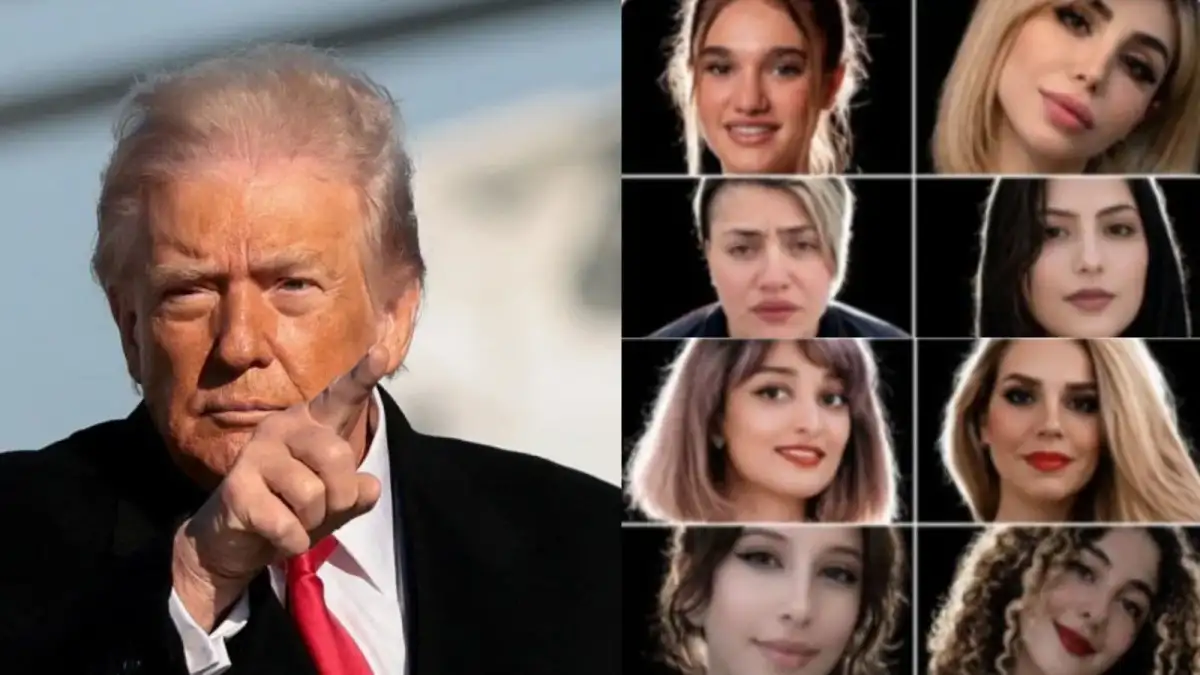
Trump announced on social media that Iran would not execute the eight women. He stated, “Four will be released immediately, and four will be sentenced to one month in prison.” However, reports from the Norway-based Iran Human Rights organization indicate that two of the women, Golnaz Naraghi, 37, and Venus Hosseininejad, 28, have been out on bail since late March.
The broader US-Iran negotiations, which Trump has framed as his "top goal," are focused on reaching an agreement to halt Iran’s nuclear enrichment and to secure an estimated 1,000 pounds of highly enriched uranium.
Read More: UK Public Opinion Shifts: More People Want to Rejoin EU

The Human Rights Dimension
Trump's direct appeal, made public through a social media post displaying images of the women, urged Iranian leaders to release them, suggesting their compliance would be "a great start to our negotiations." One of the women, Bita Hemmati, was reportedly sentenced to death for alleged involvement in a group that threw objects at Iranian forces during protests in January. Human rights groups have raised concerns that confessions may have been coerced, citing allegations of torture.
A Tangle of Geopolitical Threads
This intervention occurs against a backdrop of heightened tensions and uncertainty surrounding potential peace talks. Pakistan has been acting as a mediator, but has cautioned that a US naval blockade of Iranian ports presents a significant obstacle to dialogue.
Separately, Trump expressed hope for a resolution to the conflict between Israel and Lebanon, linking it to the ongoing US-Iran situation. He also indicated that Americans should expect prolonged higher gas prices.
Read More: Israel and Lebanon ceasefire extended by 3 weeks
Historical Context
Trump has previously employed combative rhetoric toward Tehran. In February, a significant portion of Trump's supporters expressed a willingness to use US military force against Iran, with 72 percent of self-identified MAGA supporters favoring such action. Iran, meanwhile, has indicated no immediate plans to attend talks with the United States in Pakistan, despite Trump's efforts to initiate renewed negotiations.