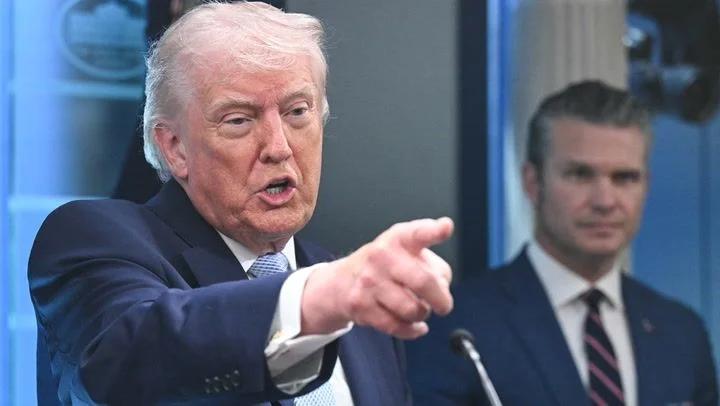
Washington has intensified its stance on the Strait of Hormuz, with President Donald Trump issuing a directive to the U.S. Navy to "shoot and kill" any vessels engaged in minelaying activities within the crucial waterway. This directive comes as the U.S. military has also reported boarding an oil tanker, the Majestic X, in the Indian Ocean, which they claim was transporting oil from Iran. Simultaneously, talks between representatives from Israel and Lebanon are slated to occur at the White House, happening against the backdrop of a 10-day ceasefire set to expire on Sunday.
The directive to use lethal force against minelayers marks a significant hardening of the U.S. position in the Strait of Hormuz, a move Trump claims will keep the waterway "sealed up tight" until Iran negotiates a deal. This comes after reports that Iran has begun receiving revenue from tolls it imposed on shipping traffic through the strait during its conflict with the U.S. and Israel. CENTCOM data indicates that 33 vessels have been redirected since Iran's blockade against its ports began, with most of these being oil tankers. The transit of ships through the strait, normally exceeding 100 daily in peacetime, has dwindled to single digits since Iran's de facto closure, though at least eight ships, including three oil tankers, transited on Wednesday. The U.S. has responded with its own naval blockade on Iranian ports, an effort to pressure Tehran into easing its control over the strait and engaging in negotiations.
Read More: AFP Reviews War Crime Claims Against Australian in Gaza
Iran's Financial Maneuvers and Regional Exchanges
Iran has announced it has received its first revenue from tolls levied on the Strait of Hormuz, a move that underscores its assertion of control over the strategic passage. This financial development occurs amidst ongoing tensions and an exchange of actions.
Hezbollah has stated it targeted the Israeli town of Shtula in response to perceived Israeli ceasefire violations. The Israeli military confirmed intercepting missiles from Lebanon, and subsequently reported striking a missile launcher in Lebanon. Reports also indicate the Israeli military killed three militants involved in launching a missile toward an Israeli warplane.
The U.S. military confirmed the seizure of another tanker suspected of smuggling Iranian oil, following Iran's Revolutionary Guards taking control of two vessels in the Strait of Hormuz.
Oil prices saw an uptick on Friday morning, influenced by concerns over renewed military tensions in the Middle East. This follows reports of Iran's air defenses engaging "hostile targets" over Tehran and a noted power struggle within Iran between hardliners and moderates.
Background and Diplomatic Efforts
The escalating rhetoric and military actions occur alongside diplomatic overtures. President Trump has indicated the U.S. is "in no rush" to end the Iran war, though he believes the "clock is ticking" for Iran. He also claimed a leadership rift within Iran, suggesting moderates and hardliners are at odds, a situation he believes is confounding the Iranian regime. The current situation unfolds as the U.S. has extended a ceasefire with Iran, with Pakistan previously urging both nations to prolong it. Trump's administration has been engaged in discussions for further rounds of direct talks with Iran, following a three-way dialogue that previously occurred in Pakistan. Trump has previously stated Iran has "no cards" in these negotiations.
Read More: Air Force Major Detained for Calling for President's Impeachment