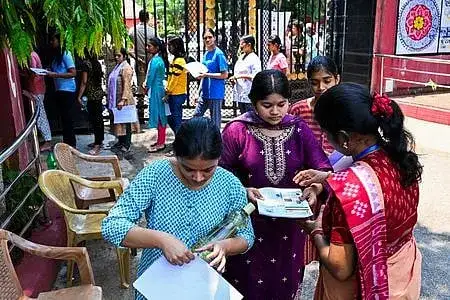
Hyderabad, Telangana - April 24, 2026 – The state of Telangana is gearing up for a significant departure from traditional data collection methods as it prepares to conduct the Census 2027, marking the nation's first entirely digital census. The initial phase, focused on house listing and housing census operations, is slated to commence statewide on May 11 and will continue until June 9. This digital undertaking involves a considerable workforce, with approximately 88,000 personnel actively engaged, while an additional 93,000 to 94,000 employees are undergoing training for the extensive exercise.
The primary aim is to leverage technology for real-time data capture, promising enhanced accuracy, transparency, and accelerated processing compared to previous paper-based censuses. A dedicated mobile application is central to this digital shift, facilitating field data collection. The government stresses that collected data will be secured on central servers immediately upon upload, vanishing from enumerators' devices to ensure inaccessibility.
Read More: Chrome mimeHandler API lets extensions handle file types
Digital Framework and Data Collection
The Census 2027 is structured in two distinct phases. The first phase, encompassing House Listing Operations (HLO), runs from May 11 to June 9. This segment will collect uniform national data across 33 questions, focusing on aspects such as housing conditions and assets. Notably, during this initial phase, the name and caste of the household head (categorized under Scheduled Castes, Scheduled Tribes, and others) will be recorded. The second phase, scheduled for February 2027, will delve into collecting caste details for all other household members.

"The success of a fully digital census hinges on the technological proficiency and preparedness of our field-level personnel." - K. Ramakrishna Rao, Chief Secretary, Telangana
To facilitate this digital transition, several technological tools have been developed. These include the Census Management Monitoring System (CMMS), a Self-Enumeration Portal, and the HLO app. The self-enumeration window offers citizens an online option to submit their details, expected to take approximately 20 minutes, and is available from April 26 to May 10. This online portal includes assistance features like tooltips and frequently asked questions. Following online submissions, census officials will conduct physical verification of the data from May 11 to June 9.
Read More: Telangana cancer data move, but treatment places lack staff
Data Security and Public Cooperation
Concerns regarding data privacy are addressed by the stated protocol of data vanishing from enumerator devices upon upload to secure central servers. The Census Act, 1948, underpins the process, with the state government appealing for full cooperation from all residents, including locals and migrants. The government has also stipulated a penalty of Rs 1,000 for providing false information during the census. Officials have emphasized a focused approach to ensure inclusive enumeration, paying particular attention to inaccessible and vulnerable areas.
Background: A Shift from Tradition
The transition to a fully digital census represents a marked departure from practices employed in censuses prior to 2011, which relied on paper-based methods. This technological evolution aims to streamline operations, improve data integrity, and enhance the overall efficiency of the decennial population count. The successful implementation in Telangana is seen as a precursor, potentially testing India's first fully digital census framework.
Read More: BEREC Asks for Mobile Network API Ideas from Developers