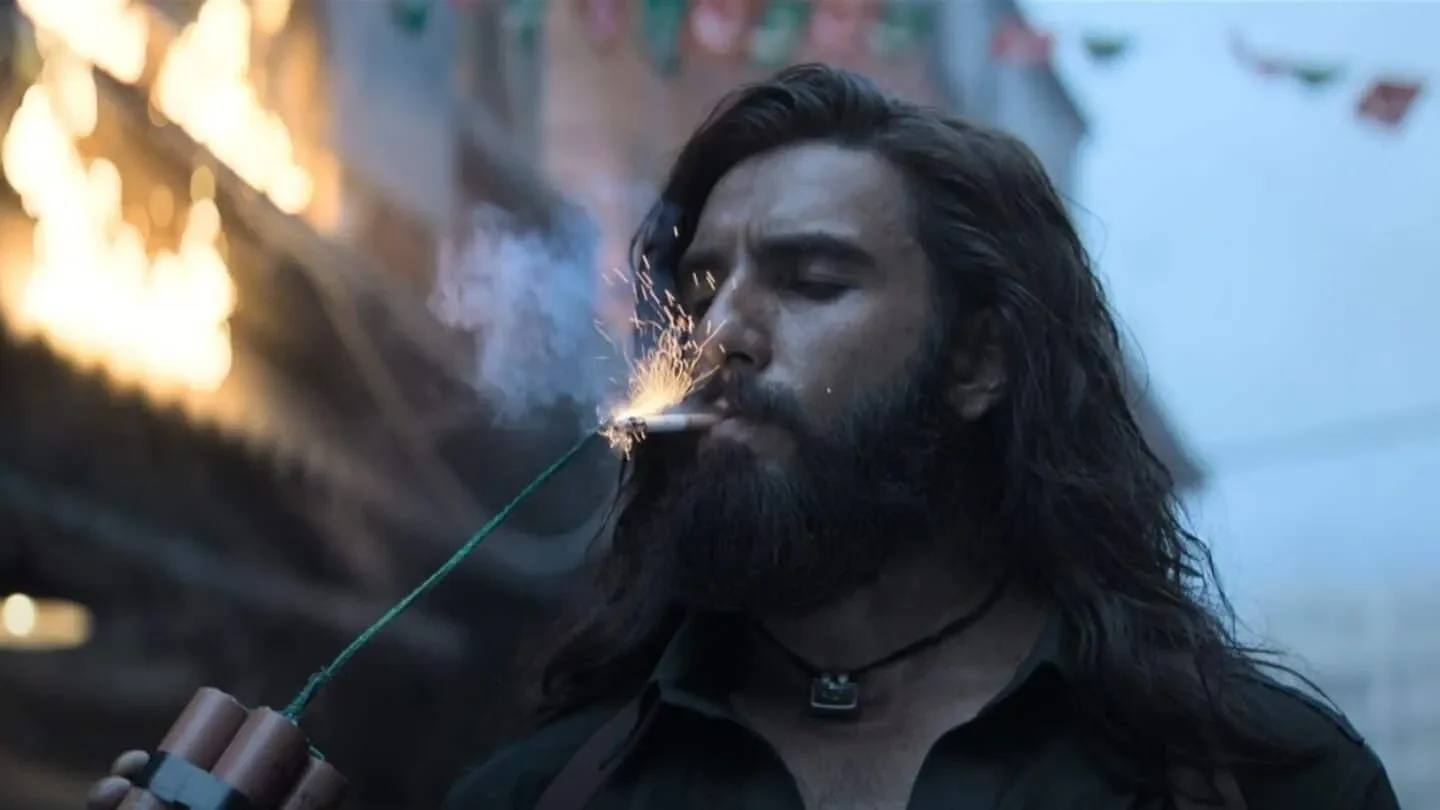
A recent wave of cinematic activity has brought the potent sound of Nusrat Fateh Ali Khan back into mainstream Hindi film discourse. The film Dhurandhar: The Revenge is credited with this revival, reintroducing audiences to the emotional depth and spiritual resonance of Khan's music. This renewed interest is particularly noteworthy given the film’s use of two compositions linked to the legendary singer: ‘Jaan Se Guzarte Hain’ and ‘Man Atkeya Beparwah De Naal’.
The film's narrative, however, appears to operate separately from the rich cultural origins of its musical selections. Dhurandhar, a spy thriller set in Lyari, a Karachi neighborhood with a significant musical heritage, features an Indian intelligence officer. Paradoxically, while the film’s plot appears to align with prevailing political sentiments, its soundtrack leans on a qawwali with Pakistani roots, a fact the movie itself seemingly sidelines. This creates a peculiar dissonance, where the repurposed qawwali carries historical and shared cultural weight that the film’s overt ideology appears to disregard.
Read More: Gabru Film Release Moved to May 8 to Avoid Competition
A Resonant Past Reclaimed
The current resurgence of interest in Nusrat Fateh Ali Khan’s work extends beyond Dhurandhar: The Revenge. It recalls an earlier instance where his immortal composition, ‘Saanson Ki Mala’, was adapted for the mainstream Bollywood setting in a film starring Shah Rukh Khan and Madhuri Dixit. This earlier adaptation served as a bridge, bringing Khan's distinctive artistry to a wider audience within a dramatic context.
Interestingly, Dhurandhar’s musical choices have also prompted a look back at other influential adaptations. A prior iteration of the Dhurandhar franchise, released around November 2025, featured a qawwali with a distinct legacy. The track ‘Ishq Jalakar - Karvaan’ from that earlier film was a fresh take on a classic, aiming to blend the original essence with a contemporary feel for current audiences. This version involved artists such as Shashwat Sachdev, Shahzad Ali, Subhadeep Das Chowdhury, and Armaan Khan, signaling an effort to connect with a younger demographic while respecting the source material.
Read More: Dhurandhar film uses Nusrat Fateh Ali Khan songs in March 2026
Intersecting Narratives and Cultural Echoes
The contemporary re-engagement with Nusrat Fateh Ali Khan's music by Dhurandhar: The Revenge occurs at a time when Hindi cinema is re-examining its relationship with iconic sounds. The film's use of 'Jaan Se Guzarte Hain' and 'Man Atkeya Beparwah De Naal' has successfully reignited conversations around the singer's unparalleled ability to evoke deep emotion. This is not an isolated phenomenon; prior installments in the Dhurandhar series have also tapped into established musical traditions. For instance, a previously released qawwali from Dhurandhar was noted for its viral popularity and had connections that reached back to other established figures in Indian cinema, suggesting a pattern of leveraging musical heritage for audience engagement.
The initial release of Dhurandhar 2, which reportedly earned around 44 crore from paid previews on March 18, 2026, before its official launch, also utilized a significant qawwali. This earlier film featured a composition by a renowned Pakistani singer, weaving themes of love, betrayal, and pride into its narrative. The actors associated with this installment included Madhavan, Arjun Rampal, and Sara Arjun, with reports also mentioning Ranveer Singh, Sanjay Dutt, and R. Madhavan in its cast. The context of these films, especially considering their release against a backdrop of geopolitical tensions following events like the Pahalgam attack, highlights the complex interplay between cultural products and their socio-political environment.
Read More: J.Lo spotted in LA after Coachella, amid online talk