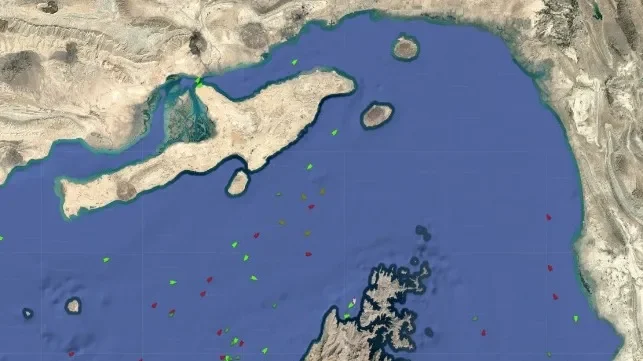
Confusion and uncertainty plague shipping firms eyeing passage through the Strait of Hormuz, as an announced United States initiative, dubbed 'Project Freedom,' offers scant detail on ensuring safe transit. Shipping companies have stated that President Trump's offer to guide vessels through the strategic waterway falls short of convincing them to risk the perilous journey, a stance reiterated by industry representatives.
The core issue remains the severe lack of actionable information regarding the operational specifics of Project Freedom, leaving shipowners unwilling to gamble on uncertain protection against potential attacks from Iran. Millions of barrels of oil remain cut off, and hundreds of ships are stranded, their crews caught in the escalating geopolitical standoff that has effectively choked one of the world's most vital energy arteries.
The US plan, as articulated by the President, involves guiding ships "safely out of these restricted Waterways" and targeting cargo from nations not directly involved in the ongoing conflict. However, this broad assurance is juxtaposed with Iran's warnings that external interference could exacerbate tensions. Market reactions have been volatile, with oil prices initially dipping on the news of the operation before surging in subsequent trading.
Read More: FIFA World Cup 2026 Revenue Reaches $15 Billion With New Ticket Prices
This predicament underscores a fundamental disconnect between official pronouncements and the practical realities faced by commercial maritime operations in a highly contested zone. While the United States has vowed assistance, the effectiveness and scope of this help remain vague, leading to a prolonged stalemate where ships are hesitant to move.
The Strait of Hormuz, previously a successfully managed passage under international agreements that explicitly reject tolls and discriminatory measures, now finds itself at the center of renewed conflict. Oman, controlling territorial waters in the narrows, has historically been a strong proponent of maintaining the strait's open and neutral status.
The current situation, where Iranian actions have led to the closure of the waterway following a US and Israeli offensive against the country, highlights the fragility of international trade routes when subjected to geopolitical pressure. The lack of clear guarantees leaves the fate of global energy supplies hanging precariously in the balance.
Read More: Gulf Oil Exports Rise in June but Still Below Pre-War Levels