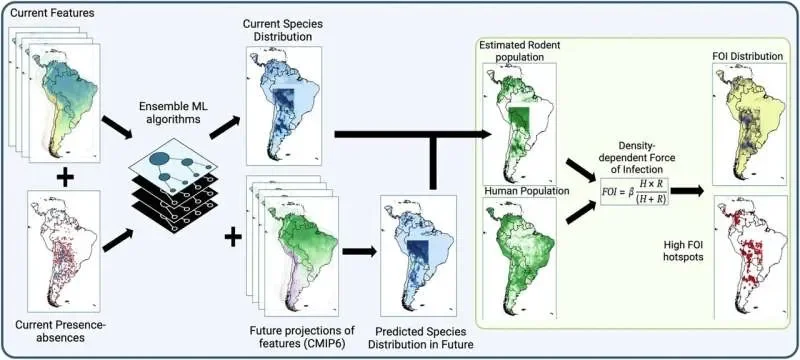
New projections suggest climate change is poised to push rodent-borne arenaviruses into uncharted territories across South America, placing previously unexposed populations in the path of these dangerous diseases. The shift, detailed in a study from the University of California, Davis, links environmental alterations with changes in rodent populations and a heightened risk of human infection.
The core of the concern lies in the potential for viruses like Guanarito, Machupo, and Junin – already established in places like Venezuela, Colombia, Bolivia, Paraguay, and Argentina – to breach existing boundaries. Researchers developed an open-source platform, AtlasArena, integrating climate projections with models of rodent movements and human exposure risks. This tool aims to map out where these viral threats might concentrate over the next two to four decades.
The study, published in the journal npj Viruses, employed ecological niche modeling alongside climate forecasts from the Intergovernmental Panel on Climate Change (IPCC). This approach allows for a detailed look at how changing temperatures and precipitation patterns might influence the habitats of rodents that carry these viruses.
Read More: Cape Verde Denies Ship Entry Over Suspected Hantavirus Deaths

One specific example highlighted is the Junin virus, endemic to Argentina. The research anticipates this virus may migrate from its current grassland stronghold into new regions within Argentina, potentially reducing risk in some areas while introducing it to others. This dynamic underscores the complex and unpredictable nature of climate-driven disease spread.
The implications extend beyond arenaviruses, serving as a broader signal of how climate change amplifies the risk of zoonotic diseases – illnesses transmitted from animals to humans. The findings advocate for stepped-up scientific investigation, vigilant monitoring systems, and proactive public health strategies to prepare for these emerging infectious disease challenges.
Read More: Hyderabad CM Vows Action on Jawahar Nagar Dump Yard Crisis
The research points to the increasing epidemiological significance of "emergence zones," areas where diseases may extend beyond their historical ranges, presenting considerable hurdles for surveillance, diagnosis, and healthcare capacity building. Leveraging computational tools alongside on-the-ground observations is seen as critical for anticipating and managing future disease outbreaks.