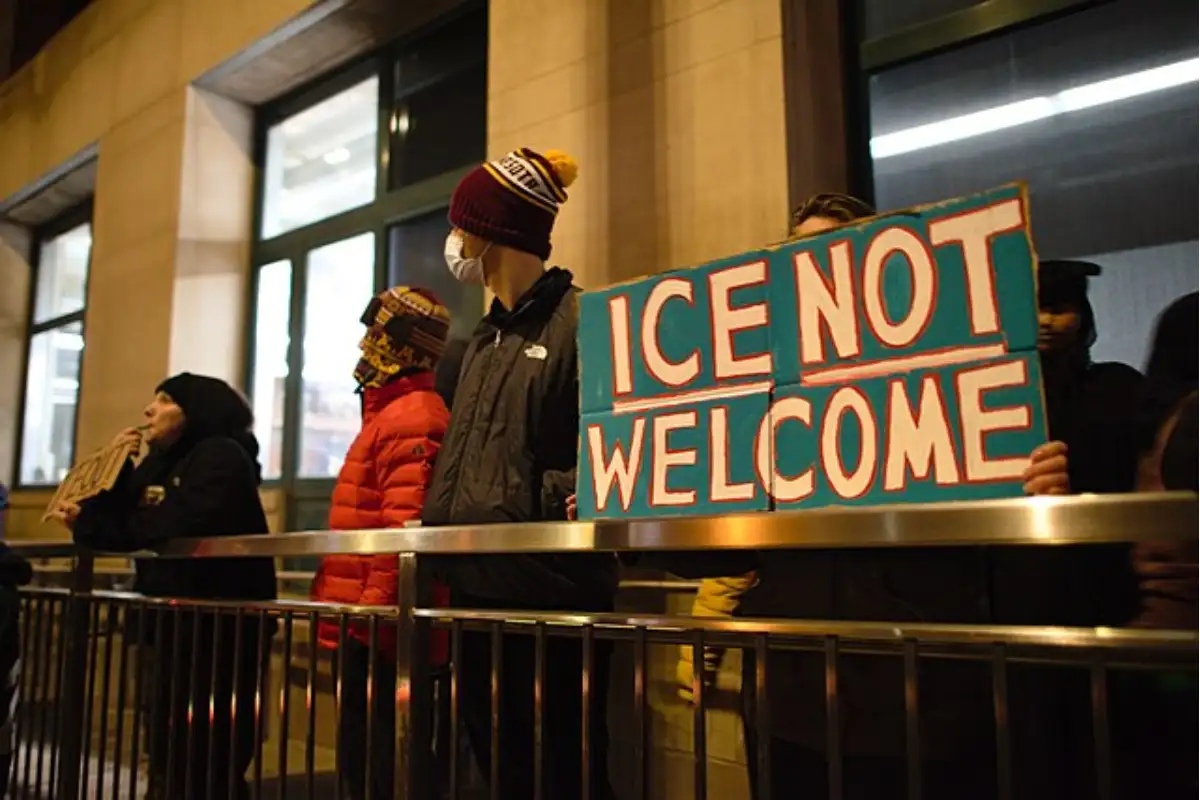
A popular online service, StopICE, which alerts users to the presence of US Immigration and Customs Enforcement (ICE) vehicles, has reportedly been the target of a cyberattack. Administrators of the service claim a US Customs and Border Protection (CBP) agent is responsible for the incident, which allegedly resulted in the defacement of the website and the sending of alarming text messages to users. Claims have also emerged that sensitive user data may have been exposed and shared with federal agencies, sparking concern and outrage.
Background of the Incident
The events surrounding StopICE began to unfold around January 29, 2026. Users reported that the StopICE.net website was briefly disrupted and defaced with an image of former ICE official Tom Homan. Alongside the image, messages alleged that user login details, locations, passwords, and phone numbers had been leaked and sent to federal agencies like the FBI and ICE.
Read More: Meta May Stop Services In New Mexico Before May 4 Court Trial

Following these initial reports, further information surfaced on February 2, 2026, from StopICE administrators. They stated that an attack on their system on January 30, 2026, attempted to target the stopice.net server and send false text alerts. The administrators asserted they had traced the source of this attack to a personal server linked to a CBP agent in Southern California.
Conflicting Claims on Data Exposure
A central point of contention revolves around the extent of user data compromised.

StopICE Administrators' Stance:
StopICE administrators have stated that their platform does not store user names, addresses, or GPS tracking details. They contend that any claims of such data being stolen are false and an attempt to spread rumors.
They claim that the attack was designed to send false text alerts and deface the website.
They also mentioned plans to release names of individuals who attempted to attack their system, including those who sent death threats to the developer.
"We will also be including phone numbers, names and profiles of those who've attempted to attack and flood our system, along with those who have attempted to send multiple death threats to the developer," the admins wrote in a statement.
Claims of Significant Data Breach:
Other reports suggest a more severe data breach occurred, potentially exposing the personal information of over 100,000 users.
These reports claim that sensitive data, including names and locations, was delivered to multiple federal agencies, including the FBI, ICE, and Homeland Security Investigations (HSI).
One report indicated that a key organizer of StopICE, Sherman Austin, was allegedly given an opportunity to inform users of the breach but failed to do so.
Social media posts and Reddit discussions indicated that "hackers delivered sensitive data from the app to multiple federal agencies."
Investigation into the Alleged Attacker
StopICE administrators have pointed to a specific individual as the source of the attack.
Accusation Against a CBP Agent:
StopICE administrators have publicly accused a US Customs and Border Protection (CBP) agent of being behind the server attack.
They claim the agent's personal server in Southern California was the origin point, and that the attacker "did not do a good job covering their tracks."
"We've traced the source of this attempted attack back to a personal server associated with two CBP officials here in Southern California."
Allegations of Sabotage and Disinformation:
The text messages sent to users, which warned them that their "information has been compromised and sent to the authorities," also contained disparaging remarks about the StopICE developer, Sherman Austin, stating he "is not to be trusted and is a terrible coder." This suggests an intent to discredit the service and its operators.
User Reactions and Broader Implications
The alleged incident has drawn strong reactions from both critics and supporters of StopICE.
Concerns over Privacy:
Critics have condemned the alleged actions as a serious privacy violation and a potential doxxing attempt, especially if user data was indeed shared with government agencies.
The situation highlights the ongoing tensions surrounding digital activism and immigration enforcement.
Support for Activist Tools:
Supporters argue that platforms like StopICE are essential tools for communities facing enforcement actions, empowering them with information.
The incident underscores the risks associated with such services, which aim to track and alert the public about government enforcement activities.
Analysis of the Situation
The divergent accounts regarding data exposure necessitate a careful examination of available evidence.
Data Storage Practices:
StopICE's claim that it does not store sensitive personal data, such as names, addresses, or GPS locations, is a critical factor. If verified, it would significantly limit the scope of the alleged data leak.
However, the reports of names and locations being sent to federal agencies contradict this assertion. It remains unclear if the compromised data was limited to account credentials or other less sensitive information, or if StopICE's assessment of its own data storage is accurate in the context of the alleged breach.
Attribution of the Attack:
The accusation against a CBP agent, based on the alleged tracing of the attack to a personal server, requires independent verification. While StopICE claims the attacker left a poor digital trail, the definitive link to a specific government agent needs to be substantiated.
The nature of the attack—primarily focused on sending false alerts and defacing the website—could be interpreted as an attempt to disrupt and discredit the service rather than a sophisticated data exfiltration operation, depending on what specific data was accessed.
Conclusion
The alleged cyberattack on StopICE presents a complex scenario involving claims of sabotage, data exposure, and the potential involvement of a federal agent. StopICE administrators have accused a CBP agent of orchestrating the attack, which they state primarily involved sending false text alerts and defacing their website. They maintain that sensitive user data was not compromised due to their data retention policies.
Read More: AP CID and RBI Train on Financial Fraud in Vijayawada
Conversely, reports suggest that significant personal information, including names and locations of over 100,000 users, may have been exposed and shared with federal agencies like the FBI, ICE, and HSI.
Further investigation is required to definitively establish:
The actual extent and nature of any user data that was accessed or exfiltrated.
The veracity of StopICE's claims regarding its data storage practices.
The definitive attribution of the attack to a specific individual and their role within CBP.
The specific federal agencies that may have received any data.
The incident highlights the ongoing friction between immigration enforcement agencies and digital activism tools, raising significant questions about online privacy and the security of user data in sensitive contexts.
Most Used Sources:
The Register: https://www.theregister.com/2026/02/02/stopicealertshacked/ (Provides detailed account of the attack, including administrator statements and accusations against a CBP agent.)
IBTimes: https://www.ibtimes.co.uk/stopice-hacked-names-locations-over-100k-users-were-sent-fbi-ice-hsi-1775307 (Details claims of a major data breach and exposure of user information to federal agencies.)
WeCumedia: https://www.wecumedia.com/post/crowdsourced-anti-ice-alert-site-stopice-net-briefly-defaced-with-tom-homan-image-user-data-claims (Reports on the initial defacement of the website and early claims of user data leaks.)
Risky.biz: https://news.risky.biz/risky-bulletin-stopice-blames-hack-on-a-cbp-agent-here-in-socal/ (Briefly notes StopICE's attribution of the hack to a CBP agent.)
StopICE.net: https://www.stopice.net/news/serverattackagainststopicenettracedtolocalcbpagentspersonalserver (Official statement from StopICE regarding the server attack and its alleged source.)