Osmond Resources is accelerating its plans for what could be the European Union's first direct rare earth production. The company's Orión EU critical minerals project in Spain is moving towards a scoping study, with Osmond poised to hold an effective 76 per cent stake upon its completion. The company is also exploring downstream processing for its extracted minerals.
Osmond Resources aims to establish the EU's inaugural vertically integrated rare earth production facility. The company has entered a collaboration with Spanish engineering firm Técnicas Reunidas to process monazite, a mineral rich in rare earth elements, into mixed rare earth carbonates and oxides within the EU. Técnicas Reunidas brings its established RARETECH technology for this process.
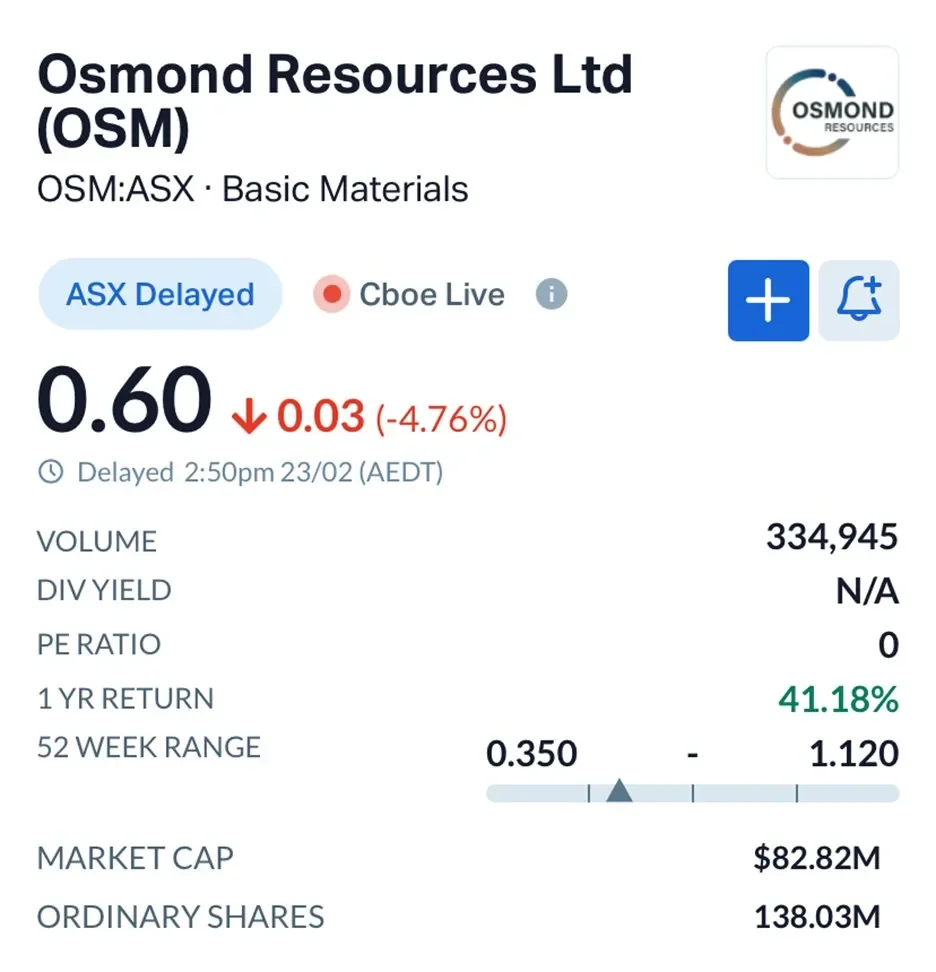
The Orión project is increasingly being positioned as a source for multiple critical minerals. Alongside rare earths, Osmond is developing plans for titanium and silicon metal. This dual focus means Osmond is targeting three of the EU's 17 identified strategic critical raw materials.
Read More: Global Markets Jump on Iran De-escalation Talk, 'TACO' Trade Emerges
Osmond's current activities include metallurgical sample analysis, an expanded drilling program, and ongoing downstream studies. The company has also indicated discussions regarding further downstream applications for titanium, zirconium, and silica.
Partnership Details
The collaboration agreement between Osmond and Técnicas Reunidas outlines mutual efforts towards extracting monazite and producing mixed rare earth carbonates in the EU. Técnicas Reunidas, a large global engineering company with decades of experience, is already a supplier of rare earth concentrates via its RARETECH process. This partnership signals a move towards a complete supply chain, from extraction to processed materials, within the European bloc.
Project Background
The Orión project in Spain has shown mineralisation of rutile, zircon, and monazite. Osmond Resources, an Australian company listed on the ASX, is positioning the Orión project as a key asset in securing critical raw materials for Europe. The push for domestic rare earth production in the EU is part of broader efforts to reduce reliance on external supply chains for materials deemed essential for modern technologies.
Read More: Arsenal's 1-0 Champions League Win Shows Title Race Depends on Small Moments