
State Surpasses Japan, Secures Fourth Global Economic Ranking
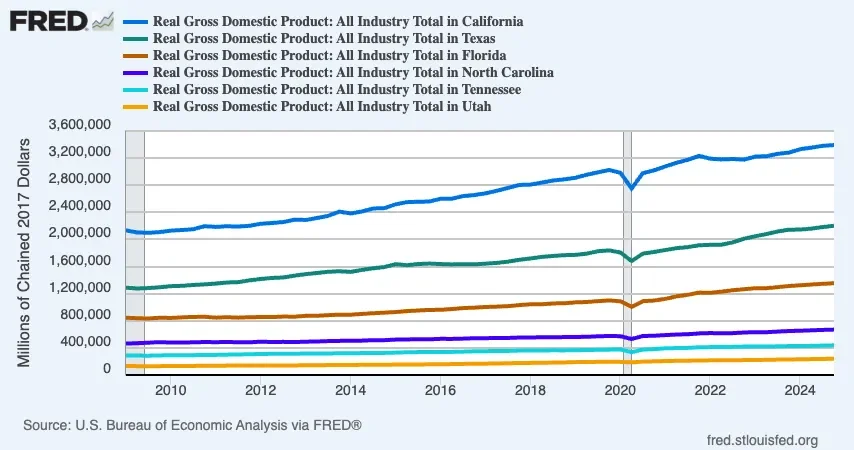
California's economy has solidified its position as the world's fourth-largest economic power, surpassing Japan. This upward trajectory, highlighted in recent data from sources including the International Monetary Fund (IMF) and the US Bureau of Economic Analysis, places the Golden State behind only the United States, China, and Germany.

The state's economic output reached $4.1 trillion as of April 2025, a figure that dwarfs other US states. For context, Texas follows at $2.7 trillion, New York at $2.3 trillion, and Florida at $1.7 trillion. This impressive growth, reported to be around 6% in the previous year, is attributed to various factors, including a robust talent pipeline, significant corporate acquisitions, and a focus on innovation.

Drivers of Growth and a Critical Eye
California companies are reportedly spending significantly more on acquisitions under Governor Gavin Newsom's tenure, with annual spending at $527 billion, nearly triple the amount seen in the two decades prior to 2019. The state also boasts a disproportionately high number of engineers, producing 70 percentage points more than the next highest state, Washington, which accounts for 20 points.
Read More: Millennial Founders Choose Corporate Incubators Over Business School for Faster Growth

However, this economic dominance is not without its critiques. While the state's growth is lauded by officials as a sign of setting global pace, some analyses suggest a "decidedly cooling economy" beneath the impressive figures. Concerns persist regarding the state's ability to sustain this momentum, especially when measured against domestic competitors and broader global economic shifts.
Innovation, Policy, and Lingering Questions
Governor Newsom has actively promoted California's economic standing, framing it as a testament to investments in people, sustainability, and innovation. The state is also reportedly a leader in AI readiness, with major hubs like San Francisco, San Jose, and Los Angeles spearheading growth. Initiatives like the California Competes Tax Credit aim to further bolster economic development by prioritizing sectors that strengthen the state's economic blueprint and foster well-paying jobs.
Read More: Trump's Strong Words to Iran on Easter Weekend Cause Concern
Amidst this narrative of economic triumph, issues such as the persistent affordable housing crisis remain a point of discussion, even as the state's population continues to grow due to immigration and birth rates. The state's engagement in trade disputes, including a lawsuit against former President Trump over tariffs, also underscores the complex interplay between state policy and its global economic standing. The sustainability of California's economic supremacy, particularly in the face of international competition and internal challenges, remains a subject of ongoing observation.