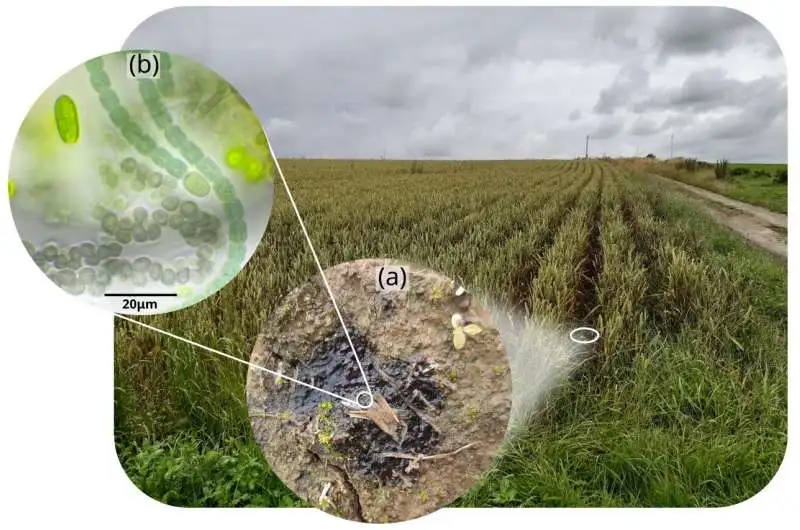
Hidden communities of algae are actively present in wheat fields, their types changing with the seasons and exhibiting differences based on how the land is managed. This previously understudied aspect of agricultural biodiversity is now coming to light, suggesting these microscopic organisms play a significant role in the health and resilience of farmlands.
Seasonal Swaps in Soil dwellers
The makeup of these algal populations is not static. Yellow-green algae, known as Xanthophyceae, appear to thrive in the cooler spells of spring and autumn. In contrast, as summer approaches and the wheat nears harvest, blue-green algae (Cyanobacteria) and green algae become more prominent. This ebb and flow suggests a direct response to changing environmental conditions within the field. While commonly associated with wet environments like streams and lakes, algae have clearly found a footing in the drier, more demanding conditions of cultivated land.
Read More: New Wheat Makes Bigger Starch for Food and Industry
Farming's Fingerprint on Microbes
Research indicates that farming practices, whether organic or conventional, influence the specific mix of algae present, even if both systems host a broad range of diversity.
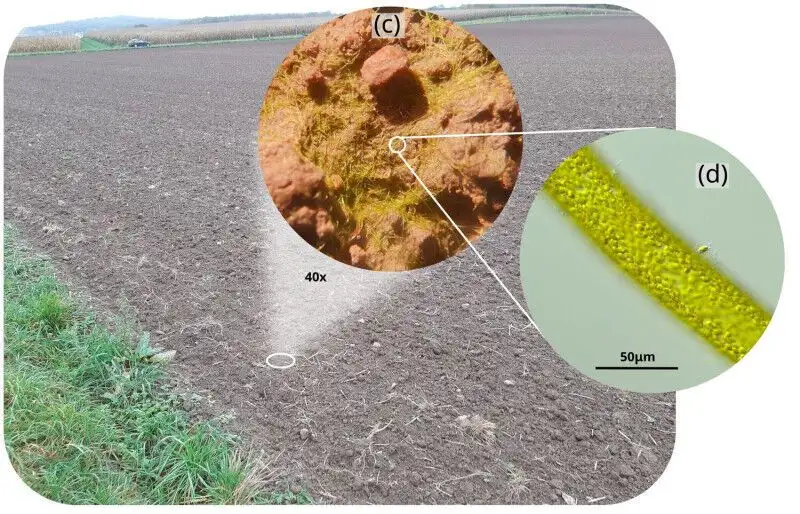
Organic vs. Conventional: Studies have revealed distinct differences in the species composition of algae found in organically managed fields compared to those under conventional cultivation.
Awareness Gap: Neither researchers nor farmers have, until now, fully grasped the extent to which crop management impacts these soil algae, leaving many questions unanswered about the precise mechanisms at play.
The Unseen Advantage of Soil Algae
Despite their integral role in the soil microbiome, soil algae have been largely overlooked in agricultural research and practice. This neglect hinders a deeper understanding of sustainable farming. Experts suggest these organisms may offer natural pathways to enhance soil health, potentially lessening the need for synthetic fertilizers and boosting crop yields through cooperative relationships.
Background:
Initial findings stem from pilot studies examining soil algae in German wheat fields. Researchers are employing techniques like DNA metabarcoding to analyze the genetic makeup of these communities. Further, more extensive research, involving hundreds of samples from long-term experiments, is planned. This work aims to provide a more robust scientific foundation for understanding how to preserve algal diversity and potentially leverage their benefits for agricultural productivity.
Read More: Indigenous Data Rights Now Key in Conservation Genomics
Key terms: 'Soil algae', 'Xanthophyceae', 'Cyanobacteria', 'agricultural biodiversity', 'sustainable agriculture'.