KeyBanc has raised its price target for NVIDIA (NVDA) to $300, citing sustained demand for GPU technology and the scaling of the company’s "AI factory" strategy. This upward revision precedes the company's fiscal first-quarter earnings, reflecting a broader pattern of financial analysts recalibrating forecasts for the semiconductor sector as of 19/05/2026.
Core Insight: Analyst consensus is decoupling NVIDIA’s long-term revenue potential from dependence on specific frontier AI models, focusing instead on the broader infrastructure buildout.
Market Positioning and Analyst Sentiment
The current valuation environment shows a concentrated effort by financial firms to align with projected growth in processing hardware.

| Firm | Action | Status |
|---|---|---|
| KeyBanc | Target to $300 | Overweight |
| Raymond James | Target to $323 | Strong Buy |
| Truist Securities | Target to $287 | Buy |
| Cantor Fitzgerald | Target to $300 | Overweight |
The adjustment follows reports of sustained interest in the Blackwell and Rubin architectures, which serve as foundational pillars for future data center scaling.
While bullish sentiment remains dominant—with roughly 60 firms maintaining buy ratings—the frequency of target adjustments highlights a market attempting to price in the "multi-trillion-dollar" scale of AI infrastructure development.
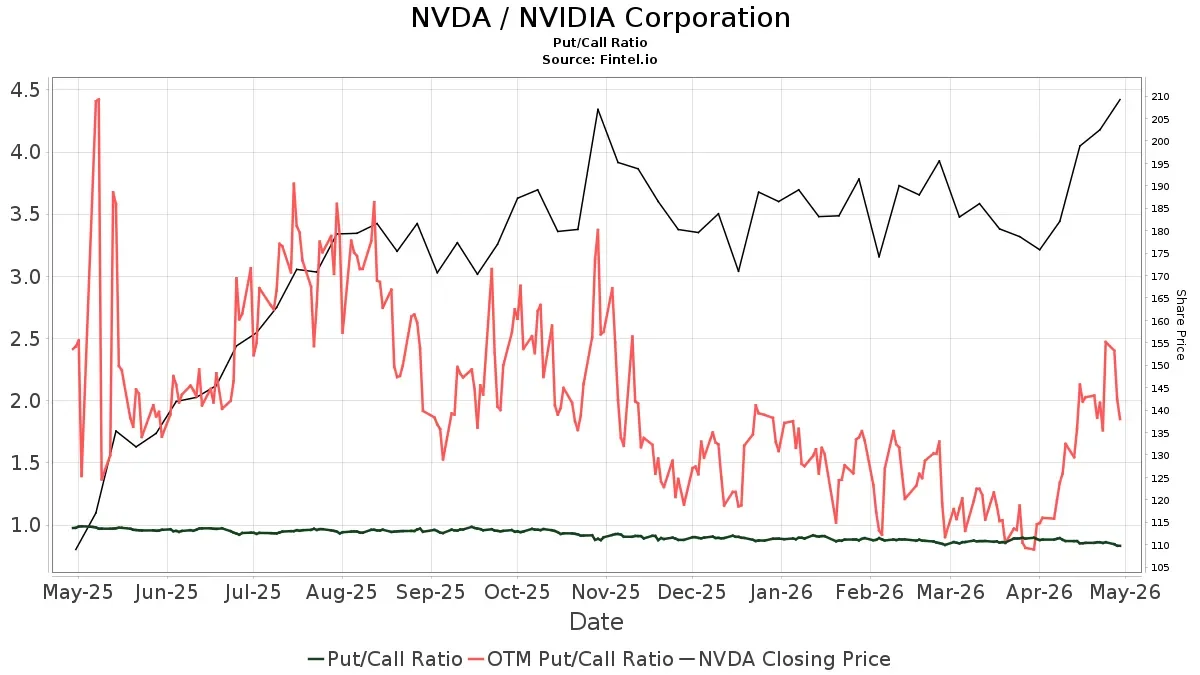
Data from the past six months indicates high liquidity in internal equity trading, with NVDA insiders executing trades on the open market 140 times.
Strategic Context
The shift in analyst perspective—away from simple consumer-facing AI models and toward "AI factories"—suggests an institutional view that NVIDIA functions as a utility provider for the digital economy. By distancing its success from individual software applications, analysts are betting on the permanence of the underlying hardware layer.
Read More: West Ham Relegation Could Cost London Taxpayers £2.5m Yearly
This environment creates a tension between actualized infrastructure spend and speculative price targets. As the fiscal quarter concludes, market participants remain focused on whether hardware delivery rates can meet the volume projected by these updated financial models.
Data sources include: KeyBanc Investing, AlphaPilot Tech, MarketsScreener, and SeekingAlpha.