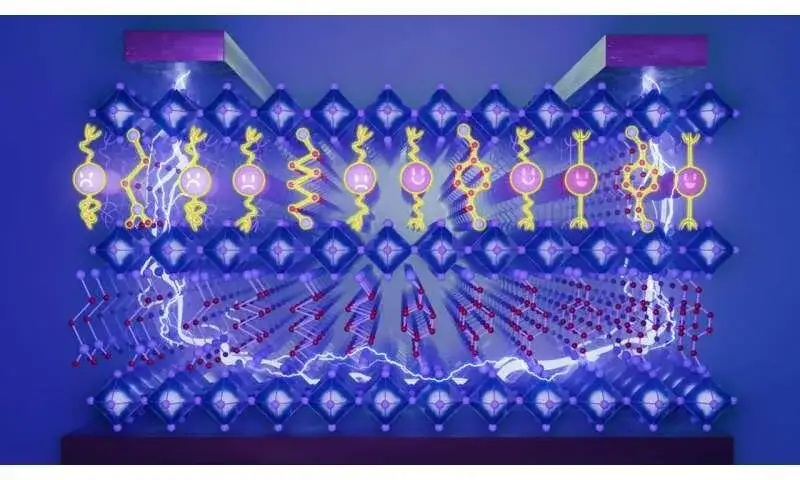
A new method for growing perovskite layers, described recently, could pave the way for more reliable and efficient transistors. This technique focuses on careful crystallization to achieve highly ordered structures, a crucial step for advancing semiconductor technology.
Researchers have developed a process that guides the formation of perovskite crystals. This meticulous approach results in layers with fewer defects, which are typically detrimental to the performance of electronic components like transistors. The development could offer a path toward smaller, faster, and more energy-efficient devices, potentially impacting everything from mobile phones to advanced computing.
The enhanced order in the perovskite layers is attributed to precise control over the crystallization environment. Details of this control, such as temperature gradients and the rate of material deposition, were not elaborated upon in the initial report.
Read More: Why AI Content Is Called Slop and How It Started in May 2026
The breakthrough lies in overcoming a persistent challenge in perovskite material science: achieving consistent, high-quality crystalline structures suitable for fabricating functional electronic devices. Perovskites have long held promise due to their unique optoelectronic properties, but their widespread application has been hindered by issues of stability and reproducibility. This new crystallization method appears to address some of those fundamental material-level obstacles.