A celestial event, referred to as a "planetary parade" or "planetary alignment," is set to occur on February 28, 2026. This phenomenon involves six planets—Mercury, Venus, Saturn, Jupiter, Uranus, and Neptune—appearing to line up in the sky from Earth's perspective. While planetary alignments happen periodically, this particular event is noted for the number of planets visible.
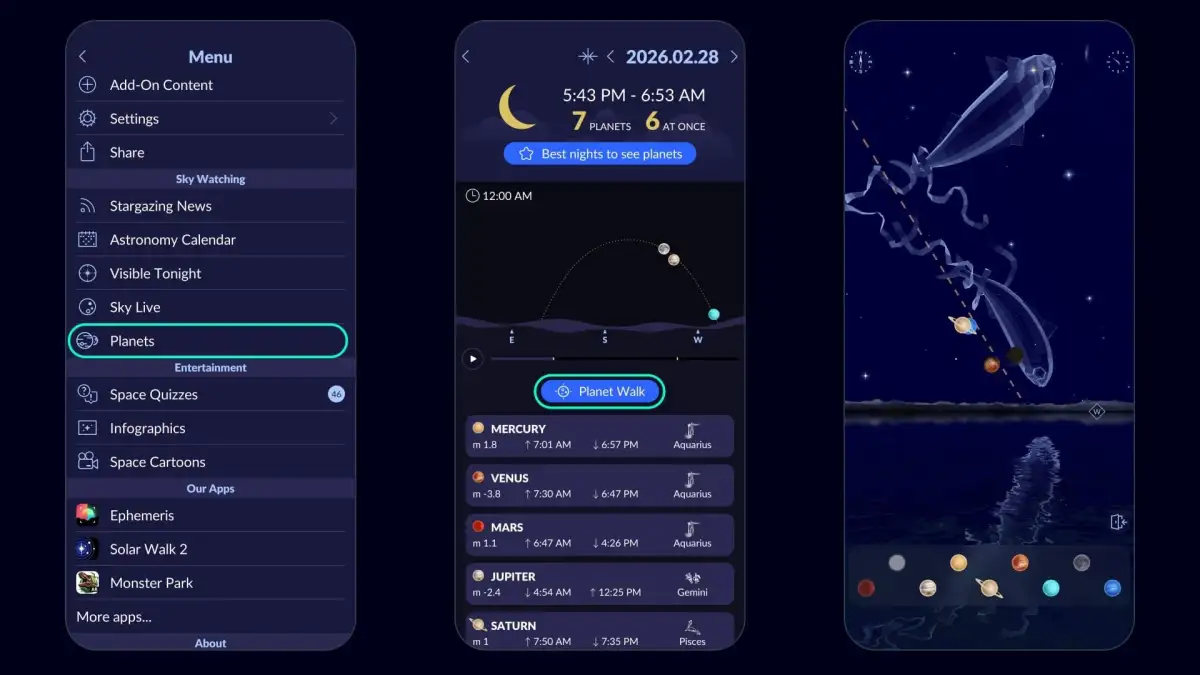
Understanding the Planetary Parade
A planetary parade describes a situation where multiple planets become visible in the night sky at the same time. This happens because planets orbit the Sun in nearly the same flat plane, and their orbits occasionally bring them to the same side of the Sun as viewed from Earth.
Definition: A planetary parade is when several planets are visible in the sky simultaneously.
Frequency: These events occur a few times each year, with varying numbers of planets visible. A parade of six or seven planets is considered rare.
Orbital Mechanics: Planets orbit the Sun, and their paths align across the sky along a line called the ecliptic.
When and Where to Observe
The peak of this planetary parade is on February 28, 2026. The planets will be visible in the evening sky, shortly after sunset.
Best Time: Approximately 30 minutes after local sunset.
Viewing Location:
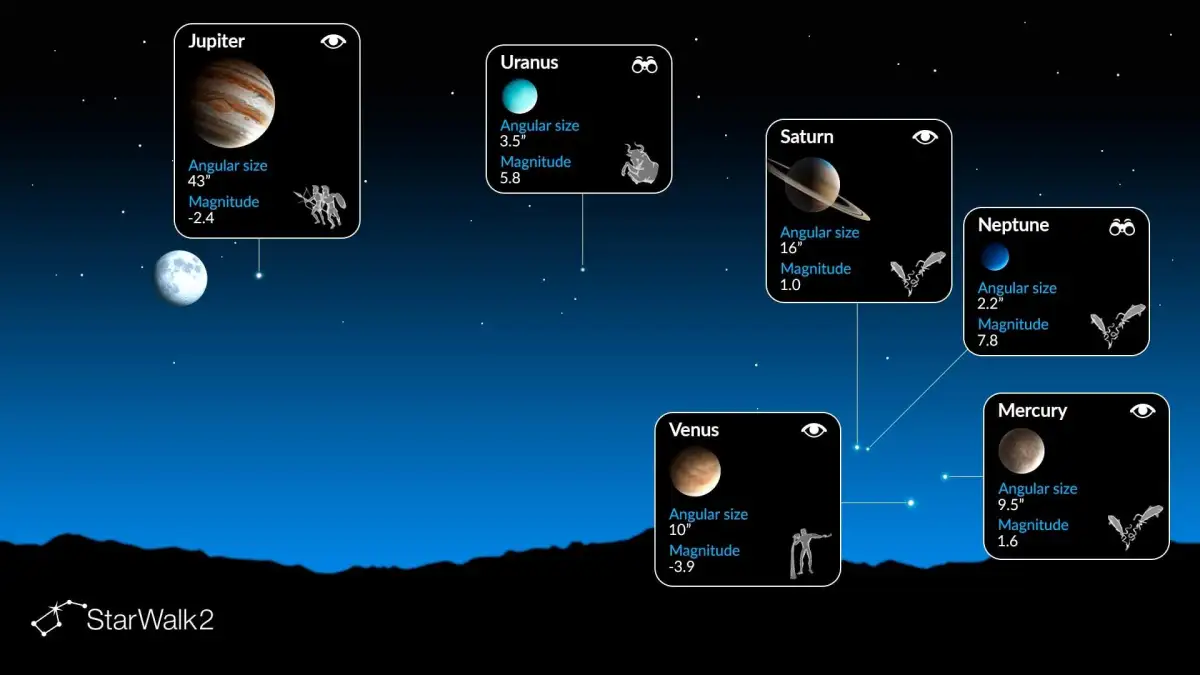
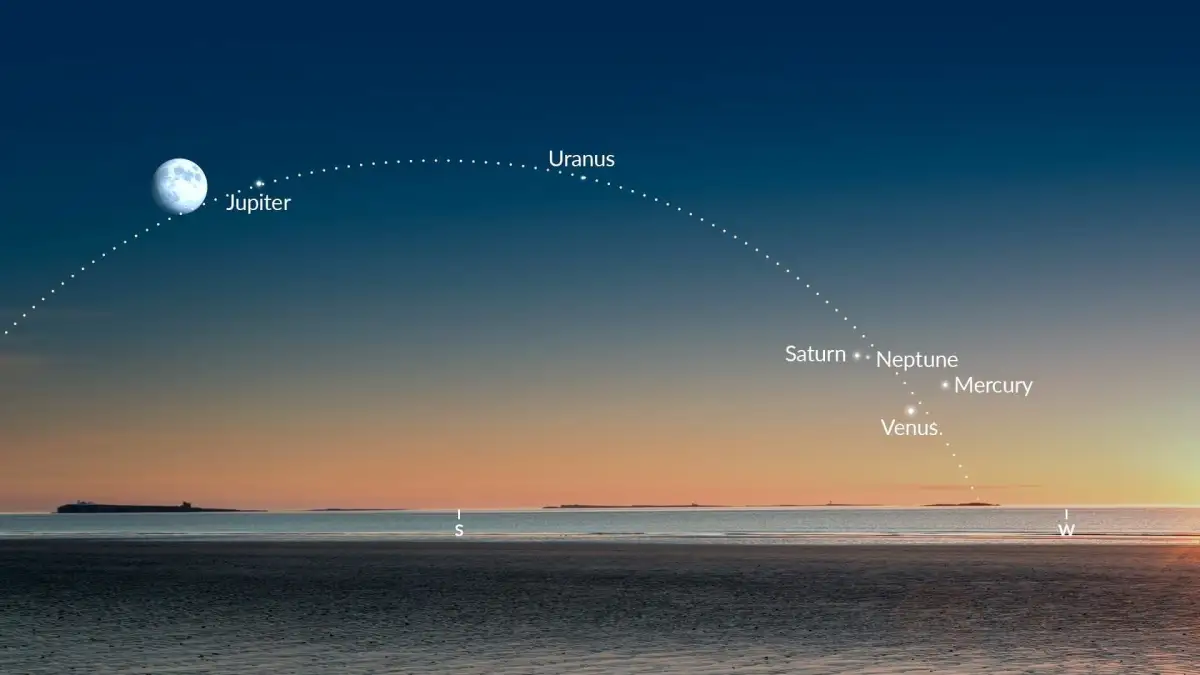
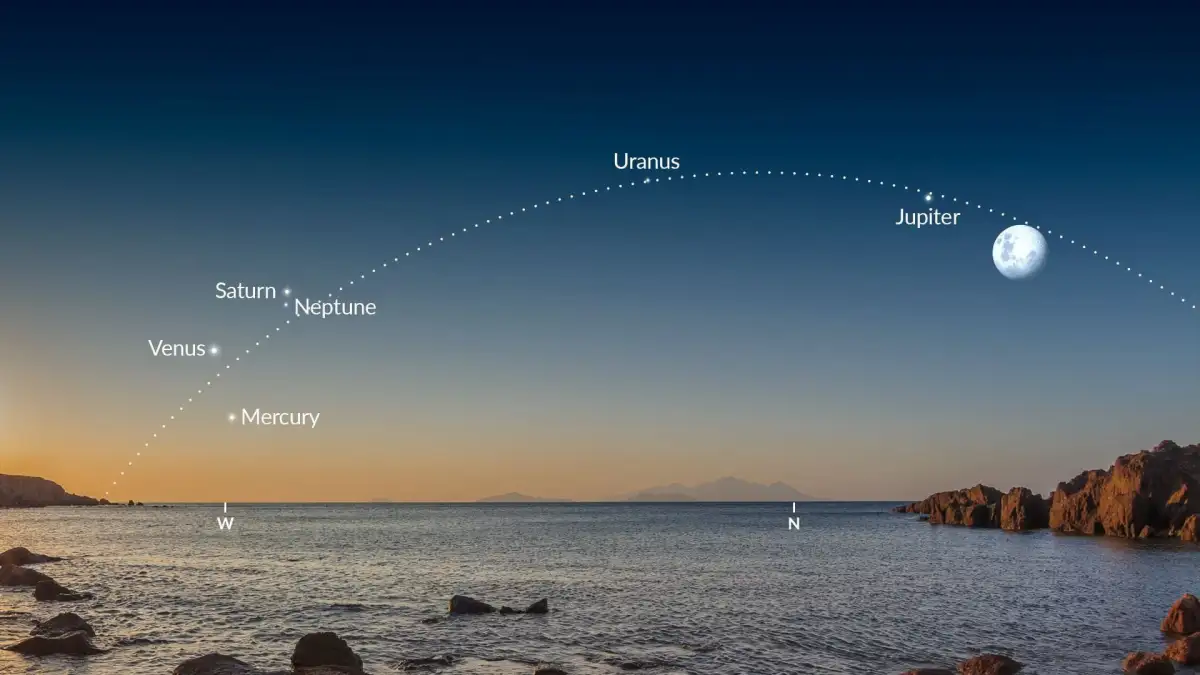
West: Mercury, Venus, and Saturn will be low in the west.
East: Jupiter will be higher in the east.
Duration: The parade is expected to remain visible for several days following the peak date, though visibility of individual planets will change as they dip below the horizon.
Visible Planets and Equipment Needs
Of the six planets involved, some will be visible to the naked eye, while others may require optical aids.
Read More: US Space Force Victus Haze Mission Successfully Tests Orbital Intercepts
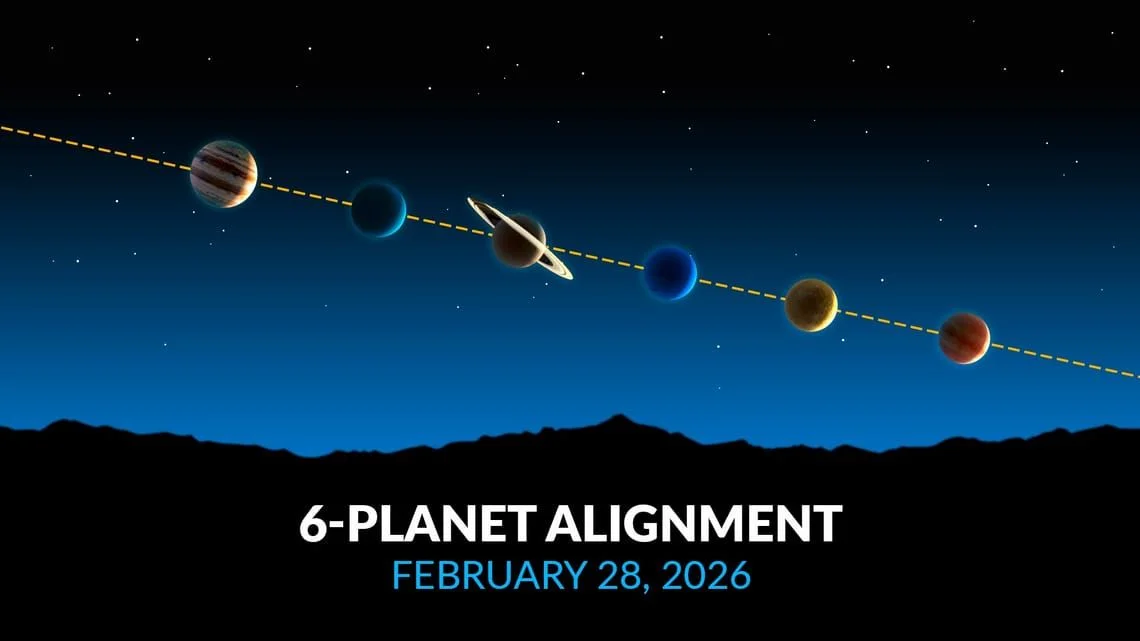
Visible to Naked Eye: Mercury, Venus, Saturn, and Jupiter.
Visible with Binoculars or Telescope: Uranus and Neptune.
It is important to note that Mercury and Venus will be visible low on the western horizon and will set soon after sunset, requiring prompt observation.
Context of the Alignment
This specific alignment includes Mercury, Venus, Jupiter, Saturn, Uranus, and Neptune. Mars is not visible in this parade as it is on the opposite side of the Sun from Earth.
Classifications of Alignments:
Mini planetary alignment: three planets.
Small planetary alignment: four planets.
Large planetary alignment: five or six planets.
Great (full) planetary alignment: all Solar System planets.
This event is classified as a "large planetary alignment."
Sources
Starwalk.space: Published 2 days ago. https://starwalk.space/en/news/planetary-alignment-february-28-2026
SDSU News: Published 7 hours ago. https://www.sdsu.edu/news/2026/02/parade-parade-how-to-see-the-feb-28-ultra-rare-six-planet-show
Weather.com: Published. https://weather.com/science/space/news/2026-02-26-six-planets-parade-february-sky-2026
Daily Comet: Published 12 hours ago. https://www.dailycomet.com/story/news/world/2026/02/26/planetary-parade-alignment-february-2026/88602459007/
BBC Sky at Night Magazine: Published 19 hours ago. https://skyatnightmagazine.com/news/planet-parade-february-2026
Deseret News: Published 14 hours ago. https://www.deseret.com/environment/2026/02/26/how-to-see-the-planetary-parade-this-week/
The Standard: Published 20 hours ago. https://www.standard.co.uk/news/science/planetary-parade-when-six-planets-how-to-see-b1272551.html
BBC News: Published 23 minutes ago. https://www.bbc.com/news/articles/c4g3l0yzyxdo
PhillyBurbs: Published 12 hours ago. https://eu.phillyburbs.com/story/news/2026/02/26/six-planets-align-planet-parade-2026-when-can-i-see-planet-alignment/88882530007/
New Scientist: Published 2 days ago. https://www.newscientist.com/article/2516799-how-to-see-six-planets-in-the-sky-at-once-in-rare-celestial-alignment/
The Guardian: Published 2 weeks ago. https://www.theguardian.com/science/2026/feb/10/planetary-parade-february
CNET: Published 3 days ago. https://www.cnet.com/science/space/the-first-planet-parade-of-2026-is-in-february-heres-how-to-see-it/
Bombay Times: Published 2 days ago. https://www.bombaytimes.com/astro/trends/six-planets-alignment-2026-date-and-time-when-and-where-to-watch-rare-celestial-planetary-parade-this-week/1772008401377