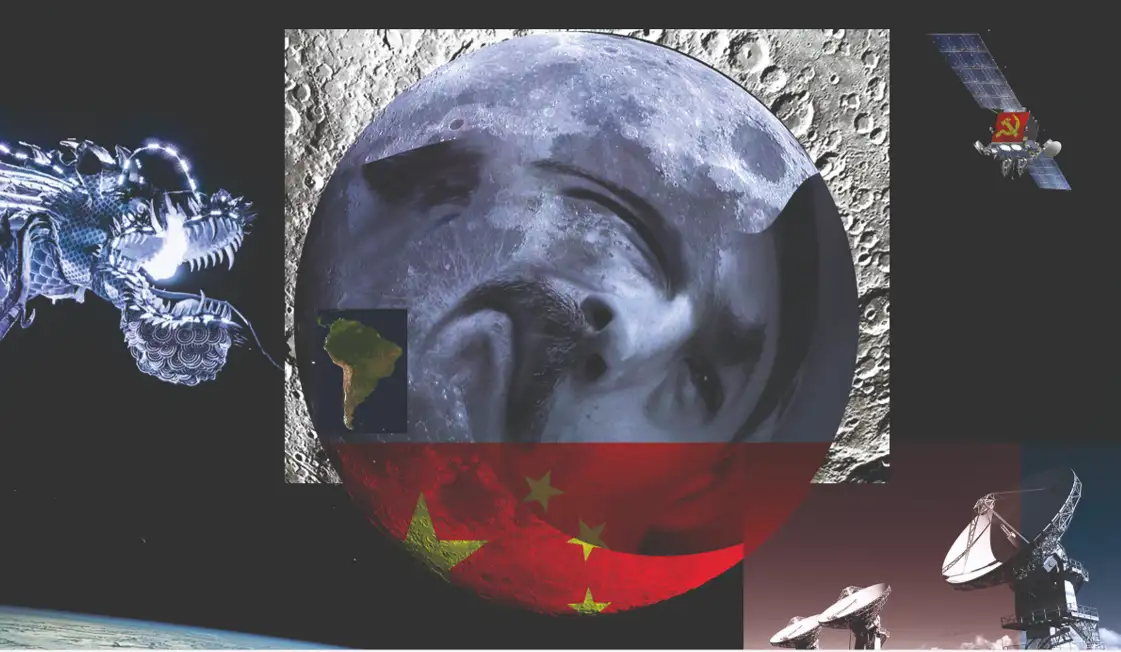
China's growing activities in space across Latin America are drawing increased attention and sparking security worries in the United States. The expansion involves establishing infrastructure and fostering collaborations, which some observers interpret as having strategic implications beyond civilian space exploration.
Historical Context of China-Latin America Ties
For over two decades, China has been building stronger economic and security connections with various Latin American nations, including Brazil, Peru, and Venezuela. This engagement has deepened over time, with China presenting itself as a partner for development and technological advancement.
Key developments in China's space activities in Latin America include:
Collaboration with governments in Venezuela and Bolivia.
Establishment of facilities for tracking and communicating with space vehicles.
Support for China's lunar and Mars mission programs.
Strategic Dimensions of Space Cooperation
While China's involvement in Latin America's space sector is often framed around economic and scientific cooperation, questions are being raised about its broader strategic objectives. The establishment of space infrastructure in a region historically aligned with the United States has amplified concerns about potential military applications.
Read More: Moon-sized object passes Earth, sparking primordial black hole debate
Data Sovereignty and Regulatory Gaps
Latin American nations currently have limited comprehensive rules to oversee foreign involvement in their space activities. This situation raises questions about data sovereignty and how information gathered from space infrastructure might be managed and utilized.
The lack of strong, unified regulations in Latin America for space actors presents a challenge in overseeing foreign activities.
Geopolitical Rivalry in the "Final Frontier"
As the rivalry between the United States and China intensifies, the space domain has become a new area of competition. China's expanding footprint in Latin America's space sector is seen by some as an effort to extend its influence into what is considered America's traditional sphere of interest.
"The bottom line of such scenarios for Latin American governments is that, despite their desire to not involve themselves in Great Power competition, in wartime they could find the PRC using space facilities on their national territory to support military actions against Western democracies."
China's Broader Engagement Strategy
China's approach to Latin America extends beyond space cooperation, encompassing economic, political, and societal engagement. The China-CELAC Action Plan serves as a roadmap for deepening China's presence across various sectors in the Western Hemisphere.
Read More: UK Minister Kanishka Narayan Looks at Australia's Online Safety Rules
China aims to embed its influence across governance, economics, and society in Latin America.
The plan outlines China's engagement strategy with 33 countries in the region over three years.
China also expresses interest in research cooperation and scientific exchanges related to Antarctica.
Concerns Over Potential Military Use
The presence of Chinese space facilities in Latin America has led to worries about their potential use in military conflicts. Experts suggest that these facilities could be utilized to support military actions against Western nations if a conflict were to arise.
China's past collaborations have been with governments considered to have anti-U.S. stances.
The intended purpose of facilities is for communication and tracking of space vehicles.
However, the possibility of these facilities being leveraged for military support in wartime is a key concern.
Expert Perspectives
Analysts and officials are examining the implications of China's growing space capabilities in Latin America.
"As the U.S.-China rivalry extends into space, national security concerns are intensifying." - Leland Lazarus, Professor at Florida International University
"It is imperative for Western governments to engage with China in the space domain with transparency, caution, and effective oversight." - Unnamed contributor to Revanellis article
Findings and Future Considerations
China's expansion in Latin America's space sector is a developing situation with potential geopolitical and security ramifications. The establishment of infrastructure and collaborative efforts are part of a broader strategy of engagement by China in the region.
The dual-use nature of space technology means civilian infrastructure can have military applications.
The lack of robust regional regulatory frameworks for space activities adds complexity.
The United States and its allies are observing these developments closely, emphasizing the need for transparency and oversight.
The expansion of China's space footprint in Latin America presents a complex interplay of economic opportunity, technological advancement, and strategic concerns.
Sources
Council on Foreign Relations: Published Apr 12, 2022. Details China's growing economic and security ties in Latin America. https://www.cfr.org/backgrounders/china-influence-latin-america-argentina-brazil-venezuela-security-energy-bri
Live Feeds: Published Feb 5, 2026. Discusses China's space expansion in Latin America and potential dependence. https://www.live-feeds.com/2026/02/05/chinas-space-expansion-in-latin-america-a-growing-strategic-challenge/
Revanellis: Published Feb 21, 2024. Provides an update on China-Latin America space cooperation, noting collaboration with anti-U.S. populist governments and potential military implications. https://revanellis.com/china-latin-america-space-cooperation-an-update
Irregular Warfare Initiative (Seen on AOL): Discusses China's rapid progress in space technology and infrastructure in Latin America, and intensifying national security concerns amid U.S.-China rivalry. https://irregularwarfare.org/in-the-news/china-space-footprint-latin-america/
Americas Quarterly: Published Jun 10, 2025. Explains China's strategy to embed itself across governance, economics, and society in the Western Hemisphere, referencing the China-CELAC Action Plan. https://www.americasquarterly.org/article/how-china-is-seeking-dominance-in-latin-america/