The Secret Service, tasked with protecting high-level officials, faces questions regarding recent events, including a fatal shooting at Mar-a-Lago and failures during an assassination attempt on former President Donald Trump. These incidents have prompted investigations and reviews of the agency's protocols and performance.
Context
Mar-a-Lago Perimeter Breach
Early Sunday morning, an armed individual drove into the secure perimeter of Mar-a-Lago, the resort owned by President Donald Trump in Palm Beach, Florida.
The incident occurred around 1:30 a.m.
The individual was carrying a gas can and a shotgun.
Secret Service agents shot and killed the man.
President Trump was at the White House at the time of the breach, not at his resort.
Trump Rally Assassination Attempt
On July 13, 2024, an assassination attempt occurred at a Donald Trump rally in Butler, Pennsylvania.
A gunman, identified as Thomas Crooks, opened fire from a rooftop.
A Secret Service counter-sniper shot and killed Crooks.
The shooting resulted in the death of one rallygoer and injured two others.
Multiple reports and investigations have followed, detailing alleged Secret Service failures.
Evidence of Failures
Communication Breakdowns: Several reports highlight significant issues with communication within the Secret Service and between the agency and local law enforcement.
A report noted that some Secret Service officials experienced chronic radio problems.
Agents were reportedly alerted to a suspicious person with a rangefinder 27 minutes before the Trump rally shooting, but some officials, including the lead agent, stated they did not receive this information.
Local police were unaware of the existence of two Secret Service communication centers at the rally site, leading to confusion about radio transmissions.
A Secret Service counter-sniper team did not accept an offer of a local radio, which would have aided communication, as they were attempting to fix their own radios.
Security Protocol Lapses: Investigations suggest that key Secret Service protocols may have been violated.
Questions have been raised about why counter-sniper teams did not neutralize the shooter before he fired multiple rounds.
Reports indicate a lack of law enforcement presence on the roof from which the gunman fired, despite local law enforcement apparently not opposing such a placement.
Discussions about placing a team on the roof with the Secret Service did not occur.
Internal Review and External Reports: The Secret Service has conducted its own internal review, and joint investigations involving the Senate Homeland Security and Governmental Affairs Committee and the Permanent Subcommittee on Investigations have also been undertaken.
These reviews have identified communication issues and missed opportunities to stop the gunman.
At least five Secret Service agents have reportedly been placed on modified duty following the rally incident.
Analysis of Attacker Behavior
A Secret Service analysis of 173 mass casualty attacks revealed common patterns among attackers.
Significant Stressors: Nearly all attackers experienced one or more significant stressors within five years of their attack.
Over one-third of attackers experienced unstable housing in the two decades leading up to their attack.
Seventy-two percent of attackers specifically experienced financial stress.
Over half of attackers exhibited mental health symptoms prior to or at the time of their attacks.
Weaponry: Handguns were used by approximately three-quarters of attackers, while roughly one-third used a long gun.
Resignations and Leadership Response
The failures identified at the Trump rally led to the resignation of Kim Cheatle, the previous Secret Service director.
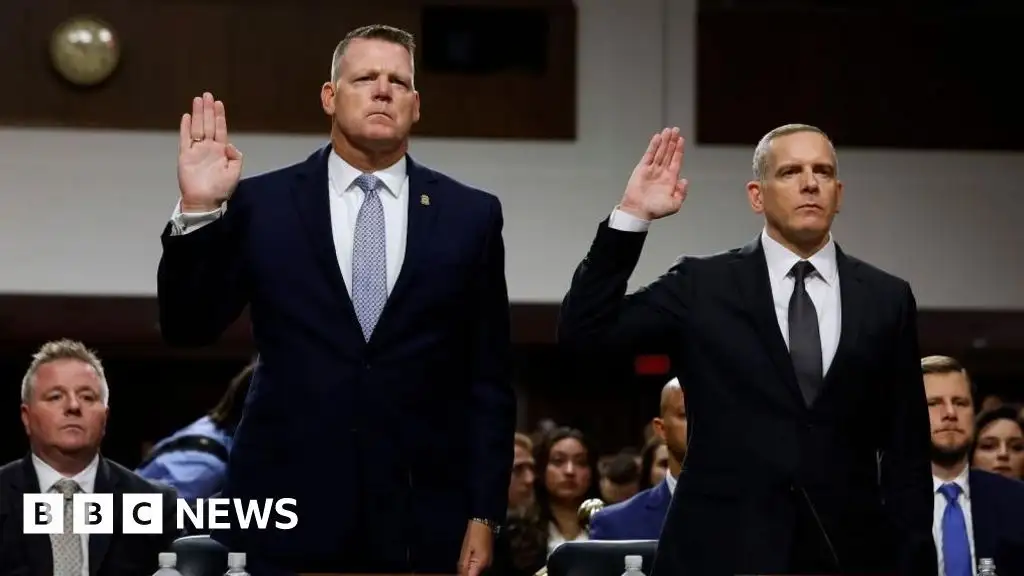
Director Kim Rowe has testified before congressional committees, acknowledging the mental toll these events have taken on him and his agents.
The agency is reportedly planning reforms to internal communication and coordination with local police before and during events.
Investigators have reportedly found a social media account that may be tied to Thomas Crooks, the rally shooter, potentially offering insight into his views.
Conclusion
The Secret Service is facing intensified scrutiny following two high-profile incidents. The fatal shooting at Mar-a-Lago, while involving an armed individual breaching a secure perimeter, is being investigated. More significantly, the assassination attempt on former President Trump has revealed what appear to be systemic failures in communication and security protocols, as detailed in multiple reports. These findings have led to leadership changes and a stated commitment to reform. The agency's own analysis of mass casualty attacks underscores the complexity of threats and the prevalence of stressors among individuals who engage in such violence. The full impact of these reviews and any subsequent disciplinary actions or policy changes remain subjects of ongoing observation.
Sources
AP News: Armed man shot and killed after entering secure perimeter of Mar-a-Lago, Secret Service says. https://apnews.com/article/secret-service-president-trump-af8b23c318e2d7709d7b4a0105f8f516
CBS News: The Secret Service analyzed 173 mass casualty attacks. Here's what they found. https://www.cbsnews.com/news/secret-service-analysis-173-mass-casualty-attacks/
BBC News: Trump shooting: Five things we learned from Secret Service boss. https://www.bbc.com/news/articles/cw4yz20dekjo
USA Today: What went wrong? How did Secret Service allow shooter to get so close to Trump? https://www.usatoday.com/story/news/politics/elections/2024/07/14/was-trump-shooting-secret-service-fail/74400138007/
Globalnews.ca: Trump rally shooting saw multiple U.S. Secret Service failures: report - National | Globalnews.ca. https://globalnews.ca/news/10766480/trump-july-assassination-attempt-secret-service-report/
BBC News: Report finds Secret Service failures during Trump assassination attempt. https://www.bbc.com/news/articles/c23k0d09d4do
AOL / AP News: Secret Service report offers new details on failures during Trump assassination attempt. https://apnews.com/article/secret-service-trump-rally-shooting-butler-police-f0e07ef8e86b7f0aa699fde3b7eee133