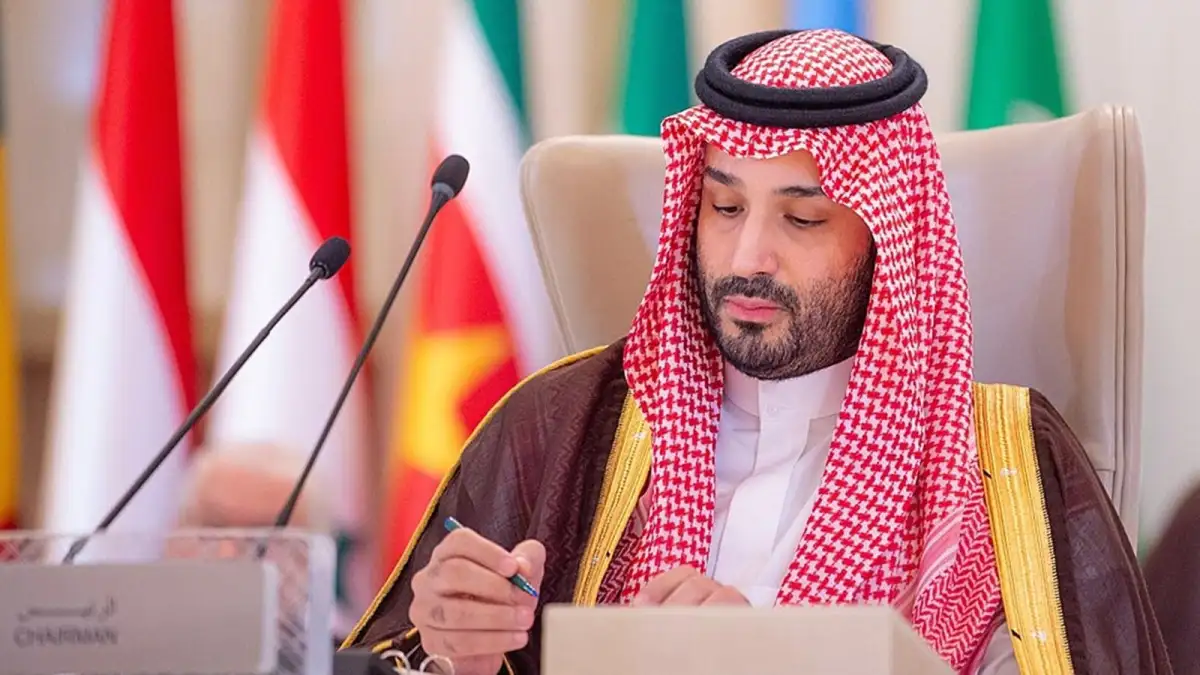
Recent reports reveal a significant pivot in Saudi Arabia's stance regarding the ongoing conflict with Iran, with Crown Prince Mohammed bin Salman now reportedly urging President Trump to intensify military action and pursue regime change. This marks a stark departure from earlier positions where the kingdom, alongside other Gulf states, had privately advised against war, advocating instead for negotiations.

Diplomatic sources now indicate Saudi Arabia is pushing the United States to lift its naval quarantine of Iranian ports and recommit to direct engagement, a notion seemingly contradicted by earlier calls for a more forceful approach. This apparent contradiction highlights a complex and evolving regional dynamic, where stated policies and private counsel appear to diverge.
A Double-Edged Sword: Calls for Escalation and Caution
While some officials and commentators suggest Saudi Arabia's previous restraint has dissolved, with a belief that Iran must be "defeated on the battlefield," the kingdom's actual policy appears to be veering towards caution. This shift is complicated by Iran's retaliatory drone strikes on Saudi targets, including a recent attack on an oil refinery in Yanbu.
Read More: UK Minister Kanishka Narayan Looks at Australia's Online Safety Rules
Conflicting Signals: Despite acknowledging attacks on its soil, Saudi Arabia has not overtly called for increased bombing. This suggests a delicate balancing act, possibly driven by concerns over its own Red Sea export routes and the potential for further instability.
Broader Gulf Support: Regional leaders, broadly speaking, appear to support US efforts in the conflict, with Saudi Arabia and the United Arab Emirates reportedly leading the charge for increased military pressure on Tehran.
Behind the Curtain: Strategic Calculations and Regional Balance
The underlying motivations for Saudi Arabia's apparent shift are multifaceted. Reports suggest the Crown Prince views the current conflict as a critical juncture for fundamentally reshaping the regional balance of power, with a preference for aggressive military options, including targeting energy infrastructure.
Regime Change Aspiration: Privately, Mohammed bin Salman is said to be encouraging President Trump to pursue the downfall of the Iranian regime, a stance that erases recent Saudi efforts towards diplomatic rapprochement with Iran.
Fears of Chaos: Analysts suggest that while Israel might accept a weakened or unstable Iran, Saudi Arabia harbors anxieties about a failed Iranian state, which could unleash regional chaos and empower militias, posing direct security risks to Gulf nations.
Active Player: The emerging picture portrays Saudi Arabia not merely as a passive observer but as an active strategic player influencing Washington's approach to the Iran conflict, having reportedly lobbied for escalation even before the war began.
Background
The United States has been engaged in a military campaign against Iran, a situation that has seen regional allies, including Saudi Arabia and the UAE, grappling with the implications. While some Gulf states initially urged restraint, recent events and intelligence reports suggest a recalibration of strategies, with Saudi Arabia now appearing to champion a more aggressive posture. The conflict's origins and the various international and regional responses continue to unfold, creating a volatile geopolitical landscape.