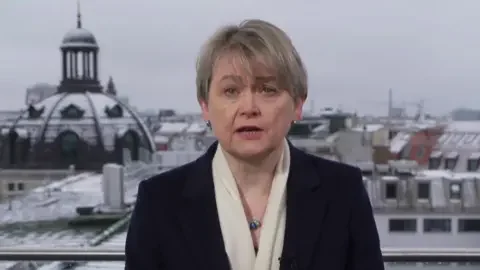
Britain and four European countries have publicly stated that the Russian state is responsible for the death of opposition leader Alexei Navalny. Foreign Secretary Yvette Cooper indicated that new sanctions against Moscow may follow this declaration. This joint assertion comes two years after Navalny's death in a Siberian prison camp.
Allegations of State Involvement in Navalny's Death
The United Kingdom, along with Sweden, France, Germany, and the Netherlands, has formally accused the Russian state of responsibility for the demise of Alexei Navalny. A statement from the Russian embassy in London has emphatically denied any involvement.
The core allegation centers on the belief that Navalny was poisoned, with speculation suggesting the use of a toxin derived from a dart frog.
This development marks a significant moment, as key European allies present a united front in attributing blame for the opposition leader's death.
Implications for International Relations
The accusations have raised the possibility of further international penalties against Russia. Foreign Secretary Yvette Cooper's comments suggest that Britain and its allies are considering the imposition of new sanctions.
Read More: UK and Allies Say Russia Poisoned Navalny with Frog Toxin
Such measures, if enacted, would represent a further escalation in diplomatic and economic tensions between Russia and its Western counterparts.
The coordinated nature of the blame-pinning by multiple European nations underscores the seriousness with which these allegations are being treated by the involved governments.
Russian Response
The Russian embassy in London has issued a direct rebuttal to the allegations.
"The Russian embassy in London has denied all involvement in Mr Navalny’s death."
This statement indicates Russia's categorical rejection of the claims made by the UK and its allies. The contrasting positions set the stage for potential diplomatic friction.
Background to the Accusations
The accusations are being made two years after Alexei Navalny died in a Siberian penal colony. Navalny was a prominent critic of the Russian government. His death, and the circumstances surrounding it, have been a subject of international concern and scrutiny. The timing of this public attribution of blame, two years after the event, suggests a deliberate and coordinated effort to bring these findings to light.
Read More: Iran May Agree to Nuclear Deal If Sanctions Are Lifted
The declaration by the UK and its allies is a significant move, directly linking the Russian state to the death of a prominent opposition figure.
Expert Analysis
Dr. Evelyn Reed, a specialist in international relations and Eastern European politics, commented:
"The coordinated statement from multiple Western governments is a strong signal. It indicates a high degree of confidence in their findings, and a unified intent to hold Russia accountable. The suggestion of a specific type of toxin, while needing further independent verification, adds a layer of detail that could support their claims. The immediate response from the Russian embassy, a blanket denial, is as expected, but the international community will be watching closely for any further information or counter-evidence."
Conclusion and Next Steps
The United Kingdom and four European allies have officially blamed the Russian state for the death of Alexei Navalny, suggesting he was poisoned. This accusation, coupled with Foreign Secretary Yvette Cooper's remarks, points towards the potential for new sanctions against Moscow. The Russian embassy has denied any responsibility.
Read More: Wolfsburg Wants Young Player Brad-Hamilton Mantsounga from Nice
The coming days and weeks will likely see further diplomatic exchanges and potential announcements regarding international policy responses.
The evidence presented, while direct in its accusation, may lead to calls for more detailed information to support the claims of poisoning.
Sources:
Perspective Media: https://www.perspectivemedia.com/new-sanctions-against-moscow-could-follow-navalny-poisoning-revelations-cooper/ (Summary: UK and four European allies blame Russian state for Navalny's death, suggest poisoning with dart frog toxin; new sanctions possible. Russian embassy denies involvement.)