Robocrop, a name associated with sophisticated agricultural automation, appears across multiple contexts, primarily focusing on robotic systems designed for tasks like fruit picking and weed removal. The technology aims to address issues of labor shortages and improve efficiency in farming operations, with specific applications for delicate crops like raspberries.
Automated Harvesting and Precision Agriculture
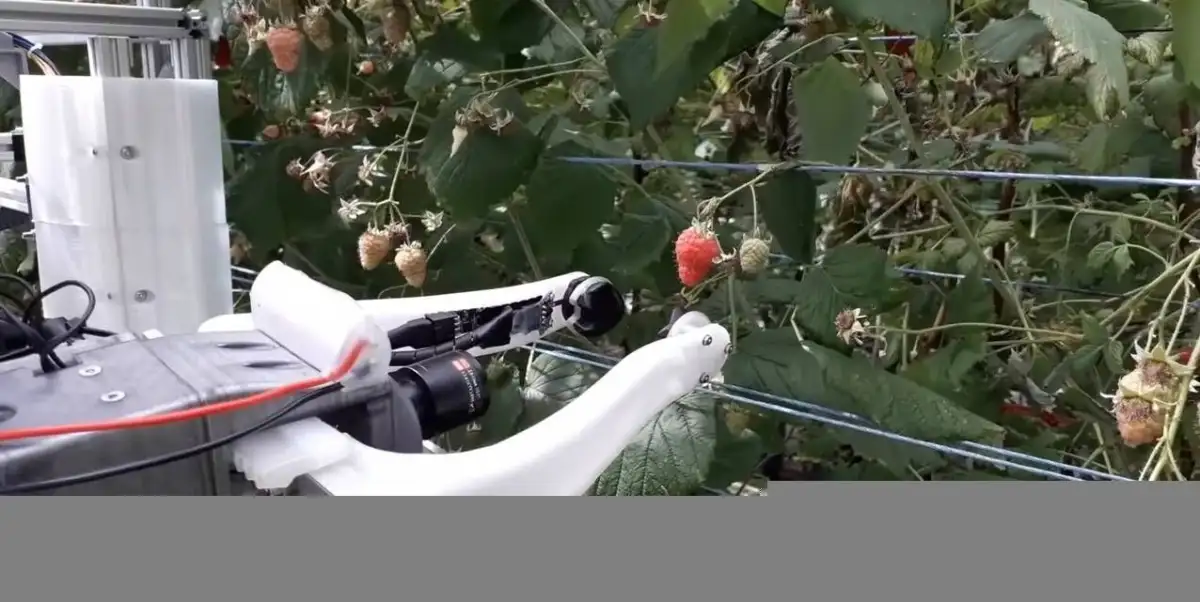
The 'Robocrop' moniker is prominently linked to Fieldwork Robotics, which has developed an automated raspberry-picking robot. This machine, also nicknamed Fieldworker 1, utilizes advanced detection capabilities to identify ripe berries and employs specialized grippers to harvest them delicately. The system is designed to move along rows of bushes, picking multiple berries simultaneously and placing them into punnets. The latest iterations of this technology are undergoing field testing with major growers, indicating a move towards commercial deployment.
The robot's capacity is estimated at 25,000 raspberries per day, significantly more than a human worker, according to manufacturer Fieldwork Robotics in partnership with Hall Hunter.
This development is occurring amidst challenges in the agricultural sector, including rising labor costs and worker shortages, particularly in the UK, exacerbated by factors like Brexit.
Fieldwork Robotics is also exploring adaptations of its technology for other soft fruits like blackberries.
Another facet of 'Robocrop' technology involves Garford Farm Machinery's Robocrop InRow Weeder. This system uses video image analysis to identify individual plants and mechanically remove weeds from both inter-row spaces and directly between crop plants.
Read More: New Wheat Makes Bigger Starch for Food and Industry
It is designed for transplanted crops such as lettuce and cabbage, and generally where plants are spaced regularly with clearly separated foliage.
The system achieves high speeds, capable of processing up to 4 plants per second per row, with specialized models offering even greater throughput.
Requirements for tractor power and hydraulic systems vary based on the width and configuration of the weeder.
Broader Interpretations and Divergent Applications
The term 'Robocrop' has also surfaced in less conventional applications, suggesting a fluidity in its usage. One instance points to a cannabis strain named Robocrop, a sativa-dominant hybrid known for its tall growth and high indoor yield potential, described as a suitable "daytime strain" with minimal body stone.
In other discussions, "Robocrop" appears in contexts related to discussions on academic pursuits versus industry, and the nature of work and compensation, as seen in comments on platforms like Hacker News. These conversations touch upon personal time allocation, creative endeavors, and the conditions of employment, extending the semantic reach of the term beyond purely mechanical operations.
Read More: Chrome mimeHandler API lets extensions handle file types
A passing reference in an article suggests a connection to discussions about the economics of innovation and how foreign entities may not be adequately compensating for research and development originating in the United States, particularly within the biopharmaceutical sector. This highlights how the term might be colloquially, or perhaps erroneously, applied in discussions about technological progress and its financial implications.
Technological Evolution and Research
The development of these 'Robocrop' technologies is rooted in ongoing research. The robotic harvesting systems, for example, leverage 3D cameras and machine learning algorithms to discern ripeness and handle produce gently. The Slashdot and Hacker News references point to publications in journals like Smart Agricultural Technology, indicating a foundation in academic and applied scientific research. These efforts are part of a wider trend in 'reaping melting-bots' or automated agricultural machinery appearing globally.
Read More: Karnataka requests higher Totapuri mango limit for farmers in April 2026
The drive towards these automated solutions is partly fueled by a desire to raise productivity in sectors where growth has lagged.
The history of the term’s usage can be traced back to discussions on video processing and signal adjustments, as indicated by forum posts from 2013 regarding RoboCrop v1.13. This suggests a longer lineage of the name associated with technical applications, albeit in very different domains.