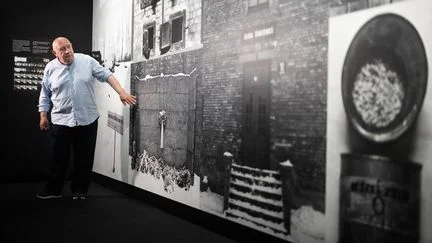
Raymond Depardon, a filmmaker and photographer with a career spanning decades, has built a reputation for his understated yet impactful approach to documenting human experiences. His work often centers on French society, exploring themes of power, mental health, and everyday life with a keen observational eye. A retrospective of his films is scheduled to run in France from late 2025 through Spring 2026, highlighting his significant contributions to documentary cinema.
Genesis of a Visual Storyteller
Born on a farm in rural France, Depardon's journey into visual arts began in his teenage years. His early experiences in photography laid the groundwork for a career that would eventually lead him to become a war photographer and a co-founder of the Gamma photo agency in the 1960s.
Depardon's preferred equipment, such as Leica M series cameras, reflects a deliberate choice for tools that are both simple and reliable, aiding his aim for unobtrusive observation.
His rural upbringing provided his initial visual landscape, a setting that he views as foundational to his perspective.
Capturing the Nuances of Political Life
Depardon's documentary work has not shied away from the political arena. His filming of political events, such as election rallies, reveals a strategy of observing beyond mere speeches.
Read More: Sayeeda Ali painting workshop in Visakhapatnam on July 4 2026
In documenting a meeting featuring Giscard, Depardon's camera captured not just the candidate's address but also the reactions of the audience.
There is an observation that Giscard, aware of the camera's presence as the film's commissioner, appeared to be asserting his appeal to the crowd for posterity.
The film includes scenes of campaign rituals, like the singing of a campaign anthem, which are presented as ordinary elements of electoral life.
Examining Psychiatric Care Through the Lens
A notable aspect of Depardon's recent work is his unflinching look at the French psychiatric system. His 2017 film, "12 Days," offers a close examination of the legal proceedings that determine a patient's stay in a mental health facility.
The film grants viewers access to hearings where judges decide whether patients, committed involuntarily, will be released or remain for further treatment.
"12 Days" covers the critical 12-day period following involuntary commitment, as mandated by a 2013 law in France.
Each year, approximately 92,000 individuals in France are placed under psychiatric care without their consent, a statistic that underscores the relevance of Depardon's documentary.
The film probes complex issues such as mental health, the dynamics of power, social class, individual agency, and the role of societal institutions.
While respecting patient privacy through pseudonyms and careful sound usage, the documentary offers a deeply empathetic portrayal of these individuals and the decision-making process.
The Artistic Partnership of Depardon and Nougaret
The career of Raymond Depardon is also closely linked with his wife and long-time collaborator, Claudine Nougaret. Her presence often structures his films, providing narrative context and personal backstory.
In some of his projects, Nougaret's voice serves to frame Depardon's journey across France, as he records conversations in a mobile studio.
Her involvement highlights the collaborative nature of his documentary practice.
Expert Analysis of Depardon's Method
Reviewers and critics frequently comment on the deliberate simplicity and observational power of Depardon's films.
"A deceptive simplicity characterises the work of Raymond Depardon." (BFI, 12 Days review)
This simplicity is seen not as a lack of complexity, but as a deliberate choice to allow the subjects and situations to speak for themselves.
The effectiveness of this approach is particularly evident in his films that confront sensitive topics like mental health, where a direct and unadorned style can elicit a profound emotional response.
Conclusion: A Legacy of Observational Power
Raymond Depardon's body of work stands as a testament to the power of restrained observation. From the political sphere to the intimate confines of psychiatric care, his documentaries employ a seemingly simple yet profoundly effective style. His use of reliable, unobtrusive equipment, coupled with a deep understanding of his subjects, allows for an unvarnished portrayal of human experience and societal structures. The upcoming retrospective in France is poised to underscore his enduring influence and the continued relevance of his quiet, yet powerful, witness to modern life.
Read More: Desogestrel Pill Use Linked to Higher Brain Tumor Risk
Sources:
Article 1: Raymond Depardon. (n.d.). Retrieved from https://www.whatcameragear.com/2026/01/raymond-depardon.html
Article 2: Le Monde d'Elodie. (2025, October 30). Avec sa rétrospective, Raymond Depardon nous plonge dans ses documentaires : "Je défendais la lecture de l'image". Retrieved from https://www.franceinfo.fr/replay-radio/le-monde-d-elodie/avec-sa-retrospective-raymond-depardon-nous-plonge-dans-ses-documentaires-je-defendais-la-lecture-de-l-image7555579.html
Article 3: Le discours politique à l’épreuve de l’essai documentaire (1974, un…). (n.d.). Retrieved from https://journals.openedition.org/mots/22486
Article 4: 12 Days review: Raymond Depardon’s heartbreaking insight into psychiatric care. (2017, May 26). Retrieved from https://www.bfi.org.uk/sight-and-sound/reviews/12-days-review-raymond-depardons-heartbreaking-insight-into-psychiatric-care
Article 5: Docs on Disc: A New Boxed Set Spotlights Raymond Depardon. (2019, January 31). Retrieved from https://www.documentary.org/column/docs-disc-new-boxed-set-spotlights-raymond-depardon
Article 6: 12 DAYS. (n.d.). Retrieved from https://icarusfilms.com/if-12days
Article 7: Raymond Depardon Cineaste. (n.d.). Retrieved from https://depardoncineaste.com/en/