New government measures aim to ease deer culling to protect woodlands, newly planted trees, and crops across England. The plan, developed over a decade, seeks to address a growing deer population that causes significant damage. These changes include streamlining licensing for night-time and off-season shooting and potentially altering grant systems that support deer culling. The initiative also involves dedicated deer officers to offer advice and coordinate management efforts.

The growing number of deer in England is attributed to the absence of natural predators and the quick breeding rate of several species, including non-native muntjac, Chinese water deer, fallow, and sika. While red and roe deer are native, all species contribute to the ecological imbalance.

Background and Driving Forces
The current situation in England's woodlands is a result of a burgeoning deer population that is out of balance with the environment.
Read More: England Makes Deer Shooting Easier to Help Woodlands and Farms

Population Growth: Four non-native deer species (muntjac, Chinese water deer, fallow, and sika) have established themselves alongside native red and roe deer. With no significant natural predators, these deer populations have grown unchecked.
Ecological Impact: The high number of deer is causing considerable damage to young trees, mature woodlands, and agricultural crops. This impacts efforts to plant new trees and maintain the health of existing forests.
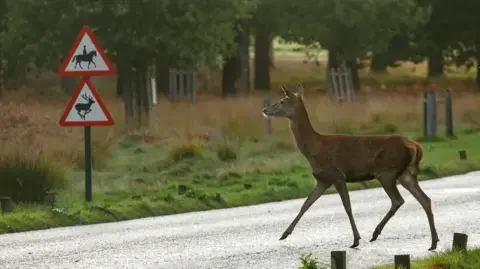
Public Safety Concerns: The deer population also poses a risk to public safety, with over 74,000 deer involved in vehicle collisions annually. These incidents result in fatalities and numerous injuries.
Government Strategy: A 10-year deer management strategy has been unveiled to address these issues. It aims to identify priority areas for culling and make licensed shooting more accessible.
Measures to Facilitate Deer Management
The new government plan introduces several changes to improve the effectiveness and accessibility of deer management.
Streamlined Processes: Licensing procedures for deer culling will be simplified to reduce bureaucracy and allow for quicker action. This includes potentially enabling night-time and closed-season shooting where a clear need exists.
Dedicated Support: The introduction of dedicated deer officers will provide clearer advice and better coordination for landowners and land managers.
Financial Incentives: Changes to grant systems are planned to support landowners undertaking deer culling and management activities.
Research and Data: Efforts are being made to improve the understanding of deer populations through better data collection and a national deer data dashboard. This includes improving deer health surveillance.
Collaborative Approach: The strategy emphasizes working with various stakeholders, including landowners, deer managers, game keepers, and the venison industry.
Opposition and Alternative Views
While the government's plan has support from some groups, animal welfare organizations have raised concerns.
Animal Rights Concerns: People for the Ethical Treatment of Animals (PETA) has stated that culling wild deer will not solve the overpopulation problem. They advocate for ensuring that deer culls benefit local communities in need.
Management vs. Sport: Proponents of the plan, like broadcaster Chris Packham, distinguish the initiative from "sports shooting or hunting," emphasizing it as a necessary form of "culling" and "management" to restore nature.
Expert and Stakeholder Perspectives
Various individuals and organizations have commented on the deer management strategy.
Forestry Commission: The Forestry Commission acknowledges the significant threats posed by deer and grey squirrels to England's woodlands, describing them as vital natural assets. They work in cooperation with partners to enable collaborative, landscape-scale deer management.
Deer Management Qualifications: John Thornley, chair of Deer Management Qualifications, highlighted the development of new qualifications, like the Deer Management Certificate, aimed at those overseeing deer management operations.
Green Campaigner: Chris Packham supports the plan, viewing it as necessary management to restore nature in a country with a depleted landscape.
Implications and Future Considerations
The new deer management strategy aims to achieve several key outcomes.
Ecological Restoration: By controlling deer populations, the plan seeks to reduce damage to woodlands, enabling the restoration of natural habitats and supporting tree-planting initiatives.
Economic Benefits: The initiative is also intended to boost the home-grown timber industry and protect agricultural land.
Sustained Management: The 10-year plan indicates a long-term commitment to managing deer populations to numbers that the ecosystem can sustainably support.
Evidence-Based Decisions: An improved evidence base and data collection are central to ensuring that management decisions are informed and effective.
Sources:
The Guardian: https://www.theguardian.com/environment/2026/feb/19/deer-shooting-rights-cull-legislation-england-woodlands
Farmers Guardian: https://www.farmersguardian.com/news/4525886/government-announces-deer-culling-plan-bid-save-woodland
Forestry Commission Blog: https://forestrycommission.blog.gov.uk/2025/11/27/a-coordinated-effort-how-were-tackling-the-dual-threat-of-deer-and-grey-squirrels/
GOV.UK: https://www.gov.uk/government/publications/management-requirements-for-woodland-supplement-ws1-deer-control-and-management-operations-note-59/ws1-deer-management-plan-guide
CLA: https://www.cla.org.uk/news/new-government-deer-strategy-consultation-opens/
AP News: https://apnews.com/article/uk-deer-culling-wild-venison-hunting-d96122072790bcf070b1b5819d30fdeb
Forestry Journal: https://www.forestryjournal.co.uk/features/forestry-journal-features/23598080.steps-taken-address-englands-deer-problem/