Inquiry Uncovers Claims of Unlawful Directives to Issue Stop-Work Notices
An inquiry in Queensland has heard testimony from safety inspectors alleging they were unlawfully directed to issue stop-work notices, specifically in response to complaints lodged by the Construction, Forestry, Maritime, Mining and Energy Union (CFMEU). These notices, which halt construction activities, were purportedly targeted at companies deemed "out of favour" with the union. Former principal inspector Deborah Dargan testified that a culture under former construction compliance director Helen Burgess prioritized CFMEU complaints. Dargan indicated that the internal pressure to accommodate the union's agenda was more concerning than the external pressure from union officials.
Allegations of Systemic Bias and Pressure
Former inspectors describe a climate where standard procedures and discretion in issuing safety notices were sidelined. "We had a bit of discretion with how we wrote notices and how we dealt with people," stated one inspector, who believed the practice was intended to "slow down the progress of jobs and placing financial pressure on builders." This inspector characterized the actions as "not proper, and we shouldn’t have been doing it." The inquiry, now in its fourth round of hearings, is examining alleged misconduct within the Queensland branch of the CFMEU.
Read More: French Workers Get New Safety Device for Lone Jobs

Former Director at the Center of Investigation
The former director of construction, compliance and field services, Helen Burgess, is reportedly a central focus of the ongoing investigation. Previous testimony before the inquiry linked Burgess to a personal relationship with former CFMEU state president Royce Kupsch. Burgess is also said to be subject to ongoing investigations by the Crime and Corruption Commission. The emphasis of the inquiry, according to Mr. Wheelahan, has shifted to this former director.
The Role of Safety Inspectors and Enforcement Notices
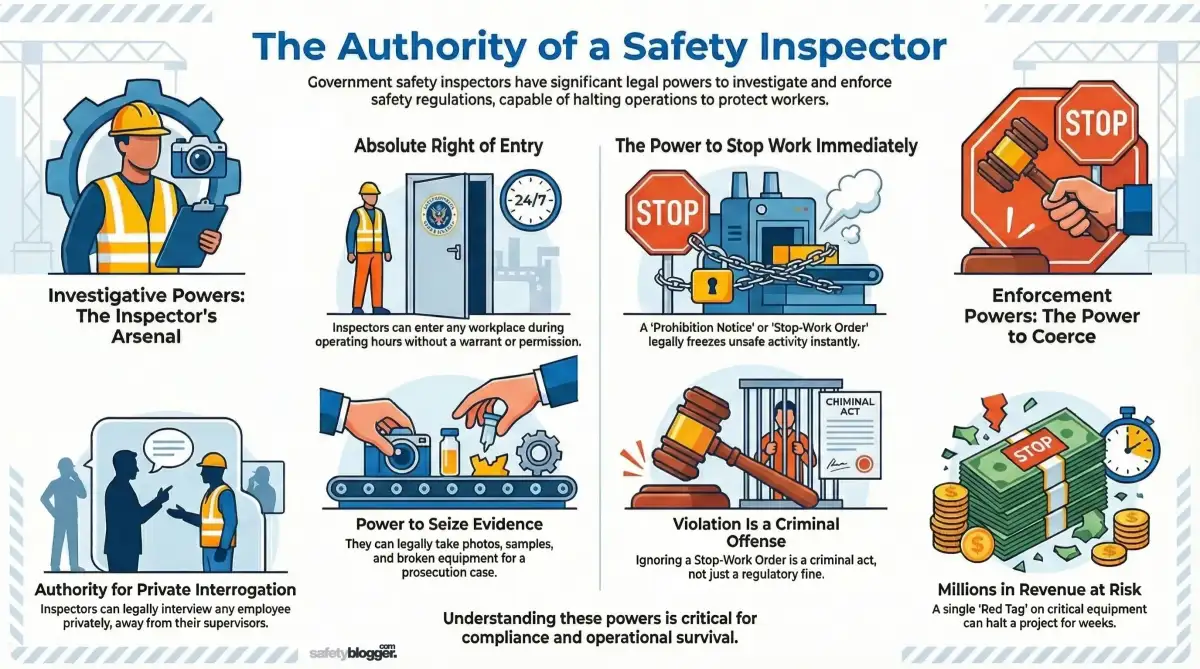
Safety inspectors, described as "the physical manifestation of the State’s police power over industry," are empowered to issue enforcement notices. These include 'improvement notices' and 'prohibition notices'. A 'prohibition notice' is a serious enforcement tool that takes immediate effect, requiring the cessation of specified activities posing a risk. Stop-work notices are a critical component of workplace safety enforcement, designed to address immediate dangers to worker welfare. Without proper authorization, work should not recommence until officially lifted.
Read More: Minister denies children sleep on office floors in Queensland 2026
Broader Context of Safety Enforcement
In other jurisdictions, safety regulators issue a range of enforcement actions. For example, the UK's Health and Safety Executive (HSE) can issue 'Notices of Contravention' (NOCs) for potential breaches of health and safety law. Past cases highlight severe consequences for companies facing enforcement, including significant fines and even custodial sentences for individuals involved in safety failures. The HSE has a history of fining companies after incidents involving fatalities and serious injuries stemming from falls from height, inadequate PPE, and improper equipment use. Notably, major contractors can rarely face prohibition notices, making their alleged issuance to specific sites a point of concern.