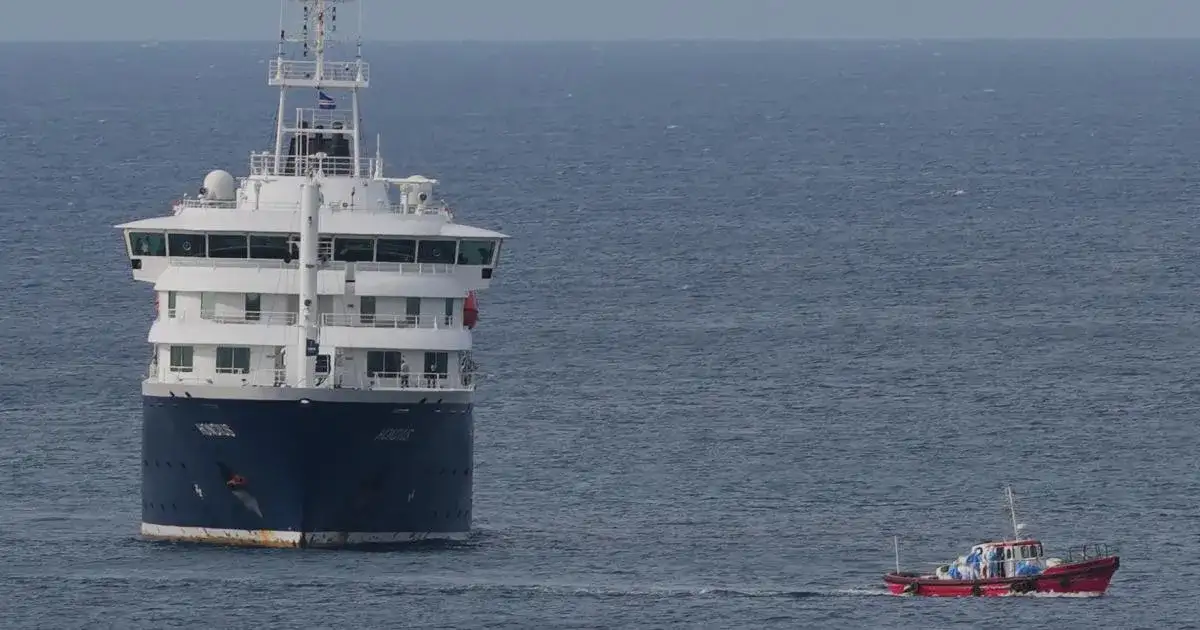
The MV Hondius, a cruise ship navigating the Atlantic, finds itself at the center of a grim narrative involving hantavirus. Confirmed cases and multiple deaths have prompted an international response, yet the World Health Organization (WHO) is actively tempering fears of a widespread pandemic, stating emphatically, "this is not the next COVID."
Key facts establish the stark reality of the situation:
Confirmed Cases and Deaths: South African and Swiss authorities have identified the Andes strain of hantavirus in passengers evacuated from the ship. Reports indicate at least three deaths directly linked to the outbreak, with one body remaining onboard as the vessel heads to Spain’s Canary Islands.
Passenger and Crew Status: Approximately 150 individuals, comprising passengers and crew, remain on the MV Hondius. While initial reports suggested those still onboard were asymptomatic, subsequent evacuations indicate varying degrees of illness and concern.
International Response: Several countries are involved in managing the fallout. Patients have been evacuated to the Netherlands, while others were transferred to South Africa. Contact tracing is underway, with authorities attempting to track down passengers and crew who disembarked at various ports, including St. Helena and flights to Europe.
Operator's Actions: Oceanwide Expeditions, the ship's operator, has stated that safety and well-being are priorities. They maintain that proper procedures were followed after the initial death, which was then considered an "isolated" case with no initial evidence of contagion.
Unraveling the Outbreak's Trajectory
The timeline of the outbreak appears complex, with the first death occurring on April 11th. Initially, the cause was unknown, and passengers were reportedly informed that the deceased individual was "not infectious." However, the situation escalated as more cases emerged and tests confirmed the presence of the Andes hantavirus.
The Andes virus strain is notable for its potential for human-to-human transmission, a factor that experts believe is driving this particular outbreak. While rare, previous instances of person-to-person spread have been documented, leading to heightened scrutiny of this event. Researchers are actively investigating the mechanisms of transmission in this confined environment.
Read More: New Health Checks for Workers Over 40 Start in India
A significant complication for authorities is the number of people who disembarked the ship prior to the full extent of the outbreak being understood. Roughly 30 guests left the vessel at St. Helena on April 24th. Efforts are now focused on tracing these individuals, including a KLM flight attendant who has reportedly been hospitalized with symptoms after potentially being exposed to an infected passenger on a flight from Johannesburg.
The Cruise Ship as a Microcosm
The MV Hondius, designed for expeditions, now serves as an unwilling laboratory for understanding hantavirus dynamics in an unusual setting. The isolated nature of a cruise ship, combined with a pathogen capable of human-to-human spread, presents a unique scenario for public health officials and researchers.
While the WHO emphasizes that hantavirus outbreaks are distinct from COVID-19 in their transmission patterns and scale, the confirmed deaths and the international effort to contain potential further spread underscore the seriousness of the situation. The focus remains on careful monitoring, contact tracing, and providing medical care to those affected, all while attempting to quell broader pandemic anxieties.
Read More: Hantavirus on MV Hondius: Ship Diverts to Canary Islands After 3 Evacuations
Background on Hantavirus
Hantaviruses are a family of viruses carried by rodents. While most transmissions occur through rodent droppings, urine, or saliva, certain strains, like the Andes virus, can spread directly between humans. Symptoms typically appear one to eight weeks after exposure and can range from mild flu-like illness to severe respiratory distress, known as Hantavirus Pulmonary Syndrome (HPS), which can be fatal. There is no specific vaccine or cure, but supportive medical care is crucial for those who develop severe illness.