Russian President Vladimir Putin’s two-day visit to Beijing, beginning Tuesday, highlights China's complex dance between Moscow and Washington. The trip, occurring shortly after U.S. President Trump's summit in the Chinese capital, underscores Beijing's effort to maintain a precarious equilibrium in its international relationships.

==Xi Jinping* has articulated the necessity for both nations to reinforce and protect their "shared interests," a phrase carrying significant weight given the current geopolitical climate. For Russia, currently facing international isolation due to the conflict in Ukraine, China has emerged as a crucial economic lifeline. Beijing has demonstrably increased its purchases of Russian oil and gas and, crucially, has continued to supply high-tech components vital for Russia's weaponry, largely ignoring Western demands to cease these transfers*.
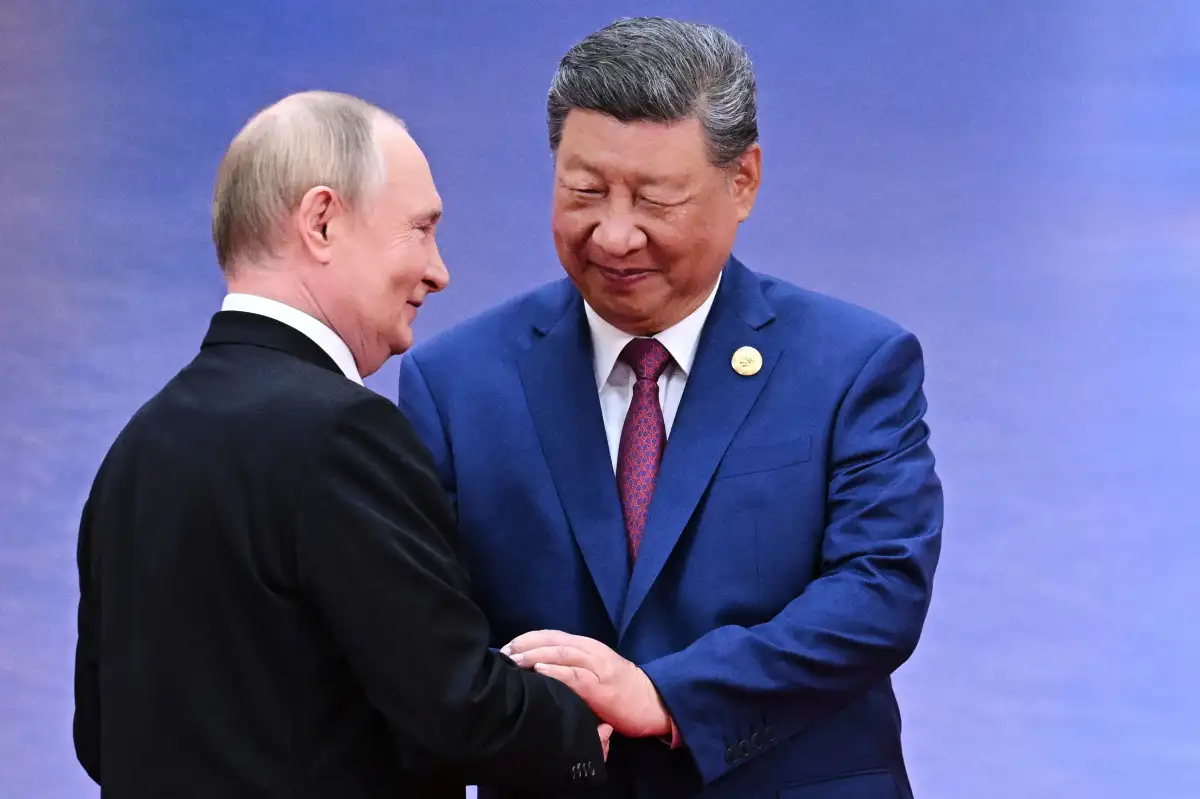
Moscow, in turn, views China's engagement with the United States as a welcome element contributing to global economic stability. Kremlin spokesman Dmitry Peskov indicated that Putin’s presence in China would facilitate direct updates and exchanges of views regarding Beijing’s ongoing discussions with the U.S.
Read More: US supports Pakistan border strikes against Taliban as of April 2026
Strategic Ambitions and Economic Realities
The visit is drawing considerable attention as China navigates its strategic partnerships. Analysts suggest Beijing's objective is multifaceted: to cultivate stable relations with the West, maintain its "strategic trust" with Moscow, and preserve enough diplomatic flexibility to be perceived as an impartial global power capable of engaging with all parties. This approach allows China to manage its economic reliance on the West while simultaneously deepening its ties with Russia, its primary trading partner. The reinforcement of the Russia-China partnership, which has visibly strengthened in recent years, appears to be a key subtext of Putin's presence.