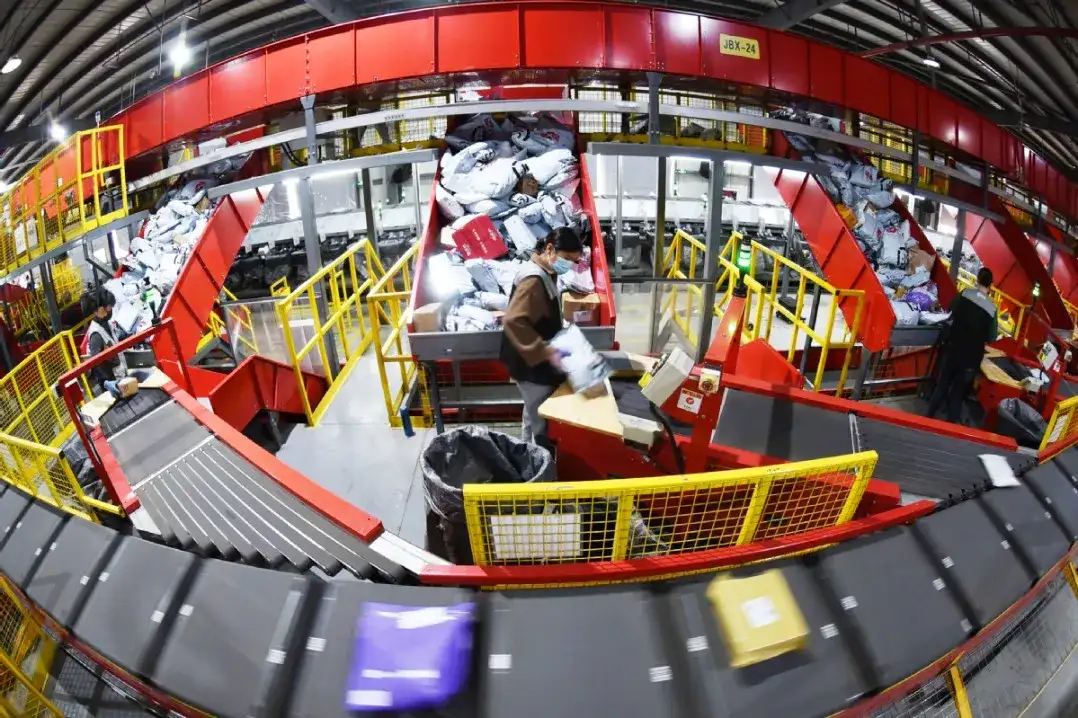
China's economy registered a GDP of 140.19 trillion yuan (approximately 20.01 trillion U.S. dollars) in the year ending 2025, fulfilling its growth targets and offering a semblance of stability amidst a turbulent global climate. The fourth quarter of that year saw a 4.5 percent expansion year-on-year, with a 1.2 percent quarter-on-quarter growth. This performance cemented China's standing as the world's largest manufacturing hub for the sixteenth consecutive year.
Sectoral Performance and Shifting Dynamics
Total retail sales of consumer goods crossed the 50 trillion yuan mark, a 3.7 percent increase from the prior year. This sustained robust consumer spending underscores China's significant position in global retail markets. A notable segment of industrial output, specifically equipment manufacturing and high-tech manufacturing, accounted for 36.8 percent and 17.1 percent, respectively, of the value-added industrial output. This points to a continued emphasis on advanced industrial capabilities.
However, recent data from December 2024, as indicated by the Caixin manufacturing purchasing managers index, suggests a slowdown. The index dipped to 50.5 from 51.5 in November, falling short of economists' predictions. While a reading above 50 still signifies growth, this deceleration signals a weakening momentum. This slowdown appears linked to trade challenges and global uncertainties, with falling export orders prompting manufacturers to resort to price cuts to stimulate sales.
Read More: Goldman Sachs predicts 15 million US jobs lost to AI by 2036
Geopolitical Undercurrents and Future Outlook
The limited immediate impact of geopolitical turbulence, such as the recent US-Israeli attack on Iran, on China's economy has been observed. China's approach prior to these events seemed to be one of patience, focusing on labor market support, gradual income increases, and fostering consumer confidence. The nation's cost advantages and relative energy stability might allow its firms to capture market share even as global demand softens.
Despite these external pressures, Chinese leaders may opt for a period of policy observation before enacting significant changes. The substantial contribution of consumption to China's GDP means even minor improvements in this area could counterbalance weaknesses elsewhere in the economy. The long-term economic outlook remains under scrutiny, with potential stimulus measures being a subject of discussion, even as the President expresses optimism.
Read More: China Ethnic Unity Law starts July 1 2026 for all citizens
Background Context
The reports indicate a nuanced economic picture for China. While headline figures from 2025 reflect growth and stability, the deceleration in manufacturing activity in late 2024 and early 2025, coupled with persistent global uncertainties, suggests that the nation's economic trajectory is subject to considerable external and internal pressures. The emphasis on high-tech and equipment manufacturing continues, but the broader industrial sector is showing signs of strain from reduced export demand.