


The Prime Minister's Office (PMO) has moved from its long-standing location in South Block to a new complex named Seva Teerth. This transition marks a significant shift in India's governance infrastructure, with South Block being repurposed into the Yuge Yugeen Bharat National Museum. The move consolidates key executive offices into a single location, aiming for improved coordination and efficiency.
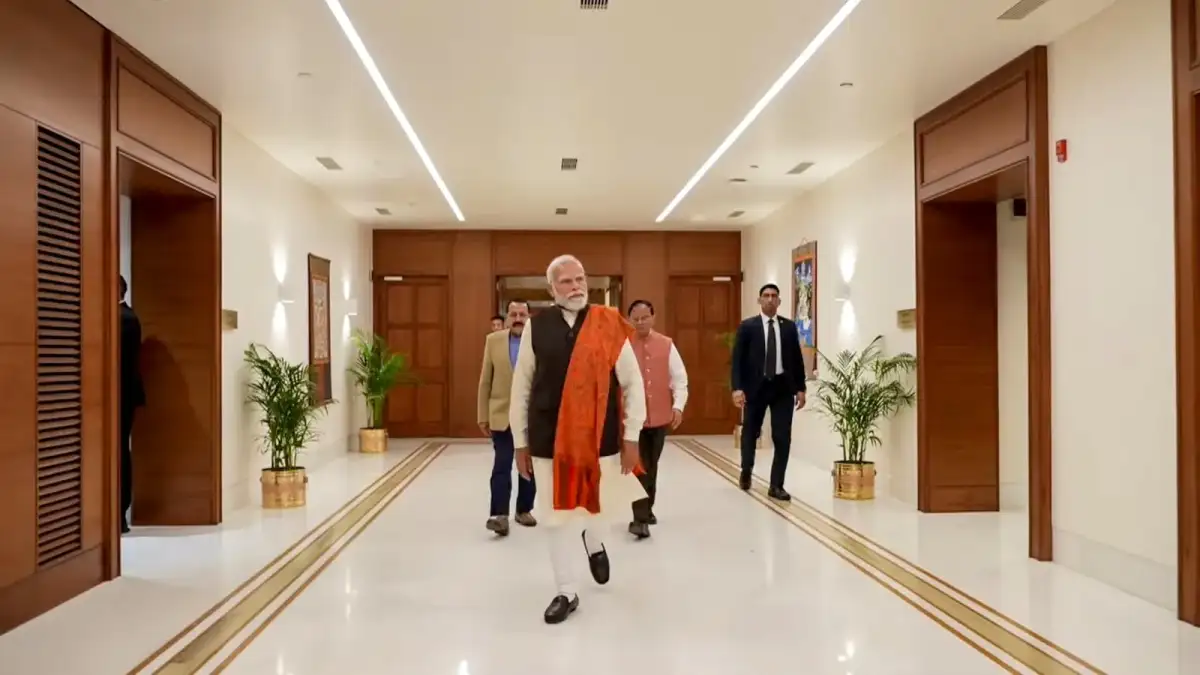
South Block, a building that has housed India's central governance for nearly 80 years, will undergo a transformation. It is set to become home to the Yuge Yugeen Bharat National Museum, which is described as the world's largest museum on Raisina Hill. This new museum is envisioned to document over 5,000 years of Indian civilisational history, featuring a vast collection of artefacts.

New Governance Hub Established at Seva Teerth
The newly inaugurated Seva Teerth complex is designed to house critical executive functions under one roof.
Read More: PM Modi Cuts Convoy Size By Half To Save Fuel

Seva Teerth One will be the new office for the Prime Minister's Office (PMO).
Seva Teerth Two will accommodate the Cabinet Secretariat.
Seva Teerth Three will house the National Security Council Secretariat and the office of the National Security Advisor.
This consolidation aims to enhance coordination on sensitive matters and streamline governance. The renaming of the complex from Executive Enclave to Seva Teerth signals an emphasis on service-oriented governance.

South Block to Transform into a National Museum
The historic South Block is slated for a significant change in its function.
It will be converted into the Yuge Yugeen Bharat National Museum.
The museum is planned to be the world's largest on Raisina Hill.
It is designed to showcase over 5,000 years of Indian history, with an estimated 80,000 to 100,000 artefacts.
These artefacts will be drawn from national collections and repatriated items.
This transformation suggests a shift from a centre of executive power to a public repository of national heritage.
Seva Teerth: Modern Infrastructure and Operational Changes
The Seva Teerth complex represents a modern approach to government office design.
It has been built from scratch, incorporating advanced features such as encrypted communication systems, robust cybersecurity frameworks, and integrated security architecture.
This is a departure from South Block, which was adapted over time.
Prime Minister Modi noted that the new complex is "more connected to the ground" and designed to be "effective and inspiring."
The new buildings are also expected to reduce government expenditure on office rent and logistics.
Implications of the Move
The relocation of the PMO to Seva Teerth signifies a physical and potentially cultural shift in India's governance landscape.
The move from the colonial-era South Block to a newly constructed complex under the Central Vista project marks a departure from the working culture associated with the older buildings.
The consolidation of key offices aims for greater operational synergy.
The repurposing of South Block into a major national museum highlights a redefinition of the role and symbolism of these historical government buildings.
Expert Analysis
"The move of the PMO to Seva Teerth is a concrete step towards a more integrated and modern governance structure. Consolidating key institutions like the PMO, Cabinet Secretariat, and NSC Secretariat under one roof is expected to foster better inter-departmental coordination and speed up decision-making."— Anonymous government official quoted in Firstpost
"Seva Teerth, built with advanced technological infrastructure, represents India's ambition to align its governance mechanisms with contemporary global standards. The emphasis on service ('Seva') in its naming also points towards a renewed focus on public welfare."— Business Standard analysis
"The transformation of South Block into the Yuge Yugeen Bharat Museum is a commendable initiative to preserve and showcase India's rich civilizational heritage. It allows for a dual purpose: modern governance in Seva Teerth and historical exposition in South Block."— Zeenews report
Conclusion
The inauguration of Seva Teerth and the subsequent move of the Prime Minister's Office mark a new chapter in India's administrative history. The complex consolidates vital government bodies, promising enhanced efficiency and coordination. Concurrently, the historic South Block is set to be reimagined as the Yuge Yugeen Bharat National Museum, preserving and presenting India's vast historical narrative. This dual development reflects a strategic reshaping of the nation's governance and heritage presentation.
Read More: Why Humans Haven't Returned to the Moon Since 1972
Sources
Zeenews: PMO moves to Seva Teerth: Inside the new office and museum transformation, what happens to North & South Blocks?
Summary Context: Focuses on the inauguration of Seva Teerth as the new PMO address and the transformation of South Block into the Yuge Yugeen Bharat Museum.
Firstpost: Seva Teerth: How PM Modi’s new office stands apart from South Block
Summary Context: Details the specific offices housed in Seva Teerth and contrasts it with the operational dynamics of South Block, highlighting the move after 78 years.
News18: From Corridors Of Power To Galleries Of Time: As PMO Moves, What Happens To North & South Blocks?
Summary Context: Elaborates on the Yuge Yugeen Bharat National Museum project and the scale of its planned collection and galleries.
Indian Express: Seva Teerth, Kartavya Bhavan built to fulfil the aspirations of India: PM Modi
Summary Context: Reports on PM Modi's statements regarding Seva Teerth and Kartavya Bhavan, including the expected reduction in government rent expenditure.
India Today: PM Modi inaugurates new office Seva Teerth, says we've got rid of slavery mindset
Summary Context: Covers the inauguration of Seva Teerth as an integrated complex housing key executive institutions and highlights PM Modi's first decisions from the new office.
Business Standard: PMO gets a new address: Seva Teerth more connected to ground, says PM
Summary Context: Discusses the relocation under the Central Vista project, the naming of Seva Teerth and Kartavya Bhavan, and PM Modi's remarks on the new office's connection to the ground.
Swarajyamag: PMO To Move From South Block To Seva Teerth, Signalling Shift In India’s Governance Culture And Power Architecture
Summary Context: Explains the consolidation of governance institutions at Seva Teerth and contrasts its modern infrastructure with South Block's adaptations, highlighting the emphasis on service-oriented governance.


