Government Agencies Requesting Identifying Information for Accounts Criticizing Immigration Enforcement
Recent reports indicate that the Department of Homeland Security (DHS), through U.S. Immigration and Customs Enforcement (ICE), has actively sought to obtain identifying information from social media companies for users posting content critical of ICE operations. This development arises amidst a broader trend of increased scrutiny and alleged suppression of anti-ICE content on various online platforms.
Timeline of Events and Key Actors
The requests from DHS and ICE for user data appear to have escalated in recent months.

October: Meta informed two Instagram and Facebook accounts of requests for information.
Recent Weeks: Several reports emerged detailing social media platforms potentially restricting or flagging anti-ICE content. This includes allegations against TikTok and Meta platforms.
Early February: A European website, "ICE List," which claims to expose U.S. immigration agents, saw its links blocked on Meta's platforms.
Ongoing: DHS continues to outline its use of social media for intelligence gathering and operational awareness.
Read More: Homeland Security Faces Shutdown Over Immigration Rules
Key entities involved include:
Department of Homeland Security (DHS): The overarching federal agency.
U.S. Immigration and Customs Enforcement (ICE): A component of DHS, focused on immigration enforcement.
Social Media Companies: Including Meta (Facebook, Instagram, Threads, WhatsApp), TikTok, and Reddit.
Content Creators and Activists: Individuals and groups posting anti-ICE content.
"ICE List": A website that publishes information about ICE agents.
Social Media Platforms Under Pressure
Multiple social media platforms are reportedly responding to government requests or implementing their own content moderation policies that impact anti-ICE discourse.
Meta Platforms: Google, Meta, and Reddit have, according to government officials, complied with some requests. Meta has explicitly blocked links to the "ICE List" website on Facebook, Instagram, and Threads, citing violations of community standards, including those related to spam and personally identifiable information. Users have reported receiving error messages when attempting to post links to anti-ICE content.
TikTok: Users have reported difficulties uploading or gaining visibility for videos critical of ICE actions, particularly those referencing specific incidents and raids. This has led to concerns about potential suppression of content.
DHS Compliance: Reports suggest that platforms are complying with some government demands, with experts noting they could potentially refuse such requests without a court order.
Government Surveillance and Information Gathering
DHS and its agencies, including ICE and Homeland Security Investigations (HSI), are engaged in extensive social media surveillance activities.
Read More: Why Dylan O'Brien Is Not on Instagram
Overt Engagement: Agents log into social media using official agency credentials, interacting with users while indicating their official presence.
Undercover Engagement: Agents use credentials that do not identify their DHS/CBP affiliation to interact with individuals.
"Masked Engagement": A program reportedly allows agents to use alias accounts to connect with and interact with users on social media.
Data Extraction: HSI extracts data from devices to map social networks, which fuels further investigations and intelligence operations, including tracking individuals for arrest.
Targeting: HSI is accused of exploiting social media information to target vulnerable populations and those speaking out against immigration policies, often based on limited evidence. Memoranda submitted to immigration courts have allegedly relied on social media information, such as online contacts, to support claims of gang affiliation.
Threat Monitoring: ICE has solicited proposals from private companies to monitor the internet, with a focus on social media, for threats, citing an increase in threats against ICE agents.
Concerns Over Free Expression and Accountability
Advocates and users have raised significant concerns regarding the implications of these government actions on free expression and the ability to hold agencies accountable.
Read More: Prime Minister's Office Moves to New Building, Historic South Block Becomes Museum
Chilling Effect: The pressure on tech companies to censor content is seen as making it more difficult to reliably share information about ICE online.
Selective Targeting: Critics argue that the actions selectively target anti-ICE activism, while supporters of the platforms' policies point to rules against doxxing law enforcement as a necessary safeguard against threats to agents.
Lack of Transparency: The scope and accountability of HSI's social media surveillance are questioned, with allegations of overbroad and open-ended data collection.
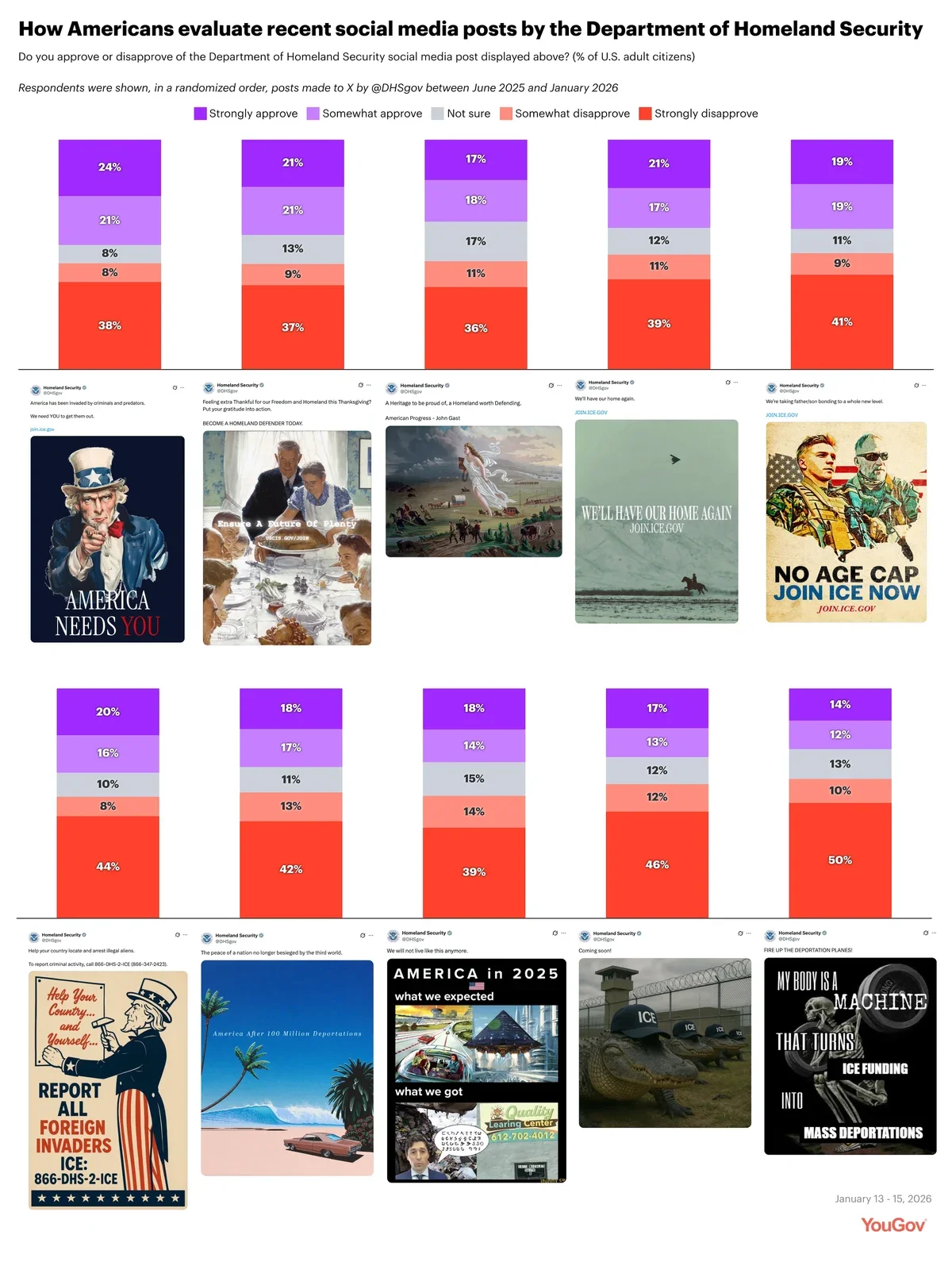
Public Perception: Polls suggest that the public is more likely to disapprove than approve of many Department of Homeland Security social media posts, indicating a potential disconnect between agency messaging and public sentiment.
Conflicting Narratives on "ICE List" and Agent Safety
The "ICE List" website, which claims to have published information on DHS employees, has become a focal point for platform actions and government justification.
Read More: Trump Shares Post Showing Obamas as Apes, Then Deletes It After Criticism

"ICE List" Operations: The website reportedly relies on publicly available data, much of which is shared by the agents themselves. Its creator stated that listings do not include home addresses or phone numbers. He has also cast doubt on claims of soaring violence against agents.
DHS Justification: The agency cites an increase in threats against ICE agents and leadership as a reason for its increased monitoring and requests for user data.
Platform Responses: Meta's blocking of links to "ICE List" is presented as a measure against spam and sharing of personally identifiable information, though the exact rules cited have varied.
Duxing Concerns: Critics of the "ICE List" argue that it could expose agents to doxxing and danger, a concern echoed by supporters of platform moderation.
Expert Analysis on Surveillance and Censorship
Experts and advocates have weighed in on the implications of DHS's social media activities.
Read More: Official Fired Over Missing Blanket, Then Hired Back
"HSI exploits social media information to target vulnerable populations and those speaking out against the administration’s immigration policies, often based on extremely thin evidence." - Brennan Center for Justice Report
"Critics argue the move selectively targets anti-ICE activism, while supporters point to platform rules against doxxing law enforcement as a reasonable safeguard amid rising threats to agents." - Analysis of platform actions
The "masked engagement" strategy has been described by one expert as an "insidious" policy.

Findings and Implications
The available evidence indicates a coordinated effort by DHS and its components, particularly ICE, to monitor and potentially identify individuals expressing critical views of immigration enforcement on social media.
Government Demands: DHS and ICE have made requests to social media companies for user identifying information.
Platform Actions: Social media platforms have responded by blocking links to content deemed problematic, such as the "ICE List," and have been accused of suppressing anti-ICE posts.
Surveillance Techniques: DHS agencies employ various methods, including overt, undercover, and "masked" engagement, to gather information from social media.
Conflicting Claims: While the government cites agent safety and rising threats, critics highlight concerns about free expression, accountability, and the potential for overbroad surveillance targeting dissent.
Read More: Discord Starts New Age Checks After Data Leak
The long-term implications for online speech, the privacy of individuals critical of government policy, and the balance between national security and civil liberties remain areas of significant concern. Further investigation may be warranted into the scope of DHS’s social media surveillance requests and the legal basis for platform compliance.
Sources Used
Article 1: Homeland Security Wants Social Media Sites to Expose Anti-ICE Accounts - Published: 11 minutes ago - Link: https://dnyuz.com/2026/02/13/homeland-security-wants-social-media-sites-to-expose-anti-ice-accounts/ - Summary: Meta notified accounts of data requests; Google, Meta, Reddit complied with some. DHS sought info on anti-ICE Facebook/Instagram accounts.
Article 2: Social Media Platforms Crack Down on Anti-ICE Content Amid Heightened Immigration Tensions - Published: 2 weeks ago - Link: https://www.michaelrcronin.com/post/social-media-platforms-crack-down-on-anti-ice-content-amid-heightened-immigration-tensions - Summary: TikTok faces allegations of suppressing anti-ICE videos. Gavin Newsom's office reviewed potential suppression. Users received error messages citing community standards. Celebrities claimed censorship.
Article 3: ICE List: the small European website exposing US immigration agents - Published: 4 days ago - Link: https://www.theguardian.com/us-news/2026/02/10/ice-list-small-european-website-exposing-us-immigration-agents?CMP=sharebtnurl - Summary: "ICE List" website uses AI and facial recognition. Info verified using public data. Listings do not include home addresses/phone numbers. Creator doubts DHS claims of soaring violence.
Article 4: We read thousands of internal ICE chats. They show how officials make raids go viral - Published: December 23, 2025 - Link: https://www.washingtonpost.com/technology/interactive/2025/ice-social-media-blitz/ - Summary: Top officials wanted more visuals from ICE public affairs. ICE video producer shadowed agents. Public affairs officials participated in operations.
Article 5: ICE's chilling social media methods uncovered as expert slams 'insidious' policy - Published: 8 hours ago - Link: https://www.themirror.com/news/us-news/ices-chilling-new-social-media-1680223 - Summary: DHS expanding undercover social media use, including "masked engagement" with alias accounts. Overt and undercover engagement defined.
Article 6: Social Media Surveillance by Homeland Security Investigations: A Threat to Immigrant Communities and Free Expression - Published: 3 weeks ago - Link: https://www.brennancenter.org/our-work/research-reports/social-media-surveillance-homeland-security-investigations-threat - Summary: HSI conducts overbroad, unaccountable social media surveillance. Data used to map networks and fuel investigations. HSI targets vulnerable populations and critics, using thin evidence.
Article 7: Platforms bend over backward to help DHS censor ICE critics, advocates say - Published: 1 day ago - Link: https://arstechnica.com/tech-policy/2026/02/platforms-bend-over-backward-to-help-dhs-censor-ice-critics-advocates-say/ - Summary: Advocates say platforms are complying with government requests to censor ICE critics. Some lawsuits suggest platforms could refuse demands without a court order. Trump officials targeted users/platforms with censorship demands.
Article 8: ICE Wants to Know If You’re Posting Negative Things About It Online - Published: February 11, 2025 - Link: https://theintercept.com/2025/02/11/ice-immigration-social-media-surveillance/ - Summary: ICE is soliciting proposals to monitor internet threats, focusing on social media, citing increased threats to agents. Criticism of ICE online could lead to scrutiny.
Article 10: How Americans feel about 10 recent Department of Homeland Security social media posts | YouGov - Published: 3 weeks ago - Link: https://today.yougov.com/politics/articles/53938-how-americans-feel-about-department-of-homeland-security-social-media-posts - Summary: Americans are more likely to disapprove than approve of DHS social media posts surveyed. Net approval ratings were negative for all 10 posts.
Article 11: Platforms bend over backward to help DHS censor ICE critics, advocates say - Published: 1 day ago - Link: https://arstechnica.com/tech-policy/2026/02/platforms-bend-over-backward-to-help-dhs-censor-ice-critics-advocates-say/ - Summary: FIRE states people have legitimate reasons to share ICE information. Communities focus on safety or accountability. Pressure on tech companies to shield users from government requests.
Article 12: DHS Is Expanding Domestic Surveillance While Targeting Efforts to Document and Dissent - Published: 3 weeks ago - Link: https://www.freepress.net/blog/dhs-ice-cbp-expanding-domestic-surveillance-targeting-efforts-document - Summary: DHS is expanding domestic surveillance and targeting efforts documenting dissent. Mentions incidents in Minneapolis involving ICE agents. DHS is described as waging an "all-out assault."
Article 7: Meta Is Blocking Links to ICE List on Facebook, Instagram, and Threads - Published: 2 weeks ago - Link: https://www.wired.com/story/meta-is-blocking-links-to-ice-list-on-facebook-instagram-and-threads/ - Summary: WIRED verified links to "ICE List" blocked on Meta platforms. Links still work on WhatsApp. "ICE List" analysis found reliance on publicly shared employee information. Meta gave varying reasons for blocking.


)