Ancient Misidentification Uncovered: Big Cats of Japan Re-evaluated
Recent scientific findings challenge long-held beliefs about the large predators that roamed the Japanese Archipelago during the Late Pleistocene epoch. Fossils previously identified as tigers have now been re-examined and are indicated to be cave lions. This reclassification refines our understanding of prehistoric ecosystems in East Asia and the migratory patterns of these powerful apex predators. The shift in identification suggests that the Japanese islands served as a sanctuary for cave lions, extending their known range and prompting a closer look at the boundaries between lion and tiger territories during this ancient period.
Fossil Evidence Points to Cave Lion Colonization
A study published in the Proceedings of the National Academy of Sciences (PNAS) has brought new clarity to the identity of large cat fossils found in the Japanese Archipelago. For a significant period, these remains were attributed to tigers. However, current research, based on a thorough re-evaluation of morphological and genetic data, indicates a different conclusion.
Read More: Amazon Spider Mimics Fungus, Raising Fears of Fungal Spread

The findings suggest that the large cats present in the Japanese Archipelago during the Late Pleistocene were, in fact, cave lions.
This conclusion arises from studies analyzing fossil evidence and comparing it with known characteristics of both cave lions and tigers.
The research challenges the established view and redraws the prehistoric map for these formidable animals in East Asia.
Northeastern Asia: A Transition Zone for Big Cats
The wider region of Northeast Asia, encompassing areas like northern China, southeastern Russia, and Korea, was historically inhabited by both tigers and cave lions during the Pleistocene. However, the specific identity of the big cats found on the Japanese islands remained a subject of debate until recently.
It is understood that cave lions primarily occupied northern Eurasia.
In contrast, tigers were generally found in regions further south.
The research indicates that tigers present in northeastern China and southeastern Russia show differences, both in form and genetics, when compared to modern tigers, including the Amur tiger. This regional variation complicates a simple geographic division.
Cave Lions: Extending Their Known Territory
The identification of cave lions on the Japanese Archipelago is significant as it pushes the known southern boundary of their distribution during the Late Pleistocene. This discovery offers valuable insights into the ecological dynamics of the time.
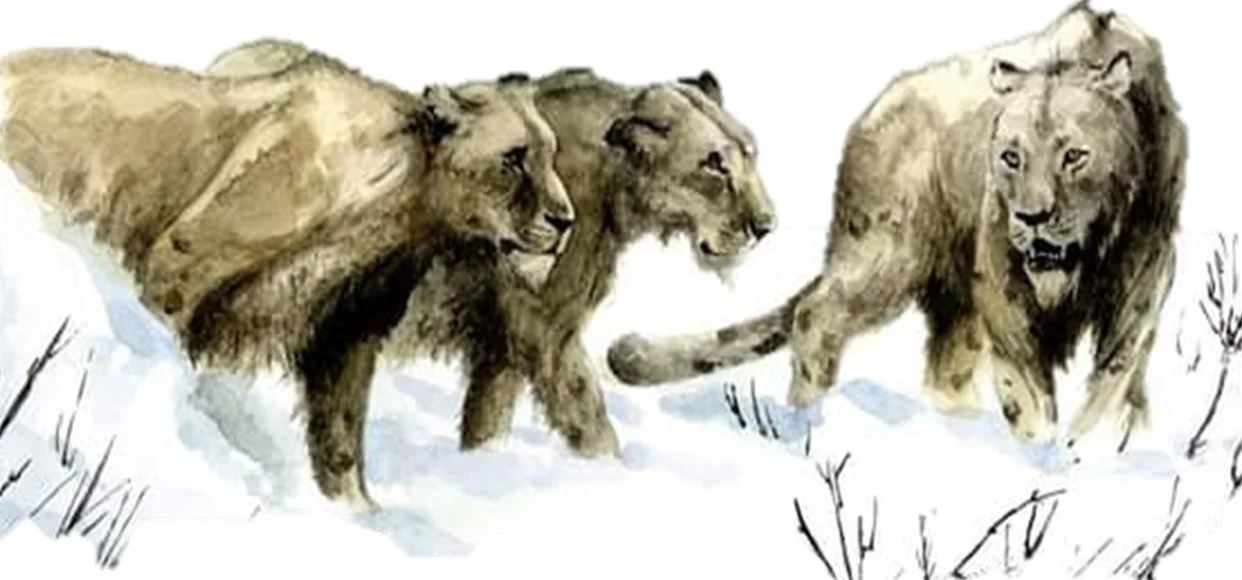
The European, or Eurasian cave lion (Panthera spelaea), evolved in Europe over 500,000 years ago.
Their presence in Japan suggests a broader reach than previously assumed for this species.
This finding also raises questions about the exact nature of the transition zone where lion and tiger populations met and interacted.
Cave Lions and Human Interaction in Prehistory
Beyond their paleontological significance, cave lions (Panthera spelaea) have captured public imagination, appearing in various media depicting prehistoric life. Evidence from elsewhere suggests potential interactions between cave lions and other large fauna, such as cave bears.
Skeletons of adult cave lions found within cave bear dens have led to theories that they may have preyed on hibernating cave bears, sometimes with fatal consequences for the lions.
The broader context of megafauna in Japan around 12,000 years ago indicates a diverse range of large animals, including elephants, mammoths, and various deer species, coexisting before a sudden disappearance.
The Mystery of the Japanese Sea Lion
Separately, historical records confirm the existence and subsequent extinction of the Japanese sea lion (Zalophus japonicus). This marine mammal, distinct from the prehistoric land predators discussed, inhabited the western North Pacific.
Read More: Andrew Carnegie's Philanthropy: How His Wealth Was Made and Given Away

Japanese sea lions are thought to have become extinct in the 1970s.
They were characterized by visible ear flaps, distinguishing them from true seals.
Their decline is attributed to human activities, including commercial capture, which ceased in the 1940s, and their use in traditional medicine.
Expert Analysis on Paleo-Distribution
Dr. Shujin Luo and her colleagues at Peking University published their findings in PNAS, a reputable scientific journal. Their work underscores the importance of re-examining fossil records with modern analytical tools.
"Lions and tigers were widespread apex predators during the Late Pleistocene and integral components of East Asian megafauna. These findings provide evidence that lions, rather than tigers, colonized the Japanese Archipelago during the Late Pleistocene. This finding extends the known range of cave lions in East Asia and refines our understanding of how far south the lion–tiger transition belt shifted during this period."— Dr. Shujin Luo and collaborators (via Peking University School of Life Sciences)
This research serves as a vital update to our understanding of Pleistocene megafauna distribution and the ecological boundaries that existed across Asia.
Conclusion: Rewriting the Paleontological Record
The recent re-evaluation of Late Pleistocene big cat fossils from the Japanese Archipelago indicates a significant shift in scientific understanding. Evidence now strongly suggests that cave lions, not tigers, were the dominant large felids to colonize these islands. This conclusion extends the known geographic range of Panthera spelaea in East Asia and prompts a deeper investigation into the precise ecological and geographic barriers that delineated lion and tiger territories during this era. Future research may involve further genetic analysis of fossil remains and comparative studies of contemporary megafauna to build a more complete picture of these ancient ecosystems. The extinction of the Japanese sea lion, a separate but also significant event in the region's natural history, highlights the impact of human activity on wildlife.
Read More: Farming's New Fiber Optic Sensors Show Soil Structure Damage by Mid-March 2026
Sources Used:
PubMed: Phylogeography of lions (Panthera leo ssp.) reveals three distinct taxa and a late Pleistocene reduction in genetic diversity.
Prehistoric Passage: Late Pleistocene “Tigers” from Japan were Actually Cave Lions
https://prehistoricpassage.com/late-pleistocene-tigers-from-japan-were-actually-cave-lions
Peking University School of Life Sciences: Cave lions predominantly inhabited northern Eurasia, whereas tigers were distributed farther south.
Dinopedia: Panthera spelaea
The Sea: Japanese Sea Lion
One Naturalist: What Really Happened to the Japanese Sea Lion? A Lost Species
David Marinelli: Japanese Sea Lion - Extinct 1974
https://www.davidmarinelli.net/blog/japanese-sea-lion-extinct-1974/
Wikipedia: Japanese sea lion
Know Your Mammals: Japanese Sea Lion (Zalophus japonicus)
https://www.knowyourmammals.com/mammal-identification/japanese-sea-lion-zalophus-japonicus/
Heritage of Japan: Large animals rule until 12,000 years ago
https://heritageofjapan.wordpress.com/pacing-the-paleolithic-path/animal-bounty/
IR School: Paleozoogeography of the cave lion in Yakutia
http://irschool.org/project2paleontology22