Forces from India, Japan, and Indonesia have completed a trilateral naval exercise in the Andaman Sea. The drills, which took place on February 13th, were aimed at boosting cooperation and operational readiness among the participating navies. This event occurred shortly after India assumed command of Combined Task Force (CTF) 154, a multinational training unit operating under the Combined Maritime Forces (CMF).
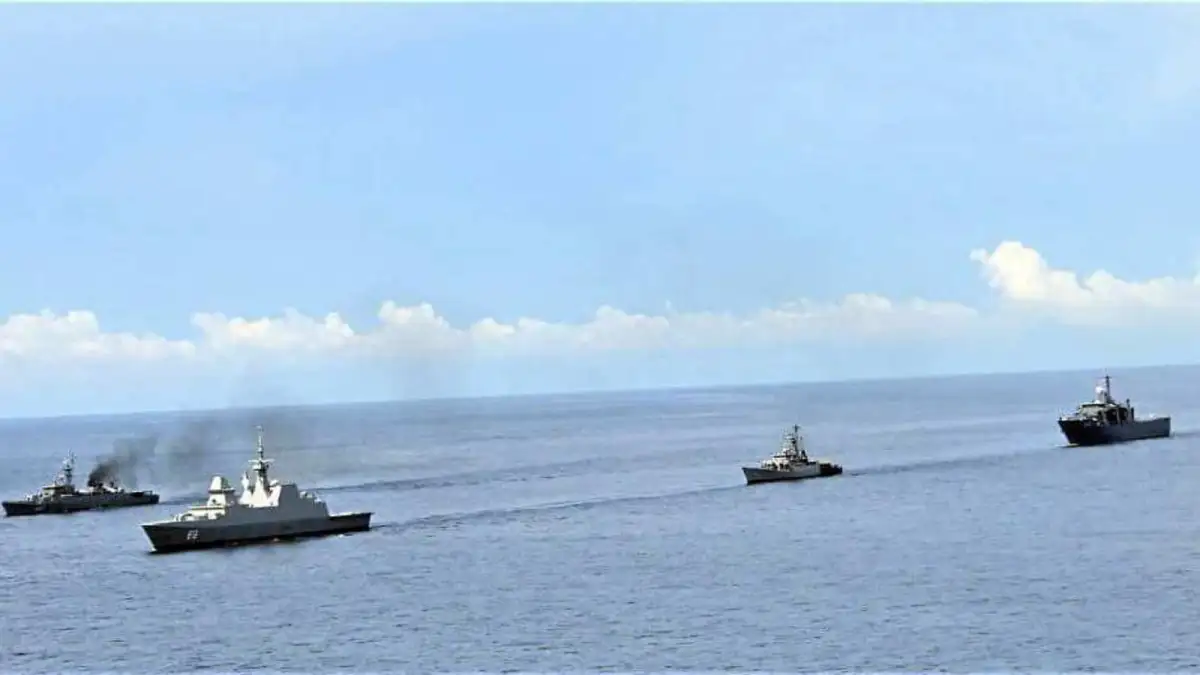
The exercise highlights the growing trend of multilateral naval activities in the Indo-Pacific region, a vital area for global trade and security. The involvement of three key regional players underscores a collective effort to ensure maritime stability and address shared security concerns.
Context and Timeline of Events
The trilateral exercise involving the navies of India, Japan, and Indonesia occurred on February 13th. This event followed closely on Thursday, when the Indian Navy assumed command of Combined Task Force (CTF) 154. Cmde Milind M Mokashi, Shaurya Chakra, of the Indian Navy, formally took over command of CTF 154 from the outgoing Commander of the Italian Navy. CTF 154 is described as a key multinational training task force under the Combined Maritime Forces (CMF).
Read More: India's Defence Ministry approves ₹52,000 crore on Friday for new Army and Navy tech

The stated objectives of the exercise were:
Enhancing combined operational readiness.
Improving interoperability between the navies.
Reinforcing maritime cooperation towards a safe, secure, and stable region.
Evidence of the Exercise
The Indian Navy's Spokesperson shared via a post on X that "Ships from the navies of India, Japan and Indonesia undertook a trilateral exercise in the Andaman Sea on 13 Feb 26, enhancing combined operational readiness, interoperability and reinforcing maritime cooperation towards a safe, secure and stable region."
Multiple news outlets confirmed the exercise took place in the Andaman Sea on February 13th.
The exercise's focus was on enhancing joint operational readiness, improving interoperability, and strengthening maritime cooperation for a safe and stable region.
CTF 154 is noted to operate alongside other CMF task forces, including CTF 150 (Maritime Security), CTF 151 (Counter-Piracy), CTF 152 (Maritime Security in Arabian Gulf), and CTF 153 (Maritime Security in Red Sea).
CTF 154's primary role involves training and capacity building for CMF member nations, conducting regular Maritime Security Enhancement Training (MSET) events.
Strategic Significance in the Indo-Pacific
The Andaman Sea is a strategically important waterway connecting the Indian Ocean and the Pacific Ocean. Its location makes it crucial for regional maritime security and trade routes.

Regional Cooperation: This trilateral exercise signals an increasing willingness among nations in the Indo-Pacific to engage in joint maritime operations. Such collaborations are seen as a measure to bolster collective security in a region with complex geopolitical dynamics.
China's Influence: The exercises occur amidst concerns about China's growing maritime presence and assertiveness in the Indo-Pacific. While not explicitly stated as a direct response, these joint drills can be interpreted as an effort by participating nations to project a united front regarding maritime security and freedom of navigation. Previous naval exercises between India and Japan, for instance, have been noted in the context of China's increasing forays into the Indian Ocean.
Past Multilateral Naval Engagements
India has a history of participating in and conducting various multilateral naval exercises in the region. These past events provide a backdrop for understanding the current trilateral exercise:
India-Japan Maritime Exercises: India and Japan have a series of bilateral exercises, including the Japan-India Maritime Exercise (JIMEX) and participation in the larger Malabar Exercise. In the past, bilateral exercises have involved vessels like the Indian Navy's INS Sukanya and Japan Maritime Self Defence Force's JS Samidare.
Malabar Exercise: This exercise typically involves India, the United States, Japan, and Australia, focusing on interoperability and enhancing capabilities in the Indo-Pacific. Its expansion to include Australia was a significant development in regional maritime security cooperation.
India-Thailand-Singapore Exercises: India has also conducted exercises with Thailand and Singapore in the Andaman Sea, further demonstrating its commitment to regional maritime partnerships.
India-Australia-Indonesia Exercises: A maritime partnership exercise between India, Australia, and Indonesia was held in September 2023, aimed at strengthening their partnership for a stable, peaceful, and secure Indo-Pacific.
Combined Maritime Forces (CMF) Context
The exercise's connection to CTF 154 places it within the broader framework of the Combined Maritime Forces (CMF). CMF is a multinational naval partnership that aims to promote security and stability across the world's largest naval areas of operation.
Read More: Tibetan Permafrost Thaw Releases Ancient Carbon, Risks Climate Tipping Point
CTF 154's Role: CTF 154 specifically focuses on training and capacity building, suggesting the recent exercise might have included elements of skill development and scenario-based training.
CMF's Mandate: CMF's other task forces focus on diverse maritime security roles, including counter-piracy and general maritime security in various strategic waters like the Arabian Gulf and the Red Sea. India's assumption of command of CTF 154 indicates its active participation in this multinational security architecture.
Expert Analysis
While specific expert commentary on this exact trilateral exercise was not extensively detailed in the provided summaries, general insights into regional maritime security cooperation are relevant. Analysts often point to the increasing complexity of the Indo-Pacific maritime environment, necessitating stronger collaborative efforts among like-minded navies. The emphasis on interoperability and operational readiness in such exercises is frequently cited as a crucial factor in maintaining regional stability and deterring potential threats. The formation of security partnerships and joint training initiatives are viewed as strategic responses to evolving geopolitical landscapes.
Conclusion and Implications
The trilateral naval exercise between India, Japan, and Indonesia in the Andaman Sea represents a concrete step towards enhanced maritime cooperation in a vital strategic region. The exercise's successful completion, coupled with India's recent assumption of command for CTF 154, signals a robust commitment from these nations to collective maritime security.
Read More: India Approves ₹52,000 Crore Military Hardware Deals
Reinforced Cooperation: The drills have demonstrably strengthened the operational readiness and interoperability of the participating navies, paving the way for more effective joint actions in the future.
Regional Stability: By reinforcing maritime cooperation, the exercise contributes to the stated goal of maintaining a safe, secure, and stable region. This is particularly relevant in the context of the Indo-Pacific, where maritime security is intrinsically linked to economic prosperity and geopolitical balance.
Future Engagements: The established pattern of multilateral naval exercises suggests that further joint drills and cooperative security initiatives can be anticipated among these nations and their partners in the Indo-Pacific. The success of this exercise may also encourage broader participation in CMF activities.
Sources Used:
India, Japan, Indonesia conduct trilateral naval exercise in Andaman Sea | Today News
India-Japan-Indonesia Trilateral Naval Exercise in Andaman Sea
India, Japan, and Indonesia Conduct Naval Exercise in Andaman Sea
First maritime exercise held between India, Australia and Indonesia
India joins Thailand, Singapore for naval exercise in Andaman Sea
India, Singapore and Thailand holding mega naval exercise in Andaman Sea
Indian, Japanese navies conduct joint military drills in Andaman Sea