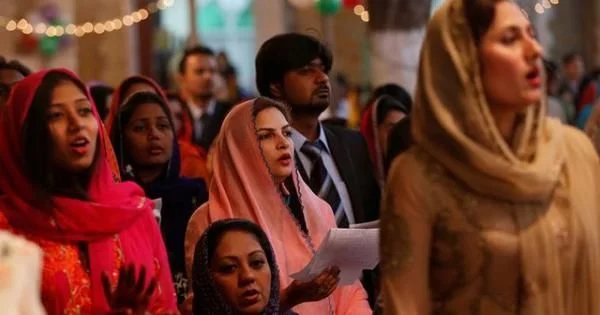
Landmark Petition Challenges 150-Year-Old Statutes
A significant legal challenge is underway in Pakistan, potentially altering the landscape of Christian marital dissolutions after nearly a century and a half. A court has begun considering changes to long-standing statutes governing Christian marriages and divorces, statutes that have remained largely unaltered since their inception. This move stems from a petition that has brought to light critical issues within the Christian Divorce Act and the Christian Marriage Act, colonial-era laws that have persisted in Pakistan even after independence. The proposed legislative shift aims to align these laws with current realities and provide a more defined legal framework for the Christian community.
The core of the matter lies in rectifying near-static, 150-year-old legislation that dictates Christian marriage and divorce in Pakistan, a situation brought to public attention by a recent court petition.
Read More: Supreme Court May Order Ayodhya Temple Fund Audit Due to Theft Claims
The consultations with religious leaders are deemed acceptable, but deferring to their approval for such changes is considered inappropriate. The established principle is that personal matters, including marriage, divorce, custody, and inheritance, should be governed by the specific religious law of a community, while other affairs fall under common law. Divergent views on remarriage also present a challenge, indicating a complex web of traditional beliefs and legal necessities. The envisioned legislation seeks to incorporate provisions similar to Canon Law, formally integrating them into Pakistan's civil legal system for the first time.
Unpacking the Legal Machinery of Divorce in Pakistan
While the focus sharpens on Christian divorce law, the broader Pakistani legal system has established procedures for marital dissolution. For Muslim divorces, for instance, a Union Council plays a role. After a divorce decree from a Family Court, this council is notified. The husband is required to submit a written notice of Talaq to the Council Chairman, initiating the formation of an Arbitration Council. This council’s purpose is to explore reconciliation. If attempts at reconciliation fail, the divorce becomes effective after a prescribed 90-day period, culminating in a Certificate of Dissolution of Marriage.
Read More: 40 Die in Quetta to Peshawar Bus Crash in Balochistan on April 3 2026
"In most cases the client is not informed of his legal rights of triple divorce and their divorce deed is prepared with triple divorce." - Barrister Ali Shaikh, Law Society Pakistan.
There are differing interpretations regarding "triple divorce." Some scholars argue it should be treated as a single divorce, while the majority believe ignorance of Islamic Law is not an excuse, making pronouncements of triple divorce final and binding unless an intervening marriage occurs. Forms like Talaq-i-Tafweez and Mubarat (mutual divorce) offer pathways for dissolution without court intervention, promising speed and simplicity.
The Dissolution of Muslim Marriages Act, 1939, outlines fault-based grounds for divorce, including cruelty, failure to provide maintenance, impotence, mental illness, long-term imprisonment, disappearance, and association with disreputable individuals. A broader clause also allows for grounds recognized under Muslim Law, such as Khula, based on irreconcilable differences or aversion. The Constitution of Pakistan, through fundamental rights like the right to life and liberty, implicitly supports these processes.
Read More: Trump Pardons 11 for Clean Air Act Violations
"A divorce pronounced under coercion shall have no effect. A divorce shall be effected only in the court and the court shall not permit a divorce before attempting reconciliation between the parties." - ZAFAR & ASSOCIATES - LLP
Broader Context: Minority Rights and Legal Reforms
This legal discussion surrounding Christian divorce unfolds against a backdrop of broader concerns for religious minorities in Pakistan. A recent landmark ruling by the Lahore High Court ordered the return of a 14-year-old Christian girl, abducted and allegedly married, to her mother. Justice Sarwar’s decision rejected claims of a lawful marriage and highlighted the urgent need for legislative reform and robust enforcement of child protection laws. The ruling underscored the persistent issues of abduction, forced conversion, and coerced marriages faced by minority girls.
“This verdict is a ray of hope,” emphasized Malik, “but unless cultural practices stop overriding the law, and unless the law is applied equally and without religious bias, countless other girls will continue to suffer in silence.”
This incident, alongside the legal efforts to reform Christian divorce laws, points to an ongoing struggle to ensure equal application of the law and protection of fundamental rights for all communities within Pakistan. The push for legislative change reflects a desire to bridge the gap between antiquated statutes and the lived realities of citizens.
Read More: Pakistan Bus Crash Kills 40 in Southwestern Ravine