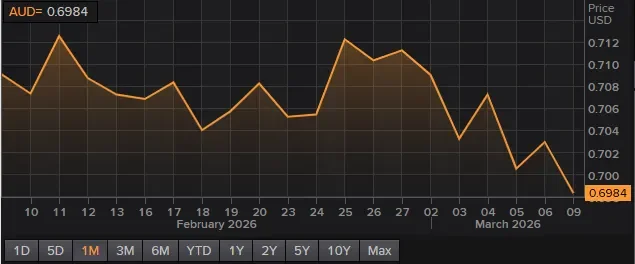
The oil price has pushed past the $US100 per barrel mark, a significant surge with implications rippling through global markets and landing squarely on Australian shores. This spike, linked to the escalating 'Middle East conflict', has triggered widespread falls across major stock exchanges, including a projected tumble for the ASX. The international instability directly impacts fuel prices for Australian consumers and industries.
US markets have already felt the strain. The Dow Jones saw a sharp drop of 453 points, a 0.9 per cent decline, after an earlier plunge of up to 945 points. The Nasdaq composite also sank 1.6 per cent. This volatility echoes on other international exchanges; London’s FTSE 100 fell 1.2 per cent, though Hong Kong’s Hang Seng managed a 1.7 per cent jump.
ECONOMIC WINDS SHIFT FOR AUSTRALIA
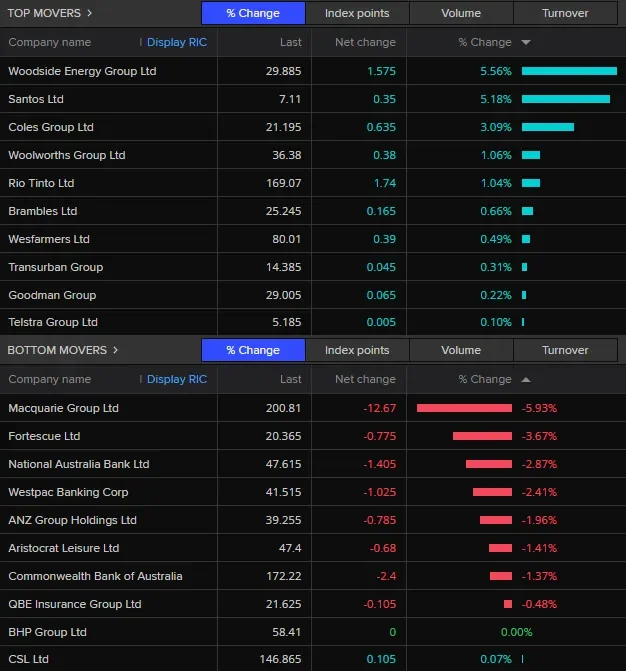
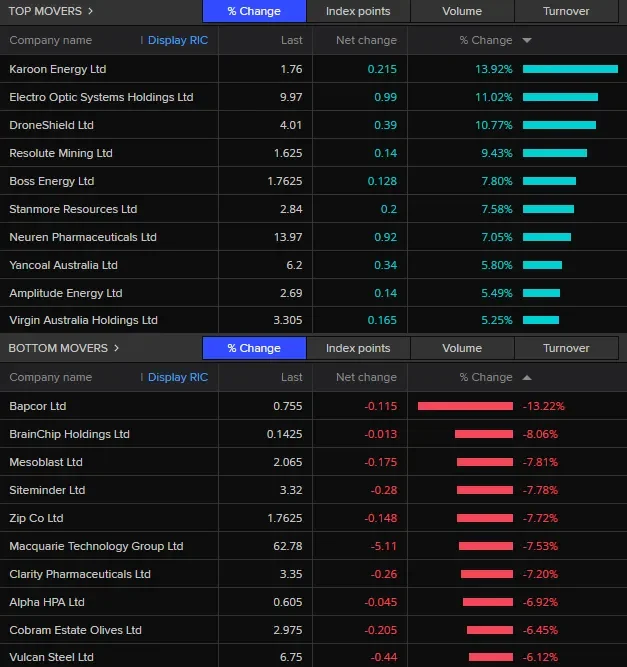
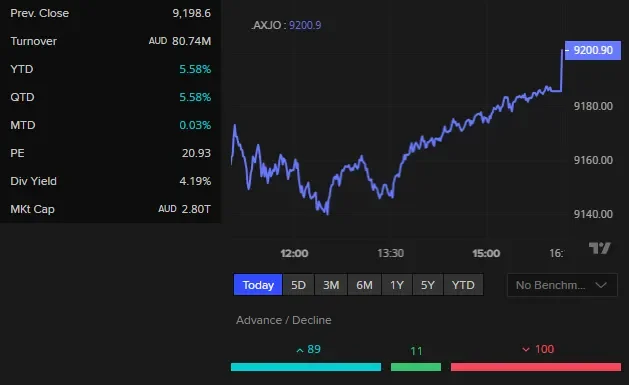
The Australian stock market is bracing for a significant downturn. Miners and banks, pillars of the Australian economy, are particularly vulnerable. Companies like BHP, the world’s largest miner, experienced a 3.5 per cent slump. Other major players like Rio Tinto fell 1.3 per cent, and Fortescue Metals shed 3 per cent. The banking sector also saw substantial losses, with National Australia Bank down 2 per cent, Westpac off 1.6 per cent, and ANZ Bank slipping 3.7 per cent. Retail and travel sectors are also feeling the heat, with cruise lines and airlines reporting significant drops in share value.
BEYOND OIL: ELECTRIC VEHICLES AND AERIAL AMBITIONS
Amidst the turbulence, the 'electric vehicle' landscape is showing signs of disruption, particularly with advancements from Chinese manufacturers like BYD. Their new 'Blade Battery' technology promises rapid charging, a potential game-changer in the Australian market. Concurrently, 'Qantas' is looking to redefine long-haul travel by launching what is anticipated to be the world's longest commercial flights, an ambitious move that will be watched closely.
Read More: Hunter Region Gets $12 Billion Train Factory
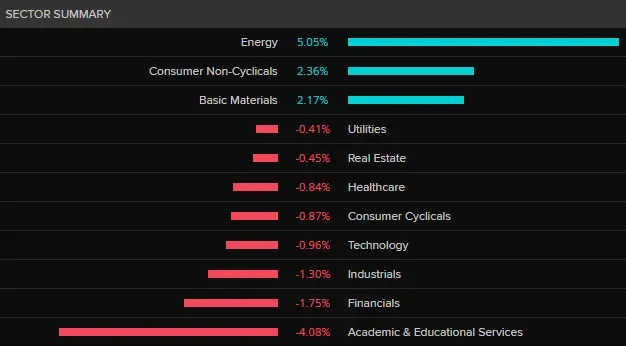
A LOOK AT THE NUMBERS
Major US stock movements include:
| Company | Change |
|---|---|
| Old Dominion Freight | -7.9% |
| Carnival | -5.0% |
| Southwest Airlines | -5.3% |
In Australia, earlier market tremors saw:
| Company | Change |
|---|---|
| NAB | -2.0% |
| Westpac | -1.6% |
| ANZ Bank | -3.7% |
| Rio Tinto | -1.3% |
| Fortescue Metals | -3.0% |
| BHP | -3.5% |
| Scentre | -2.4% |
| Vicinity | -2.5% |
| Northern Star | -2.5% |
| Evolution Mining | -4.7% |
| Newmont Mining | -6.3% |
Yields on 10-year Treasuries initially moved towards 4.19 per cent before settling back to 4.14 per cent.
CONTEXT AND BACKGROUND
The surge in 'oil prices' is directly attributed to the ongoing 'Iran war' and its ramifications for the Middle East's energy output. This geopolitical tension has historically been a significant driver of commodity price volatility. The financial markets, as always, react with a degree of predictability to such global events, often translating instability into downward pressure on equities, especially in sectors heavily reliant on global trade and energy. The mention of a '10.75% ASX dividend yield' from an unnamed source suggests opportunities might still exist for the discerning investor, though the prevailing sentiment is caution. The shifts in the automotive sector, particularly the rapid development of 'EVs' and charging infrastructure from China, point to a broader transformation underway, independent of, but influenced by, the current economic climate.