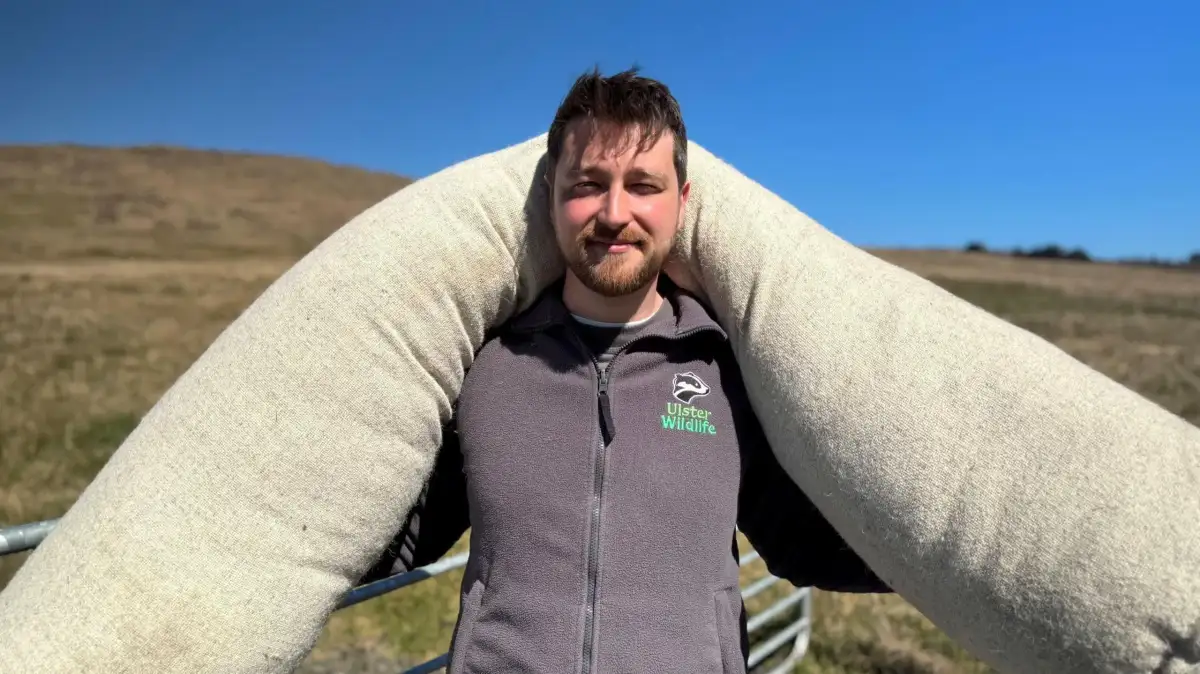
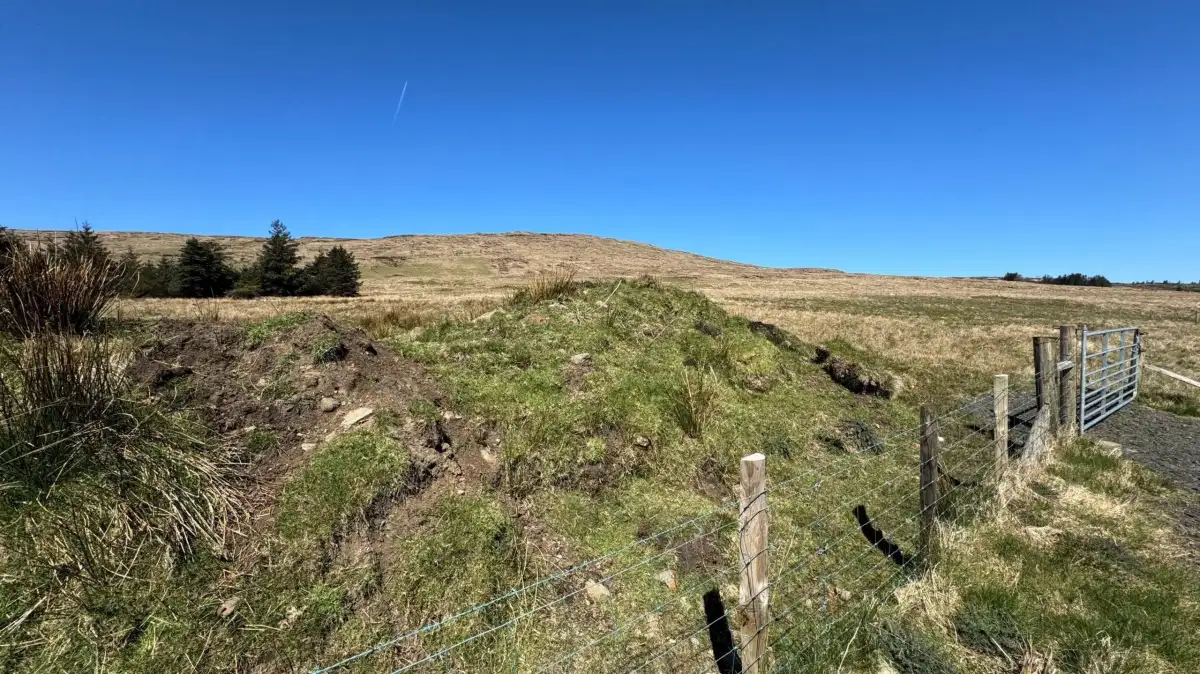
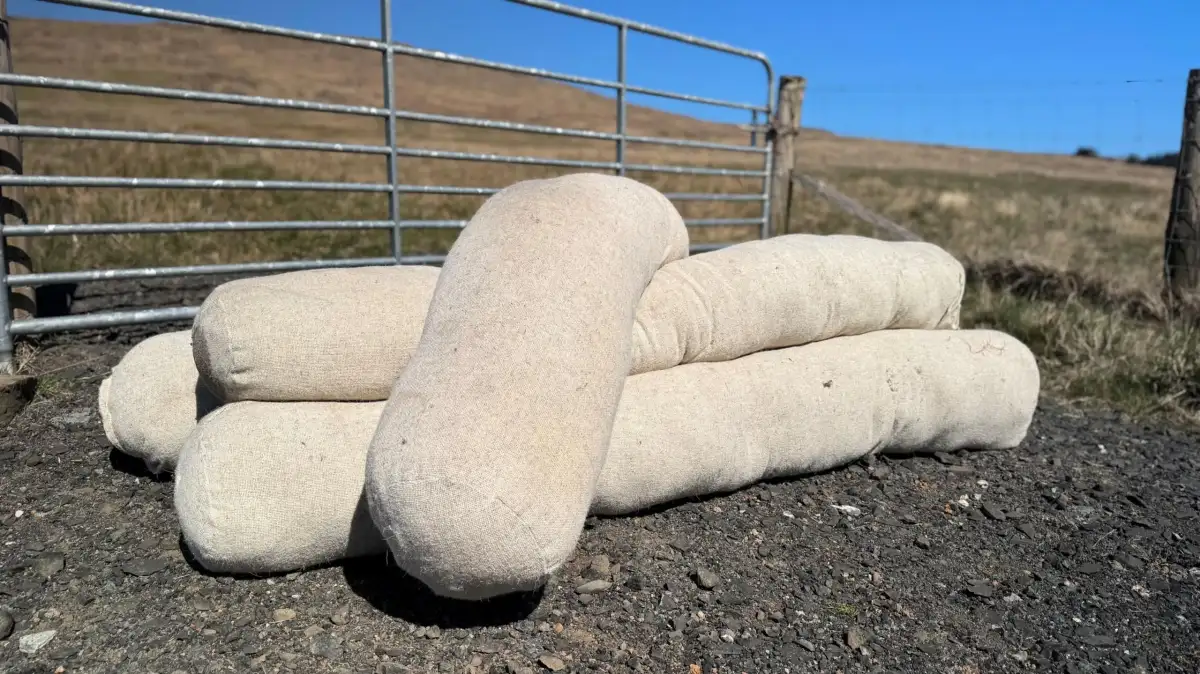
Ulster Wildlife is testing raw sheep wool as a functional substitute for imported coconut-based coir logs to stabilize degraded peatlands in the Antrim Hills. The pilot project, centered on Slievenanee, saw the deployment of approximately 60 wool-filled, tubular structures designed to manage water retention and reduce soil erosion.
| Feature | Imported Coir Logs | Domestic Wool Logs |
|---|---|---|
| Origin | South-East Asia | Northern Ireland |
| Primary Use | Erosion/Re-wetting | Erosion/Re-wetting |
| Economic Impact | High transport carbon/cost | Supports local farming |
The logs function as physical barriers—likened to 'massive draft excluders'—to prevent water runoff and assist in the saturation of peat layers.
Structural integrity is maintained via a dense wool core, preventing the tubes from sagging or losing shape when exposed to elements.
Local farmers and landowners participated in the February installation, linking the project to a broader effort to mitigate regional agricultural decline.
The Logic of Localized Materials
Peatlands serve as massive, natural carbon vaults. When degraded, they release trapped gases, contributing to atmospheric shifts rather than tempering them. Restoration efforts traditionally rely on Coir, a byproduct of the coconut industry imported from thousands of miles away.
By pivoting to sheep wool, organizers aim to shorten the supply chain while simultaneously creating a new, potentially viable revenue stream for Northern Irish sheep farmers. Recent market trends have seen wool prices collapse to the point where shearing costs often exceed the value of the fleece, leaving many producers with an unsellable surplus.
Read More: Amazon Land Use Changes Cause Disease Clusters in Brazil
"The time has come to look for alternatives to imported coir logs," noted Devenney, peatlands restoration manager at Ulster Wildlife.
Skepticism and Context
While the initiative is framed as a sustainable convergence of ecological restoration and economic support, its scalability remains untested. The long-term durability of wool—a biological material—versus the fibrous resilience of coconut husk in high-moisture, acidic peat environments is a critical variable that has yet to be observed over multiple seasons.

The transition represents a move away from the globalization of Conservation tools, challenging the assumption that standard, imported materials are the only path toward land remediation. Whether this woolly substitute offers a durable alternative or merely a localized experiment in resource recycling remains the primary question for the Antrim Hills site moving forward.