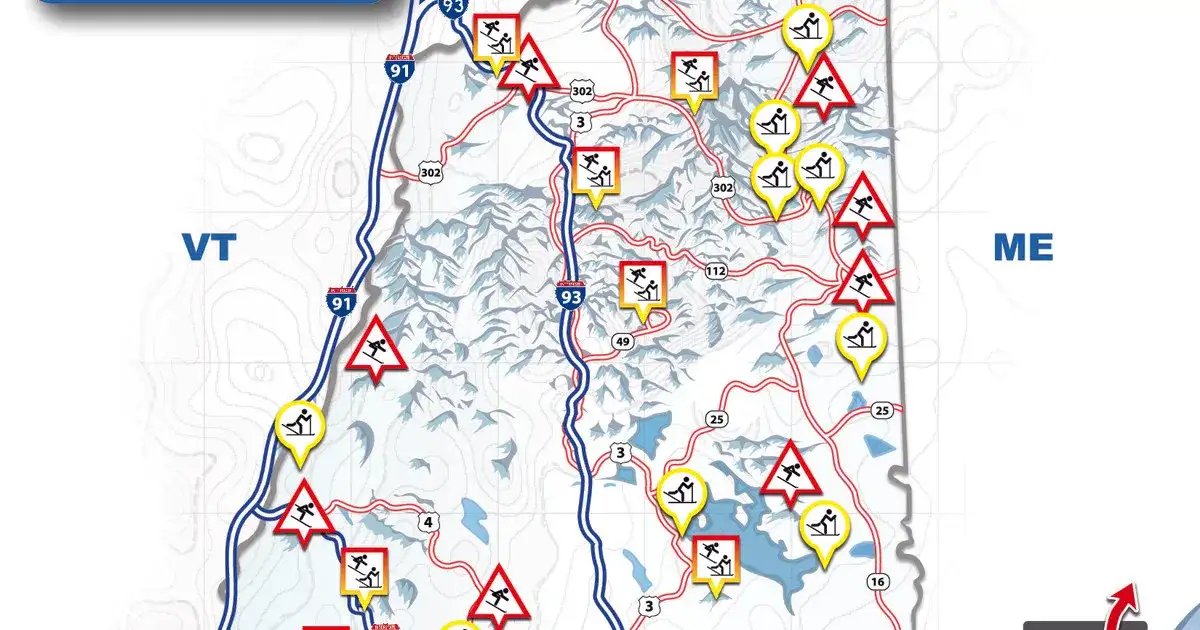
A significant majority of professionals within New Hampshire's ski sector express substantial unease regarding the impacts of climate change and believe more robust action is imperative. The industry, a vital economic driver supporting an estimated 10,000 seasonal and 6,000 annual jobs, sees this shared concern as a potential catalyst for adopting sustainable practices and advocating for systemic adaptations.
In the 2017-2018 season alone, approximately 2.8 million individuals visited New Hampshire ski areas, injecting an estimated $384.2 million into resorts and surrounding locales. Research from the University of New Hampshire's Carsey School of Public Policy highlights this economic dependency, with study co-author Elizabeth Burakowski emphasizing the need to preserve the industry amidst rising temperatures and shortening winters.

While many in the New Hampshire ski industry acknowledge the unfolding challenges, the research also indicates a landscape where advocacy, education, and operational shifts are already in motion. These efforts aim to address climate change through both mitigation and adaptation strategies.
Read More: India Stops New HFC Gas Production Permits After 2027
Economic Foundation and Industry Response
The economic weight of ski-related tourism in New Hampshire is considerable, providing employment for a substantial workforce. The Carsey School of Public Policy study underscores that professionals within this industry are not only concerned but also exhibit a readiness to implement changes. This suggests a potential for collective action focused on reducing greenhouse gas emissions, promoting energy efficiency, and developing strategies to protect winter conditions while sustaining the recreational economy.

Operational Adaptations and Perceptions
Ski resorts are investing in artificial snowmaking as a primary means to navigate fluctuating winter weather. This move towards capital investments in snowmaking technology reflects a pragmatic response to the challenges posed by unpredictable conditions. However, the perception of winter's viability is also tied to visible weather patterns. When key market areas, such as southern New Hampshire or the greater Boston region, experience mild temperatures or a lack of snow, it can diminish the public's inclination to consider skiing.
Read More: Five Game Studios Create Nova Assembly for Resource Sharing
Challenges to the Winter Experience
Beyond the economic implications, changing climate patterns are altering the very nature of winter recreation. Reports detail how warming winters can constrict experiences, affecting everything from traditional downhill skiing to Nordic and backcountry activities. For some areas, snowmaking has become a matter of survival, particularly for smaller ski operations.
Background
The conversation surrounding climate change and its effect on New Hampshire's ski industry has been ongoing, with academic institutions like the University of New Hampshire playing a key role in research and analysis. Studies dating back to 2012 have explored climate impacts on winter tourism economies, with more recent assessments in 2022 detailing warming trends and snow loss in Northeastern North America. These reports provide a crucial backdrop for understanding the current anxieties and strategic responses within the state's ski sector.
Climate Impacts on the Winter Tourism Economy in the United States | New Hampshire Climate Assessment 2021 | Economic Contribution Study
Read More: Hyderabad Taj Banjara Lake Faces Pollution and Encroachment Threat