Computational Shortcut Reduces Energy Demands for Asteroid Trajectories
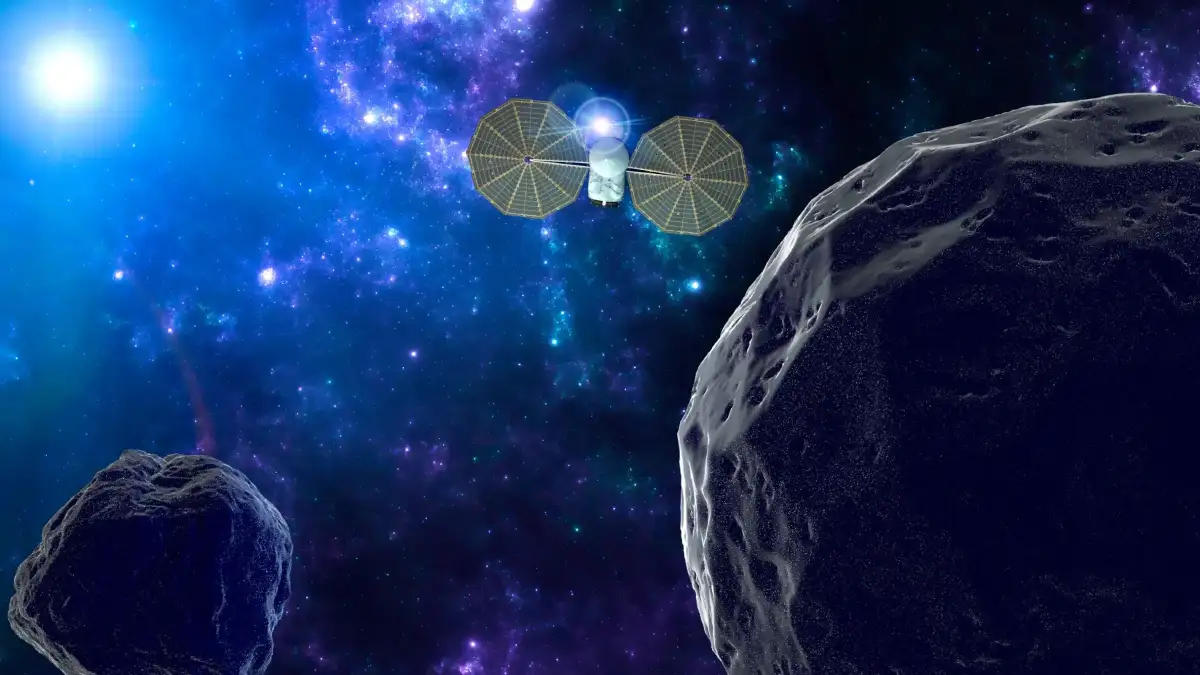
A novel approach to plotting spacecraft paths to near-Earth objects (NEOs) is presenting a more computationally efficient and energy-saving alternative to existing methods. Researchers have developed a new technique that significantly reduces the computational power needed to calculate these complex trajectories, while also identifying paths that require less energy expenditure. This development could potentially make accessing the resources contained within NEOs more feasible.
The core of this new methodology involves a two-part modeling system. Near Earth, the system utilizes the "circularly restricted three-body problem," accounting for the gravitational pull of both the Sun and our planet. As the spacecraft travels further from Earth, the model shifts to the "classic two-body problem," focusing solely on the Sun's influence. This hybrid approach contrasts with traditional methods that often rely on more intensive calculations for the entire journey.
Read More: Indigenous Data Rights Now Key in Conservation Genomics
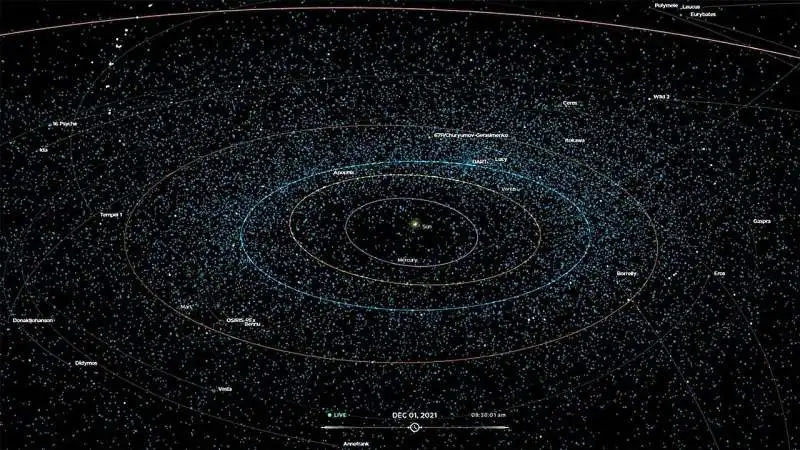
Early comparisons against NASA's Near-Earth Object Human Space Flight Accessible Targets Study (NHATS) database show promising results. While the new method yields similar values for delta-v—the total velocity change required for a mission—it demonstrates a marked reduction in launch energy. This efficiency gain is attributed to identifying less energy-intensive paths. Testing on objects with complex orbits, such as Apophis, a near-Earth asteroid with a notably elongated and inclined path, further validates the model's utility.
This work, spearheaded by astrodynamicist Alessandro Beolchi of Khalifa University of Science and Technology and his collaborators, addresses the long-standing challenge of planning asteroid trajectories. These calculations have historically demanded "a massive amount of computational power." The new method aims to streamline this process.
Furthermore, an analogous development, not directly part of Beolchi's specific publication but discussed in related contexts, explores how highly inclined asteroid orbits can create direct alignments between Earth and Mars. This could potentially compress one-way trips to Mars to around 153 days, fundamentally altering future mission planning by leveraging unusual orbital geometries rather than straight-line trajectories. This concept hinges on placing a spacecraft in an elliptical orbit that intersects both Earth's and Mars' orbital paths.
Read More: US Space Force Victus Haze Mission Successfully Tests Orbital Intercepts
The vast number of NEOs—tens of thousands—represent a readily accessible frontier for resources within our solar system. The practical implications of more efficient trajectory planning could therefore extend to resource utilization and further space exploration.