A 10% tariff on imports from many countries has been introduced, a move by President Trump that follows a Supreme Court decision limiting his previous tariff powers. This new action seeks to establish new duties, with some countries facing even higher rates, while exemptions are noted for North American neighbors.
Following a Supreme Court decision that restricted President Trump's ability to impose tariffs under an emergency statute, a new 10% tariff on imports has been announced. This measure is set to take effect soon, impacting trade with numerous nations. The tariffs aim to address trade imbalances and unfair trade practices, with specific countries facing higher percentages. Canada and Mexico are exempt due to trade agreements. This development follows previous tariffs that remain in place, alongside ongoing investigations into other nations' trade conduct.
Read More: US May Add Tariffs on Australian Goods Due to Forced Labour

Tariff Details: A new 10% tariff on goods from many countries.
Timing: The temporary import duty will start on February 24th.
Exemptions: Canada and Mexico are not subject to this new duty.
Justification: The move is presented as a response to trade imbalances and unfair practices.
Legal Basis: The President stated his belief in having the right to impose tariffs through other means.
Background: A Supreme Court Setback and a New Strategy
The recent Supreme Court ruling stated that the President does not have the authority to impose tariffs using a specific emergency law. This decision was described as "deeply disappointing" by the President. However, the court acknowledged that other avenues for imposing duties exist, particularly concerning unfair trade practices or balance-of-payments deficits.
The President expressed frustration with the Supreme Court's decision.
The ruling invalidated tariffs previously imposed under the International Emergency Economic Powers Act (IEEPA).
The administration had argued that this law allowed for broad tariff imposition.
Despite the setback, the President indicated a commitment to using other available legal means for tariffs.
Mechanism and Scope of New Tariffs
The new 10% tariff is described as a "reciprocal" measure, intended to match trade barriers imposed by other nations on U.S. exports. These duties are designed to encourage domestic manufacturing by making imports more expensive.

Reciprocal Tariffs: The stated goal is to mirror trade barriers imposed by other countries.
Domestic Manufacturing: The tariffs aim to boost local production.
Duration: These particular new tariffs are temporary, lasting 150 days unless extended by Congress.
Existing Tariffs: Tariffs under Section 232 and Section 301 remain active.
Varied Impact Across Nations
While a baseline 10% tariff applies to many imports, certain countries face significantly higher rates. This tiered approach suggests a targeted strategy to address specific trade relationships.
Higher Rates: Some larger trading partners will face additional levies.
Specific Examples:
European Union imports may face a 20% tariff.
Chinese goods could be subject to a 34% tariff, adding to existing levies.
Vietnam could face a 46% tariff.
Exclusions: Goods already subject to separate national security tariffs, such as steel and aluminum, are excluded from these new global tariffs.
Potential for Further Trade Actions
Beyond the immediate tariff imposition, there is indication that further trade actions could follow. Investigations into unfair trade practices are ongoing and may result in additional tariffs.
Read More: Taiwan Holds Nantou County Drills to Prepare for State Collapse
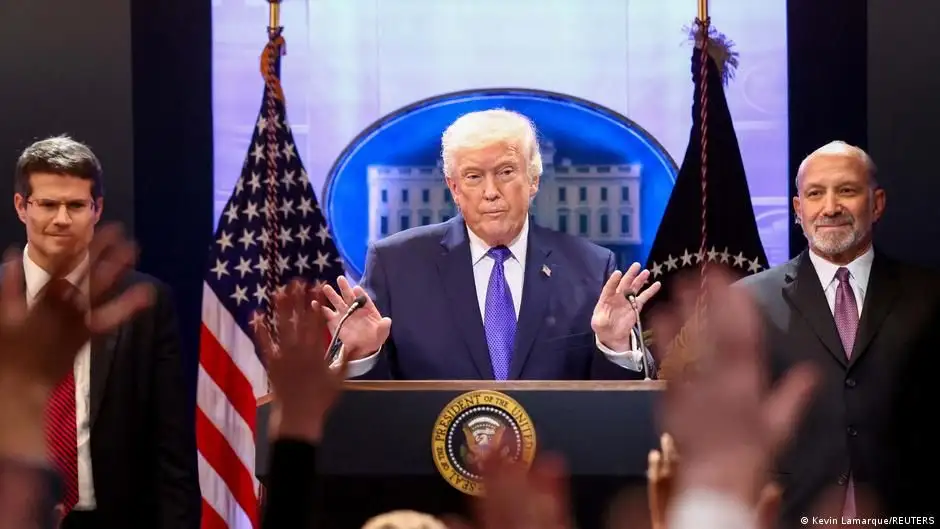
Ongoing Investigations: The U.S. Trade Representative noted that investigations into unfair trade practices could lead to more tariffs.
Broad Interpretation: The administration has historically used statutes like Section 301 to initiate such investigations.
Legal Foundation for the New Measures
The President has indicated that he believes he has the authority to act. One legal basis cited is Section 122 of the Trade Act of 1974, which allows the President to impose a temporary import surcharge under specific conditions related to international payments problems.
Section 122 of the Trade Act of 1974: This section is noted as a potential legal framework.
Presidential Authority: The President asserted his right to take necessary measures.
Unused Provision: Section 122 has reportedly never been used by previous administrations.
Economic Implications and Reactions
The introduction of new tariffs is expected to have economic consequences, including the possibility of retaliation from affected countries.
Retaliation: Other nations are reportedly bracing for possible retaliatory measures.
Import Limits: The tariffs are intended to reduce imports.
Sources:
CNBC: Article 1, Published 18 hours ago. Discusses the legal basis and presidential assertions regarding tariff authority after the Supreme Court's decision, mentioning IEEPA, Section 232, and Section 301.
Link:
https://www.cnbc.com/2026/02/20/trump-global-trade-tariff-supreme-court.html?msockid=38ef417c80fb6a290361567b819e6b69The Guardian: Article 2, Published 17 hours ago. Details the timing of the new duty, exemptions for Canada and Mexico, and references Section 122 of the Trade Act of 1974 as a potential legal instrument.
Link:
https://www.theguardian.com/us-news/2026/feb/20/trump-tariff-scotus-responseUSA Today: Article 3, Published 16 hours ago. Reports on the President's approval of new tariffs following the court ruling, highlighting the temporary nature of some duties and the potential for tariffs based on unfair trade practices.
Link:
https://www.usatoday.com/story/news/politics/2026/02/20/trump-new-10-percent-tariffs/88778386007/NPR: Article 4, Published April 3, 2025. Describes the introduction of reciprocal tariffs designed to match other countries' trade barriers and encourage domestic manufacturing.
Link:
https://www.npr.org/2025/04/03/nx-s1-5349403/trump-unveils-10-tariff-on-all-imports-and-reciprocal-tariffs-dozens-of-economiesGlobalnews.ca: Article 5, Published April 5, 2025. Details the commencement of the 10% global tariffs and outlines specific, higher tariffs imposed on several major trading partners, with noted exclusions.
Link:
https://globalnews.ca/news/11117454/us-collects-10-percent-global-tariff-trade/