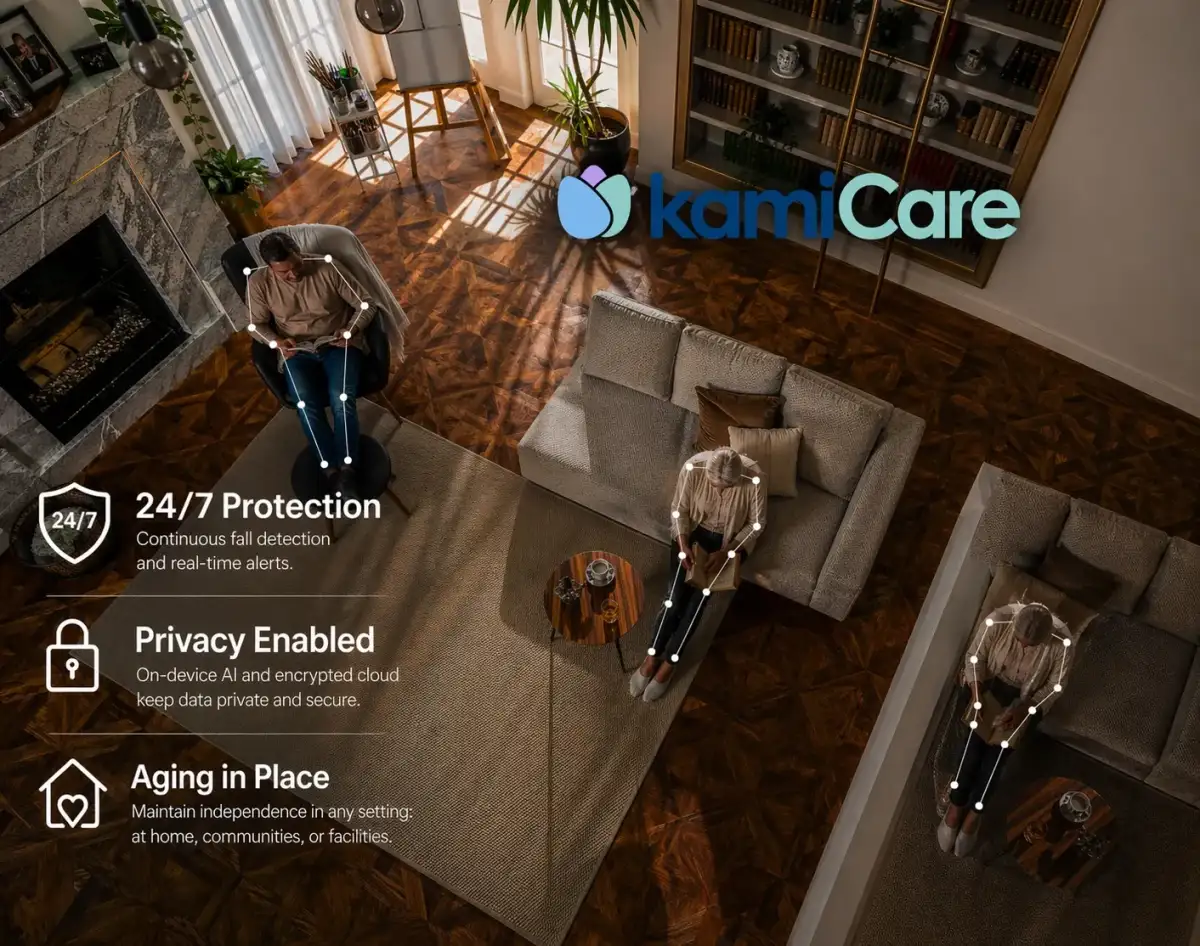
A pilot program in the Netherlands has launched a system where ceiling-mounted sensors continuously monitor the homes of older adults to detect falls. The initiative, involving WeConnect, Leefsamen, and Brainport partners, uses artificial intelligence to distinguish between routine movements and emergency incidents, automatically alerting families when a fall occurs.

Core Insight: The tension between individual privacy and physical safety is intensifying as ambient sensing technology becomes a standard requirement for aging in place.

Technical Approaches to Fall Detection
While the Dutch pilot utilizes continuous video-based scanning, the broader market is bifurcating between passive, contactless sensors and active, wearable devices.

| Technology Type | Mechanism | Market Trend |
|---|---|---|
| Contactless (Ambient) | Ceiling sensors, Wi-Fi signal analysis, AI vision | Institutional deployment in care facilities |
| Wearable | Accelerometers, smart insoles, kinematic sensors | Direct-to-consumer devices for home use |
Institutional Shifts: Companies like Kami Vision are moving away from consumer-grade subscriptions toward partnerships with care facilities, nursing homes, and memory care centers to ensure longer-term operational stability.
Academic Research: Recent studies published in early 2026 highlight a heavy focus on Deep Learning (DL) and Machine Learning (ML) to improve accuracy, specifically aiming to reduce false positives in elderly gait analysis.
Accessibility: Beyond high-cost commercial enterprise solutions, small-scale or individual inventions—such as youth-led algorithmic developments—are emerging, often seeking to eliminate the recurring costs of proprietary software.
The Privacy Conundrum
For many older adults living alone, the alternative to algorithmic surveillance is often the risk of an unassisted, prolonged period of immobility following an injury. Proponents argue that AI-based monitoring is a vital mechanism for maintaining independent living. Conversely, critics identify a potential for intrusive oversight, where the home is converted into a constant stream of predictive data.
Read More: Chamath Palihapitiya warns PwC and Accenture about AI competition

Evolution of Care Models
The integration of smart technology is changing the way care facilities approach risk. Rather than relying on intermittent human checks, operators are increasingly embedding AI detection into the environment. This shift represents a transition toward "predictive care," where balance tests and behavioral patterns are monitored long before an actual fall occurs. Whether this model enhances true independence or merely subjects the aging population to a persistent digital gaze remains a subject of ongoing debate within the social care sector.