


The Most Outstanding Player (MOP) award serves as the formal consensus of credentialed media members following the NCAA women’s championship. While the selection often mirrors the outcome of the title game, the intent is to categorize a player’s entire influence across the final stage of the tournament.
| Statistical Archetypes | Key Indicators |
|---|---|
| High-Volume Scorers | Erica Westbrooks (21.5 PPG), Charlotte Smith (47 points in one game) |
| Dynastic Repetition | Breanna Stewart (Four consecutive wins, 2013-2016) |
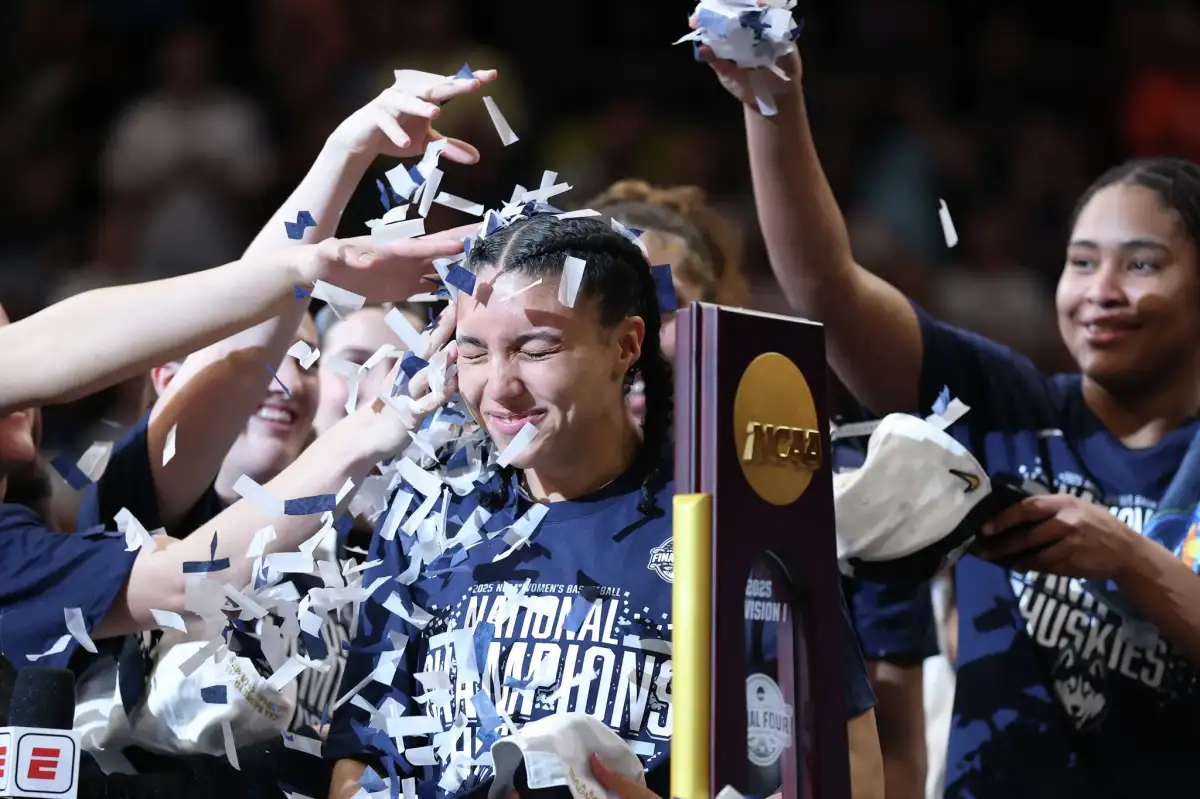
| Recent Standard | Azzi Fudd (2025 winner; 24 points in title game) |
Dissecting the Selection Mechanism
The MOP designation acts as a historical ledger, reflecting shifting values in college athletics. From the early era of Janice Lawrence (1982) to the contemporary dominance of players like Kamilla Cardoso (2024) and Azzi Fudd (2025), the award filters talent through the lens of team success.
The Correlation Trap: The award is traditionally tethered to the national champion. Deviations from this pattern are rare, signaling that the 'Most Outstanding' status is less about raw individual metrics and more about the perceived centrality of a player to a winning program.
Narrative Anchors: Media members weigh 'March Madness' performances as the final variable in a season-long performance cycle. For 2025 recipient Azzi Fudd, a 24-point performance in the final served as the functional closing argument for her candidacy.
Institutional Weight: Programs like UConn, Tennessee, and South Carolina appear with disproportionate frequency in the historical record. This creates an uneven landscape where the award often functions as a reinforcement of existing institutional dominance rather than a neutral assessment of individual skill.
Background: A Fragmented Legacy
The MOP award began in 1982. It serves as a static metric in a sport currently experiencing rapid institutional and cultural change. As the landscape of women's basketball moves toward longer player tenures—highlighted by Fudd’s decision to return for a season despite senior status—the criteria for 'outstanding' remains rooted in the specific geometry of the Final Four weekend.
Read More: LA Clippers 'The Wall' Section Costs $5,000-$25,000 for Intense Fan Zone
The data suggests a tension between pure statistics and the aesthetics of victory. While players like Charlotte Smith (1994) etched their names into the record books through singular scoring displays, the award itself continues to prioritize those who occupy the apex of the tournament bracket, confirming that at the collegiate level, the trophy is often the primary lens through which individual excellence is focused.
For further reference on the historical progression of the award, visit the official NCAA database.


