Recent pronouncements from state ministers and national leaders highlight a concerted effort to champion 'natural farming', positioning it as a pathway to both financial gain and environmental resilience for agriculture. These initiatives, framed within broader governmental schemes, suggest a strategic shift away from conventional, chemically-intensive methods.

Natural farming is being presented as a method that not only makes agriculture profitable but also sustainable, with an emphasis on higher prices and strong market demand for its produce. Government officials across different states are actively promoting these practices, often within the context of specific corporate or livelihood missions, and backing them with targets for land conversion.

Governmental Embrace of Natural Farming
Across the country, governmental bodies are articulating a clear directive towards natural farming. A significant push involves the 'National Mission for Natural Farming' (NMNF), which aims to expand the acreage under these practices. This mission targets an additional 7.5 lakh hectares, building upon existing state-level initiatives that already cover about 17 lakh hectares. The stated purpose behind this widespread promotion is to combat the excessive use of chemical fertilisers.
Read More: New Wheat Makes Bigger Starch for Food and Industry

The distinction between 'natural' and 'organic' farming has also been brought to the fore. Some officials maintain that natural farming is inherently more sustainable and eco-friendly than organic farming, even as historically, these methods have been implemented without strict differentiation.

Economic and Social Dimensions
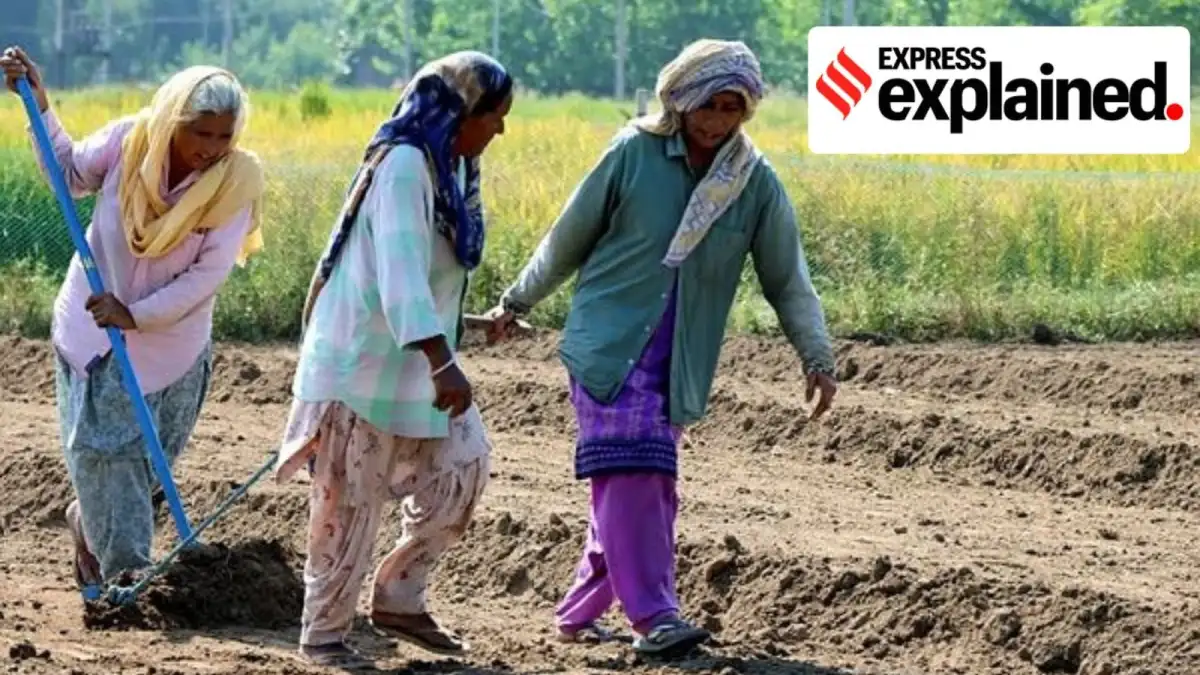
Beyond environmental concerns, a recurring theme is the purported economic benefit. Natural farming products are said to command higher prices and enjoy strong market demand. Furthermore, these practices are being linked to boosting women’s livelihoods. Initiatives like the Karnataka State Rural Livelihoods Mission (SRLM) are actively training women in self-help groups in natural farming techniques, soil health management, and value addition, aiming to create skilled rural employment and improve incomes. Over 5.26 lakh self-help group members have reportedly received such training.
Read More: Australia Gambling Ads: New Rules Start May 12, Affecting TV and Online
State-Level Commitments
Specific states have articulated ambitious targets:
Maharashtra: Chief Minister Devendra Fadnavis announced a plan to bring 25 lakh hectares under natural farming. This declaration follows earlier missions for natural farming initiated in 2014 and a renewed focus after guidance in 2023.
Andhra Pradesh: A minister in the state has indicated the TDP-led NDA government's commitment to promoting eco-friendly agricultural practices, including natural farming.
Broader Narratives and Official Backing
The Prime Minister has also voiced strong support, labelling natural farming as an “indigenous idea” rooted in Indian traditions and suited to the environment. At events like the South India Natural Farming Summit, emphasis has been placed on making natural farming a “fully science-backed movement”, and encouraging practices like 'One Acre, One Season'.
Official backing extends to financial schemes, with programmes like the 'Paramparagat Krishi Vikas Yojana' (PKVY) noted for supporting both organic and natural farming clusters. The broader market for sustainable agriculture is also reportedly showing growth, with companies experiencing revenue increases through these practices, citing factors like stronger brand loyalty and market differentiation.
Background: The Critique of Chemical Farming
The push towards natural farming appears to be a response to perceived negative consequences of chemical-intensive agriculture. Reports allude to the accumulation of toxins in food stemming from chemical farming. This has spurred a wider discussion on the economic viability and environmental advantages of sustainable and regenerative agricultural methods, suggesting a market shift driven by both ecological concerns and consumer demand.
Read More: Karnataka requests higher Totapuri mango limit for farmers in April 2026