Maryland Governor Wes Moore has invoked the legacy of the late Reverend Jesse Jackson, urging Democrats to internalize the activist's lessons amid what Moore describes as democracy being under "assault." His remarks surfaced as he paid respects to Jackson in Chicago, where thousands gathered to honor the civil rights leader following his passing in February.
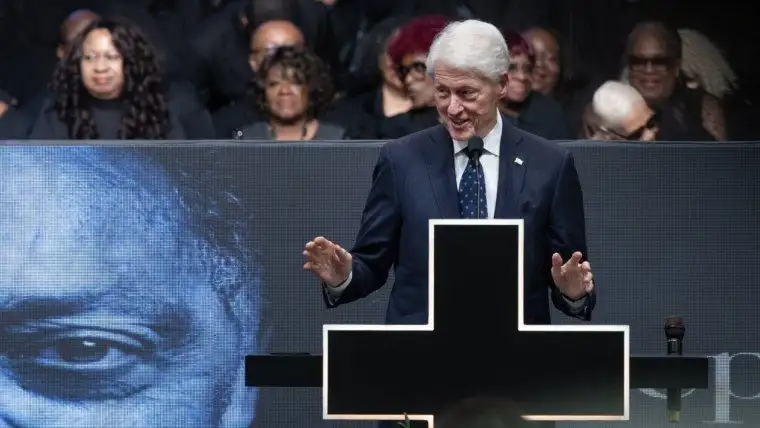
Moore's invocation of Jackson's fight and sacrifice frames a critical juncture for the Democratic party. The governor's pronouncements come against a backdrop where Jackson himself, a figure deeply associated with advancing civil rights through persistent activism, is being memorialized.

Internal Party Squabbles and the Electoral Map
This broader commentary from Governor Moore unfolds alongside significant internal party friction. Reports indicate Moore has encountered resistance within the Maryland Democratic party regarding redistricting efforts. A push to reconfigure electoral maps to potentially secure more Democratic seats in the U.S. House of Representatives appears to have met firm opposition from within the party ranks.
Read More: Taiwan Holds Nantou County Drills to Prepare for State Collapse

"They are very clear on what they want to do."
This internal deadlock highlights a tension between the governor's strategic objectives and the will of established party members. Despite a strong Democratic majority in the Maryland State Senate—with 34 out of 47 senators identifying as Democrats—the path to altering district boundaries, as Moore apparently desires, is far from straightforward. Moore has insisted such political maneuvering has not been part of his calculus, though the practical outcomes of these debates remain contested.

Broader Political Landscape and the Concept of 'Fairness'
Moore's public statements also touch upon broader questions of electoral fairness, particularly concerning district maps. In past discussions, he has questioned the fairness of certain state-level electoral designs, implying a dissatisfaction with maps that do not align with what he perceives as equitable representation.
The governor's reflections on Jesse Jackson, his advocacy, and the current state of American democracy, interwoven with the pragmatic challenges of partisan politics and electoral boundary disputes, paint a complex picture of contemporary political discourse. The enduring significance of figures like Jackson, contrasted with the immediate, often internecine, battles over political power, forms the substance of Moore's public pronouncements.
Read More: Maryland Democrats disagree on 2028 election map changes