Woodrow Wilson's ascendance to the presidency, particularly in 1912, was not a straightforward victory but a consequence of deep fissures within the dominant Republican Party. The party's split between the conservative wing, backing William Howard Taft, and the progressive faction, rallying behind Theodore Roosevelt and his Bull Moose Party, created an opening for the Democratic nominee. Wilson ultimately prevailed, not with an outright majority, but a plurality of the popular vote, and an electoral landslide, a testament to the electorate's dissatisfaction with the existing Republican order. This fragmentation meant that voters seeking change were presented with a divided opposition, allowing Wilson's "New Freedom" platform to gain traction.
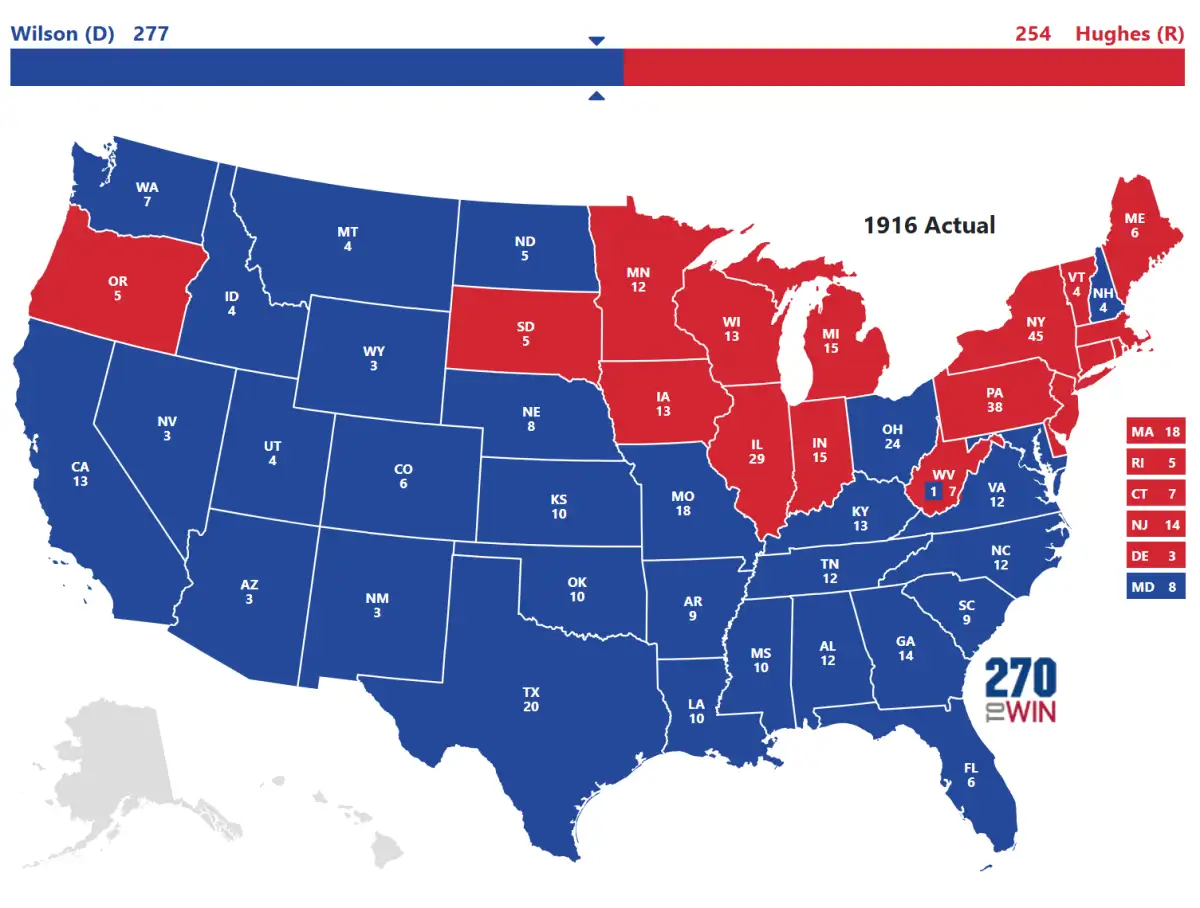
The election of 1916 presented a different challenge. While Wilson successfully fended off Charles Hughes, the victory was described as "much closer than anticipated." The campaign revolved around key issues of the day, including World War I, with the nation maintaining a stance of neutrality, though public sentiment leaned towards the Allied forces. Hughes's campaign reportedly faltered, not solely due to his "tepid personality," but also in comparison to Wilson's ability to navigate the complex international situation.
Read More: US 250th Anniversary on July 7, 2026, sees 20% not celebrating
The 1912 Confluence of Discontent
The 1912 election was fundamentally shaped by the Republican Party's internal schism. Theodore Roosevelt, disillusioned with Taft's administration and its policies, particularly regarding business interests and conservation, broke away to form the Progressive Party. This move fractured the Republican vote, as many progressive leaders followed Roosevelt. The party establishment, however, largely favored Taft's more conservative, pro-business approach and his personal style over Roosevelt's independent, often confrontational stance.
Republican Split: Roosevelt's departure from the Republican Party created a significant division, diminishing Taft's base.
Wilson's Platform: Wilson, as the Democratic nominee, offered his "New Freedom" agenda, which resonated with voters seeking reforms in response to rapid industrialization and urbanization.
Mandate for Reform: While there was a clear demand for reform, it wasn't exclusively tied to Wilson himself. The societal changes of the era necessitated new governmental approaches.
Wilson's Second Term and Emerging Challenges
The 1916 election saw Wilson facing Charles Hughes. The electoral map was closely contested, with West Virginia notably having voters directly choose electors, splitting their allegiance between Hughes and Wilson. Beyond the domestic political maneuvering, the election was heavily influenced by international affairs, primarily the ongoing war in Europe. The campaign grappled with America's role, maintaining neutrality while public opinion showed a leaning towards the Allied powers.
Read More: Trump says Vance-Rubio ticket would be "unbeatable" for 2028
Broader Political Context and Contemporary Echoes
The analysis of these historical elections highlights a recurring theme: the impact of party fragmentation on electoral outcomes. While the 1912 election saw the Republican Party's division directly pave the way for Wilson's victory, more recent events, such as the Nepean byelection and the New York City Council special election, demonstrate that even seemingly localized contests can reveal shifts in political momentum and the influence of established political figures. In the Nepean byelection, One Nation mounted a challenge, securing a significant percentage of the primary vote, indicating ongoing political contestation. Similarly, the Manhattan council race, which saw Carl Wilson defeat Lindsey Boylan (a candidate supported by Mayor Zohran Mamdani), was framed as a proxy battle and revealed potential limitations to Mamdani's political influence. These instances, though disparate in scale and context, underscore the dynamic and often unpredictable nature of electoral politics.
Read More: Pentagon Staffing Choice: Jan 6 Participant in Sensitive Role