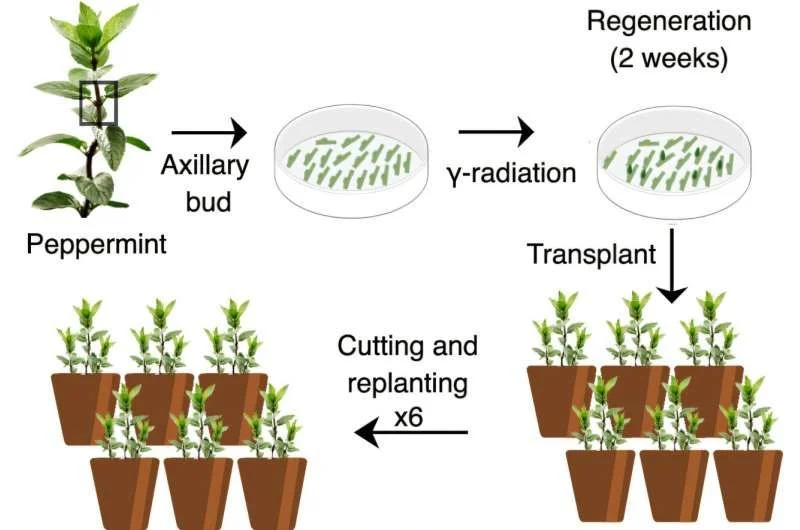
University of California, Davis researchers have cultivated a significant genetic diversification in peppermint, generating more than 250 new, distinct plant variants. This undertaking, described as breathing "new genetic variation into the species," involved exposing cuttings of the prevalent "Black Mitcham" clone to gamma radiation.
The experiment introduced a total of 1,406 large-scale genetic mutations across the new variants. Each new variant, on average, accumulated approximately 5.83 of these substantial mutations when compared to the original genome. Scientists see this as a move to invigorate the genomics of peppermint, a field not considered particularly cutting-edge compared to the plant's familiar aroma and taste.
Unlocking Flavor and Function
The altered genetic makeup of these new peppermint strains offers potential avenues for enhanced flavor profiles and even disease resistance. Researchers have identified specific variants exhibiting notable shifts in their chemical composition.
Read More: Indigenous Data Rights Now Key in Conservation Genomics
Two mutants, for instance, showed markedly reduced levels of (?)-menthol, a key component of peppermint's signature taste and cooling sensation.
Concurrently, these same mutants displayed increased concentrations of (?)-menthone and neomenthol, other compounds contributing to the plant's aromatic complexity.
This layer-specific genetic variation is being explored for its capacity to unlock a wider spectrum of secondary metabolite diversity within the long-lived, clonal peppermint. The large number of induced mutations provides a valuable resource for identifying key genes that could be leveraged in future breeding or selection programs aiming for superior peppermint varieties.
Aromatic History and Potential
Peppermint's allure, particularly its menthol content responsible for its distinctive cooling and sweet, spicy notes, has been recognized for centuries. Menthol has even found use in pain relief practices stretching back millennia. While menthol can be produced synthetically, the focus on genetically diversifying the plant itself suggests a renewed interest in the natural source and its inherent variability. The ‘Black Mitcham’ clone has long been the leading peppermint variety grown in the United States.