


A leaked National Intelligence Council report, predating the commencement of 'Operation Epic Fury,' flags substantial peril, suggesting the campaign risks considerable failure. This classified assessment, observed across multiple reports, casts a long shadow over official pronouncements of success.
The intelligence points to significant doubt regarding the war's primary objectives:
The report questions the efficacy of large-scale military action in dislodging Iran's existing regime, doubting that any opposition force would ascend to power following either short or extended U.S. military engagement.
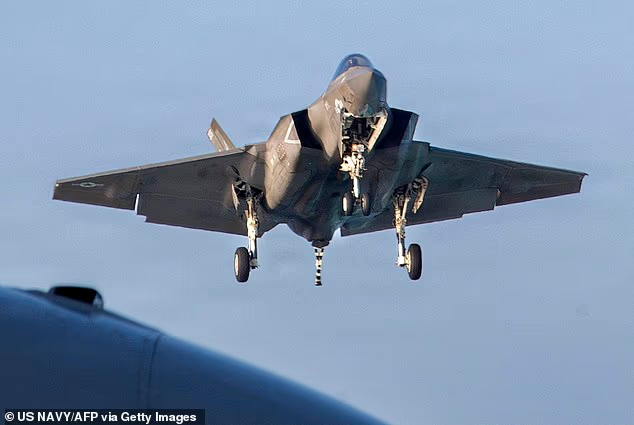
Furthermore, leaked intel indicates that U.S. strikes have fallen short of "obliterating" Iran’s nuclear program, with some reports suggesting only "months lost" in its advancement, a claim the White House has reportedly contested as "flat out wrong."
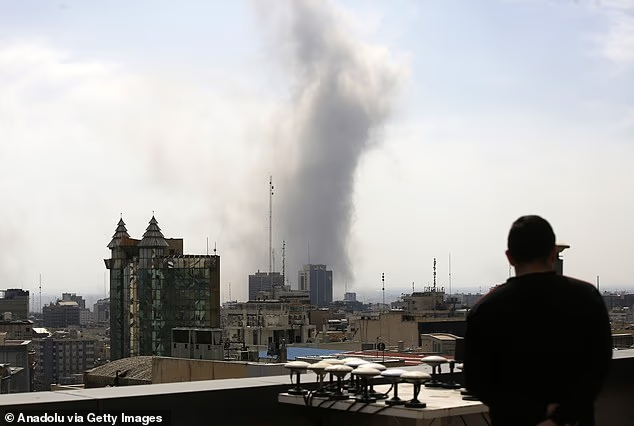
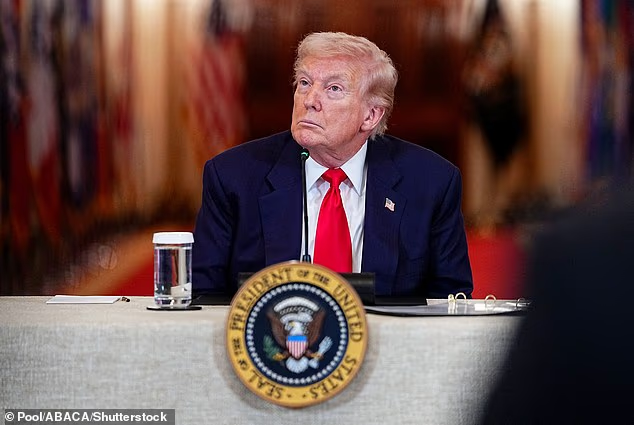
Amidst this critical internal assessment, official statements from the Trump administration project an image of decisive action. President Trump has characterized Iran as a diminished power, a "loser" following joint U.S.-Israeli operations. He has spoken of taking out a "major threat" in a manner "nobody’s ever seen before." These assertions are juxtaposed with reports of continued explosions within Iran, including strikes on Mehrabad International Airport, and a rising death toll.
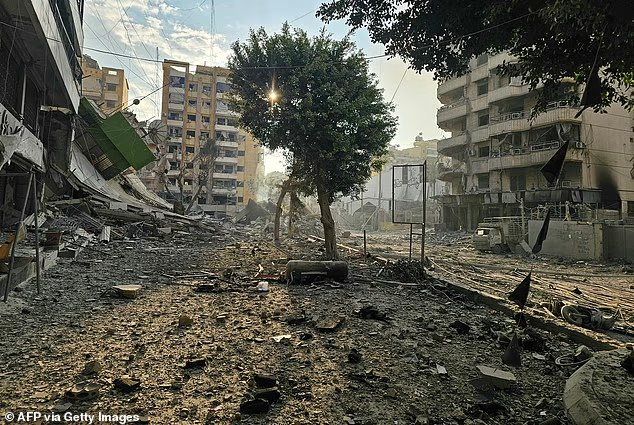
Casualty figures cited in reports vary, with Iranian sources indicating over 1,230 domestic deaths. Additional fatalities are reported in Lebanon (at least 41 from Israeli strikes on Hezbollah), Israel (11), and six U.S. troops.
Read More: US Israel forces strike Iran 14 cities, Iran retaliates
In the wake of these events, Iranian President Masoud Pezeshkian has reportedly offered apologies to GCC countries for drone and missile strikes targeting their territories. Both Iran and Israel have indicated an adherence to a ceasefire, contingent on mutual respect. The U.S. military, according to some reports, plans to refocus on operations against Hamas in Gaza.
The broader context includes Israel's initiation of air strikes on June 13th, targeting Iranian nuclear sites. The administration claimed these actions "degraded" Iran's nuclear capabilities, a statement less absolute than Trump's earlier assertion of "obliteration." This sequence of events, the worst blow to the Islamic Republic since the 1980s war with Iraq, appears to have been partially brokered by Trump, with U.S. officials engaging with Iranian counterparts.
Read More: Guardian's 20-Picture Gallery Format Continues into 2026