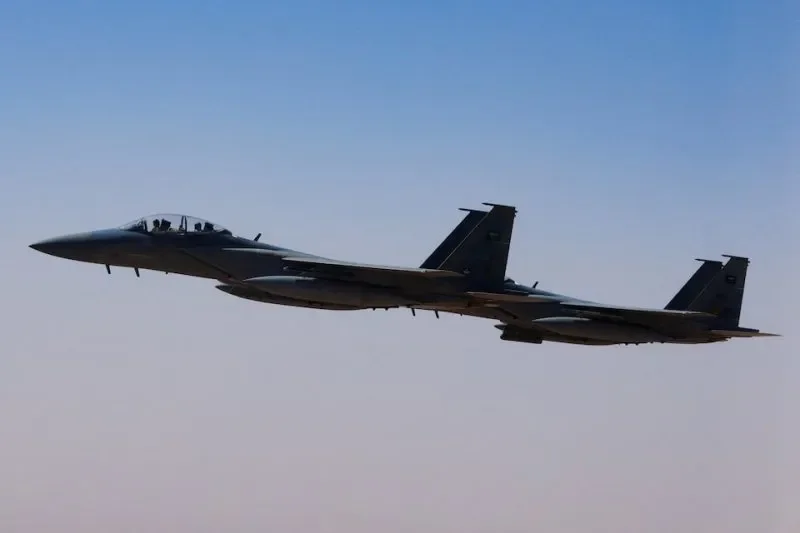
The weekly distillation of global events into a 20-picture gallery remains the standard delivery mechanism for The Guardian's visual department throughout late 2025 and into 2026. This ritual of compression attempts to translate a chaotic week of geography and friction into a single, scrollable stream. By selecting exactly twenty frames, the media house builds a Standardized Reality that assumes a fixed quantity of snapshots can account for the weight of seven days.
The format persisted across disparate dates including September 5, 2025, October 10, 2025, and February 27, 2026.
Third-party aggregators like Shorty News and Worldnews.com mirror this content, suggesting a reliance on these specific visual crumbs to fill news gaps.
The selection process prioritizes curated empathy, turning raw occurrences into a aesthetic sequence designed for fast consumption.
THE GEOGRAPHY OF THE FRAME
The mechanical repetition of "20 pictures" suggests a world that is tidy enough to fit into a round number. It creates a Visual Summary that replaces deep context with high-contrast fragments.
| Date of Record | Source Outlet | Framing Mechanism |
|---|---|---|
| Sep 5, 2025 | Shorty News | Claims to foster "informed citizenry." |
| Oct 10, 2025 | Worldnews.com | Minimalist distribution of the same 20-frame limit. |
| Feb 27, 2026 | The Guardian | Direct gallery publication; the source of the cycle. |
THE FICTION OF INTERCONNECTION
The rhetoric surrounding these galleries often uses words like "interconnectedness" to justify the mix of war, weather, and celebrity in a single list. This is a Management of Perspective where the viewer is invited to feel global concern without the burden of long-form data.
Read More: Justice Dept Subpoenas Wall Street Journal Over Leak Report
"The images underscore the interconnectedness of global affairs… fostering a more informed and empathetic global citizenry." — Shorty News Analysis
This framing treats the world as a static museum. By looking at twenty frames, the consumer feels they have "seen" the week. The uneven, jagged nature of actual history is smoothed out into a flat, digital grid. The interconnectedness mentioned is often just the coincidence of appearing on the same webpage.
BACKGROUND: THE COMPRESSION RATIO
For decades, the "Year/Week in Pictures" has functioned as a sedative for the overwhelming noise of the news cycle. By 2025, the ratio of actual human events to reported images has skewed further toward the symbolic. These 20-picture sets do not explain why things happen; they merely prove that something was seen. The survival of this format into 2026 confirms a public preference for the iconic over the investigative. The messy, asymmetrical truth of global friction is sacrificed for the sake of a clean, symmetrical gallery layout.