Residents voice strong opposition to a planned Sewage Treatment Plant (STP) near Madambakkam Lake, citing existing pollution concerns and potential exacerbation of water contamination.
Close to 200 residents gathered on March 1 to voice their objections to a proposed Sewage Treatment Plant (STP) slated for construction near Madambakkam Lake. The protest, organized as part of the 'Save Madambakkam Lake' movement, implores the Tambaram City Municipal Corporation to abandon the plan. Activists argue that STPs should be situated far from populated areas and water bodies, emphasizing that lakes are meant to receive natural rainwater, not treated effluent.
The core of the contention lies in the perceived contradiction of building a sewage treatment facility near a lake already grappling with contamination and serving as a drinking water source.

Environmental Watchdogs and Residents Unite Against Development
The recent protest underscores a growing unease among residents regarding the state of Madambakkam Lake. Brigadier (retired) Mohan Thomas, a participant in the meeting, stated, “The STP should be commissioned far away from the crowded localities and not near the Madambakkam lake. A waterbody must receive fresh rainwater and not treated water.” This sentiment reflects a broader concern about the 'treating' of water that is intended to remain in its natural state.
Read More: Amazon Land Use Changes Cause Disease Clusters in Brazil
The lake's situation is further complicated by past actions. The National Green Tribunal (NGT) has previously issued an ultimatum to the Tambaram Corporation, warning of significant penalties if sewage continues to enter Madambakkam Lake. In November 2024, the NGT's southern bench noted the corporation's lack of response to a show-cause notice from the Tamil Nadu Pollution Control Board (TNPCB). The tribunal stipulated that failure to submit an action plan by December 20 would result in a Rs 10,000 fine.

Conflicting Claims Over Water Potability and Ongoing Pollution
Adding to the discord are conflicting reports on the quality of water drawn from the lake for public consumption. In November 2023, the Tambaram Corporation asserted that water supplied from wells at Madambakkam Lake to around 3,300 households in Chitlapakkam and Madambakkam was 'potable', citing a lab report from the Tamil Nadu Water Supply And Drainage (TWAD) Board. They even threatened 'criminal action' against those spreading 'fake news' about water quality.
Read More: Chennai Summer Temperatures To Rise By 1°C By 2040
However, residents and civic activists dispute these claims. Groups like 'Chitlapakkam Rising' have alleged that drinking water supplied from the lake is contaminated with sewage. They conducted independent tests using private labs, which reportedly confirmed the presence of E. coli and Fecal Coliform in the supplied water. While the TWAD Board's report, based on samples taken by authorities in October 2023, declared the water potable, the discrepancy remains unresolved.

The lake itself faces continuous pollution, with residents reporting instances of illegal sewage dumping by tankers. Furthermore, waste from the area is allegedly dumped near the lake, contributing to its degradation. The issue has been brought before the NGT, with reports indicating the presence of hyacinth and encroachments by 'influential people'.
Read More: Kanyakumari Atomic Mining Permit Extended for 1144 Hectares in 2026
Broader Context: Infrastructure Deficiencies and Urban Expansion
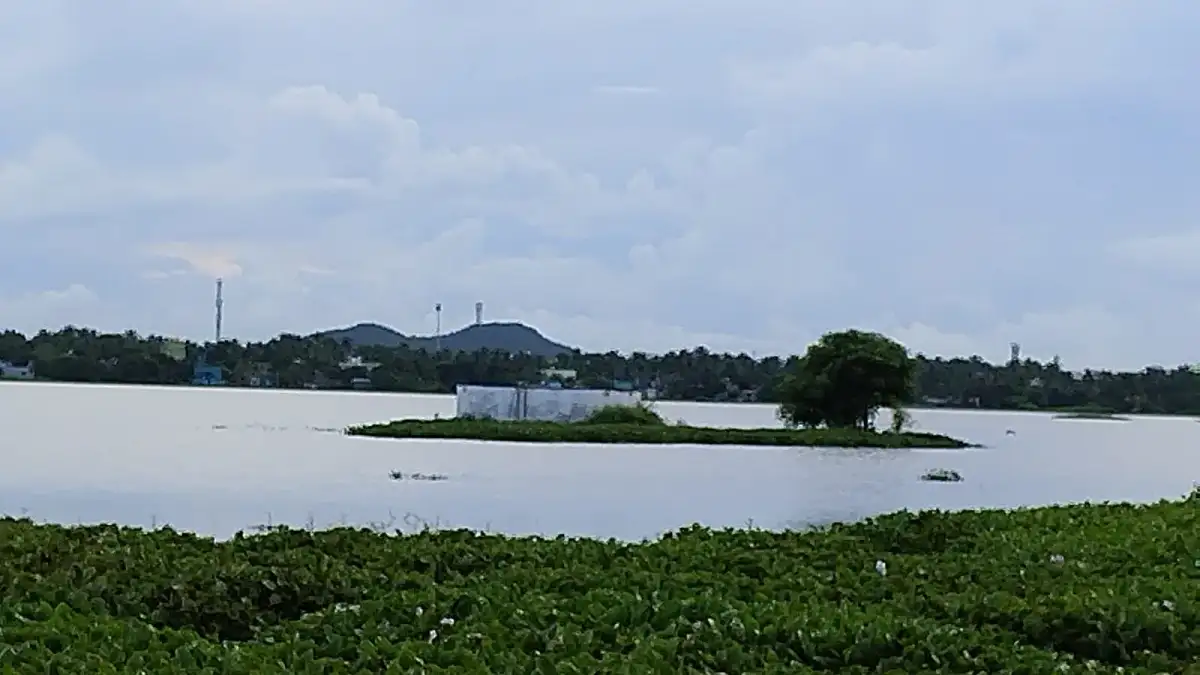
Madambakkam Lake, spanning 100 hectares, is part of a larger water flow system, receiving excess water from Thiruvanchery Lake. Like many urban water bodies, its contamination is attributed, in part, to the absence of an adequate underground drainage system in the locality. This points to a systemic issue of wastewater management.
In a separate development, the Tambaram Corporation has reportedly sought Rs 1,241 crore for an underground sewage project, indicating an acknowledgment of the underlying infrastructure deficit. Meanwhile, real estate expansion is cited as another significant threat, exacerbating environmental pressures on the lake and its surroundings.
The proposed STP’s location near a lake already burdened by sewage ingress and contested water quality raises fundamental questions about municipal priorities and the long-term ecological health of urban water bodies.