


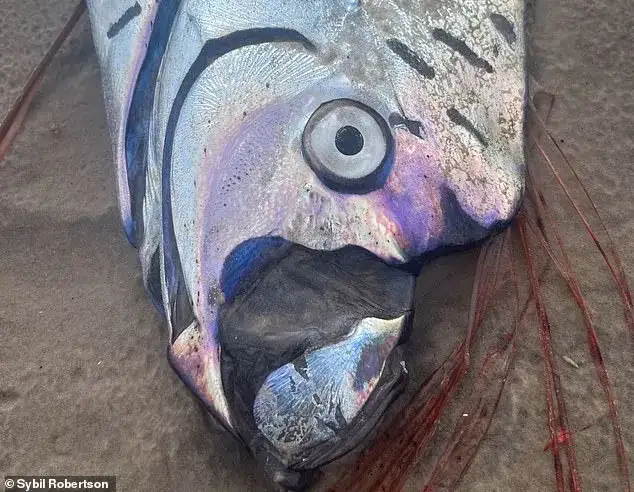
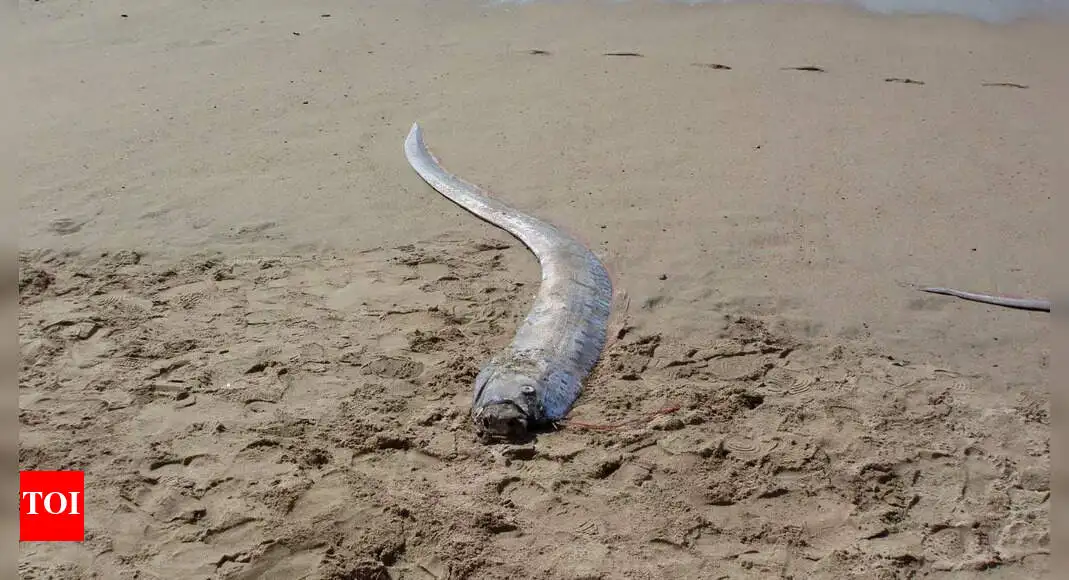
Cabo San Lucas, Mexico – Two exceptionally large 'oarfish', commonly termed 'doomsday fish' due to ancient folklore, have been observed on beaches near Cabo San Lucas. The uncommon appearance of these deep-sea dwellers has resurrected old tales of impending catastrophe, amplified across social platforms. The fish, measuring up to an estimated 30 feet, were found in shallow waters and subsequently washed ashore, a phenomenon noted by local residents and visiting tourists.
Sightings of even a single oarfish are extraordinarily rare. These creatures inhabit the mesopelagic zone, at depths of approximately 1,000 meters (3,280 feet), far removed from human observation. Their emergence onto shorelines is consequently viewed as anomalous, prompting widespread speculation. The occurrences have been documented by individuals, with one account describing the distressed state of the marine animals.
Whispers of Doom and Scientific Skepticism
The oarfish, characterized by its elongated, ribbon-like form and silvery scales, has long been associated in various cultures with misfortune and natural disasters. This cultural baggage, coupled with the creature's deep-sea habitat, fuels the 'doomsday' narrative. Social media channels have been abuzz with discussions, linking these recent strandings to a premonition of significant events.
Read More: Tohorā Diet Study Boosted by New Zealand Beach Find
However, marine biologists and ichthyologists offer a more grounded perspective. They suggest that oarfish typically surface when they are sick, injured, or have encountered severe environmental disturbances. The appearance of these fish is more likely an indicator of distress within their natural environment, rather than a harbinger of doom. There is no concrete scientific data that directly links oarfish strandings to specific future disasters.
A History of Ethereal Encounters
This recent event in Cabo San Lucas is not an isolated incident. In late 2024, a 10-foot oarfish was recovered from a beach in Encinitas, California. In Australia, a nearly 30-foot specimen was also reportedly caught. These scattered events across different oceanic regions contribute to the persistent intrigue surrounding the oarfish. Each stranding, however localized, becomes part of a broader, albeit often unsubstantiated, global pattern of sightings that keeps the 'doomsday fish' myth alive.
Read More: Mexico Fan Zone Security Increased Due to Unrest
The oarfish, scientifically known as Regalecus glesne, is recognized as the longest bony fish in the world, with some specimens reaching lengths of up to 56 feet. Their biology and behavior in the deep ocean remain largely unstudied, making them subjects of fascination and, consequently, fertile ground for speculative interpretations. The mystery surrounding their deep-sea existence inherently invites conjecture when they do appear.






.png)