A new film, "Finding Harmony: A King's Vision," is generating buzz for its portrayal of King Charles III's lifelong environmental advocacy. Yet, as it champions his "vision," it appears to sideline the very pioneers who laid the groundwork for the modern environmental movement, raising questions about historical accuracy and the film's intent. Does this documentary serve as a genuine reflection of ecological history, or is it a carefully curated narrative designed to bolster a royal legacy?
A Royal Green Initiative or a Re-Written History?
The documentary "Finding Harmony: A King's Vision," recently premiered on Amazon Prime Video, aims to showcase King Charles III's dedication to environmental causes. The film, which aligns with the work of The King's Foundation, presents his "Harmony" philosophy, which posits a deep connection between humanity and nature. This perspective, championed by the King for decades, advocates for seeing ourselves "as part of nature, not apart from nature," seeking to "readdress our relationship with the environment and nature for the good for people, places and the planet."
Read More: Narungga 'Guuranda' play in Chennai shares South Australia stories with India
The film's narrative, however, is not without its critics, who point to a notable omission: the absence of early environmental pioneers who arguably paved the way for the very ideas King Charles later espoused.
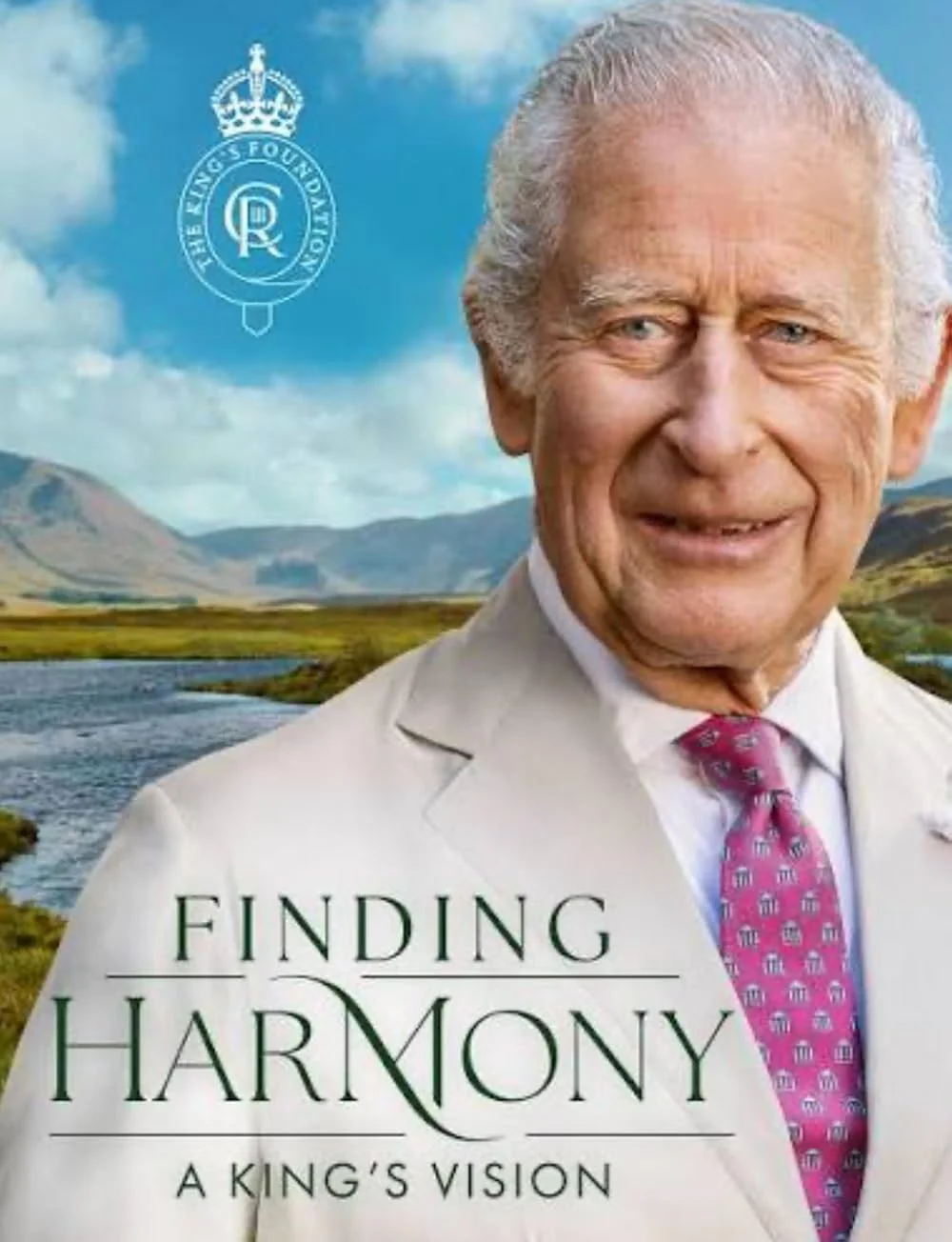
The film's approach has drawn comparisons to an almost "psychedelic" or "hallucinogenic" experience, as one reviewer noted, where the King's pronouncements seem to come from a place of unique, isolated foresight. This is particularly evident in moments where the documentary seems to imply he alone recognized environmental perils as far back as the 1960s. Interviewees within the film reportedly recall how Charles was once "dismissed him as delusional" for his views, only for these ideas to later gain mainstream acceptance.
Key Assertions and Criticisms:
Film's Core Message: The planet faces critical challenges, and humanity's woes stem from ignoring the King's advice.
Historical Context: The film spans King Charles's advocacy from his early years as Prince of Wales to his current role.
Oversight Claims: The documentary emphasizes King Charles's perceived foresight, suggesting he foresaw environmental devastation decades ago.
Critical Omission: Significant environmental figures like Aldo Leopold, Rachel Carson, and the early organizers of Earth Day are reportedly not acknowledged.
Tone: The documentary is described as maintaining an "excessive admiration" and, despite its 90-minute runtime, can feel much longer, akin to "background footage at a dull conference."
The Echoes of Early Environmentalism: A Disconnected Narrative?
While "Finding Harmony" champions King Charles's environmental activism, it appears to have largely bypassed the foundational figures of the modern environmental movement. This oversight is particularly glaring given the documentary's focus on the King's "vision."
Read More: BT Adds £13.09 Charge to Landline Bills for UK Customers Starting Next Month
Aldo Leopold: His seminal work, "A Sand County Almanac" (1949), introduced the concept of a "land ethic," a philosophical framework that views humans as part of a larger ecological community, not separate from it. This predates much of King Charles's public environmental advocacy.
Rachel Carson: Her groundbreaking book, "Silent Spring" (1962), exposed the devastating effects of pesticides like DDT on the environment and human health. It is widely credited with launching the modern environmental movement and leading to significant policy changes.
Earth Day: The first Earth Day, celebrated in 1970, was a massive public demonstration that galvanized public opinion and led to the creation of environmental protection agencies and legislation in many countries.
The "Harmony" philosophy presented in the film, which encourages seeing ourselves "as part of nature," echoes sentiments that have been central to environmentalist thought for decades, long before King Charles became a prominent voice on the issue.
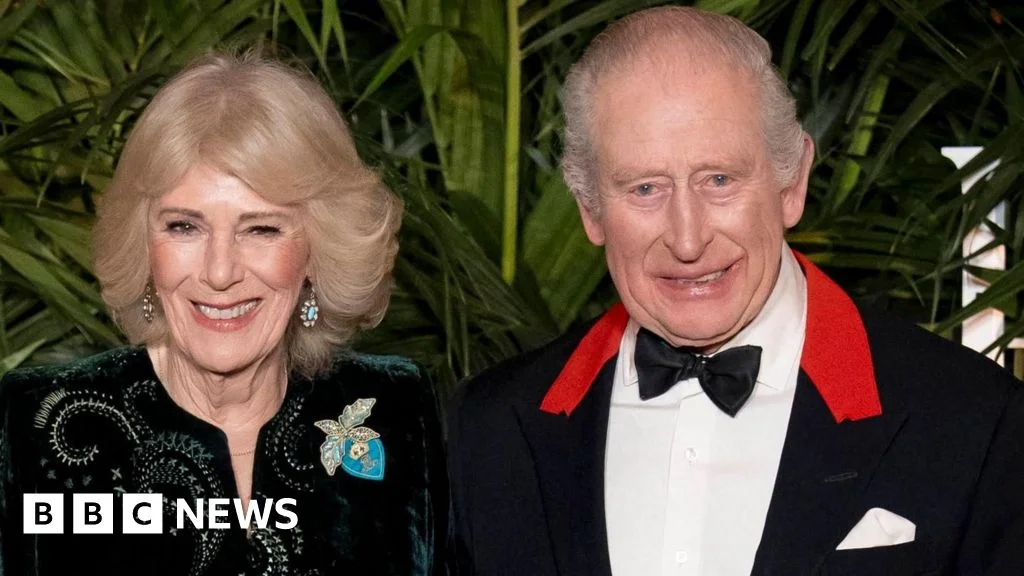
"The documentary maintains a tone of excessive admiration, showcasing Charles’s claims of having foreseen environmental devastation since the 1960s, while interviewees reminisce about how 'people dismissed him as delusional.' We witness his advocacy for organic farming, alongside headlines branding him as eccentric, only to be reminded that what once seemed unconventional has now become widely accepted." (Article 1)
Could the film's narrative be an attempt to consolidate a royal legacy by foregrounding Charles's contributions while downplaying the broader historical context and the work of countless other activists and scientists? How does "Finding Harmony" reconcile its depiction of Charles as a lone visionary with the well-documented history of a global environmental movement already in full swing?
Amazon Prime and the Royal Brand: A Strategic Partnership?
The decision to premiere "Finding Harmony: A King's Vision" on Amazon Prime Video is a notable one. This platform, with its vast global reach and its association with figures like Jeff Bezos, raises questions about the film's distribution strategy and its potential impact on how King Charles's environmental message is perceived.
Read More: Why people call some movies 'perfect' online
Amazon's Role: The involvement of Amazon, and potentially Jeff Bezos himself, in discussions about environmental philanthropy and parallels with King Charles's work, suggests a strategic alliance. Bezos's own "Bezos Earth Fund" signifies his significant financial commitment to environmental causes.
Platform Choice: The move to Amazon Prime Video, rather than a more traditional broadcaster like the BBC, has been interpreted as a potential way to bypass more critical editorial scrutiny.
"Perhaps this is why the film ended up on Amazon. Who knows if the king of England can compete with that any more. The BBC, you sense, would have pushed back on some of the more ostentatiously woo-woo elements. Either way, it will be fascinating to see how this does on Amazon. And that really wouldn’t do, especially in a film that feels precision-engineered to underscore the king’s legacy." (Article 2)
This strategic placement raises the question: Is "Finding Harmony" primarily an artistic endeavor, or is it a carefully orchestrated piece of public relations designed to solidify King Charles's image as a pioneering environmentalist for a new, digitally-connected audience? What does the choice of Amazon Prime Video signal about the film's intended reach and the messaging it seeks to amplify?
Beyond the "Eccentric" Label: A Reclaimed Narrative?
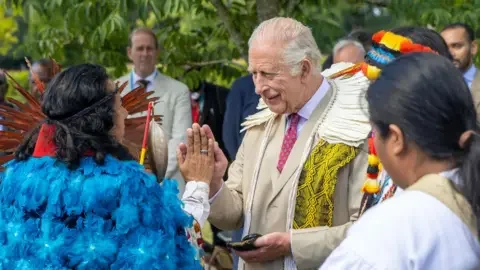
One of the recurring themes in the commentary surrounding "Finding Harmony" is how King Charles's early environmental advocacy was often met with skepticism, even ridicule. The film appears to be an effort to reframe these past dismissals as prescient insights, highlighting how once-unconventional ideas have become mainstream.
From Eccentricity to Expertise: The film revisits headlines that once branded the King as "eccentric" for his views on organic farming and his connection to nature. It then contrasts this with the current widespread acceptance of these principles.
"Talking to Plants": The documentary reportedly addresses the long-standing trope of the King "talking to plants," framing these comments not as mere eccentricity but as an expression of a deep, almost spiritual, connection to the natural world that was misunderstood.
Personal Philosophy: The film delves into the King's "worldview about the interconnectedness of all things," presenting it as a glimpse into his "inner man" beyond his public role.
"And the movie addresses one of the hardiest old chestnuts about the King - that he talks to plants - showing how the comments he made about being close to nature became an opportunity to marginalise his views." (Article 6)
The documentary seems designed to transform perceptions, moving from the image of a well-meaning but perhaps out-of-touch royal to that of a visionary leader whose ideas were simply ahead of their time. However, this narrative construction begs the question: Does this reinterpretation inadvertently diminish the contributions of others who were actively campaigning for environmental protection during the same period, often with less privileged platforms?
Read More: Great Britain Energy Bills Drop April 1st But Toaster Costs Still High
The King's Foundation: A Collaborative Effort
The production of "Finding Harmony" has been closely linked to The King's Foundation, the King's own charity dedicated to environmental and sustainability initiatives. This collaboration underscores the documentary's role in promoting the Foundation's work and, by extension, the King's ongoing environmental agenda.
Filming Locations: Key filming sessions for the documentary took place at The King's Foundation sites, including Dumfries House and Highgrove Gardens, showcasing the Foundation's practical projects.
Educational Outreach: The film is presented as part of the Foundation's mission to educate and inspire action on environmental issues, encouraging viewers to "take action."
Integration of Tradition and Science: The documentary highlights how the King's vision integrates "traditional practices with modern ecological science," featuring archival footage and interviews related to his work in organic farming, renewable energy, and biodiversity.
While this collaboration is a clear indicator of the film's purpose, it also raises concerns about potential bias.
"The film, made in collaboration with his King's Foundation charity, is a sometimes elegiac look at his many decades of campaigning to protect the natural world." (Article 6)
Given this close association, how objective can the documentary truly be in its portrayal of the King's environmental legacy? Does the direct involvement of The King's Foundation create an inherent conflict of interest that might lead to a selective presentation of history?
Conclusion: A Legacy Documented, But At What Cost?
"Finding Harmony: A King's Vision" undoubtedly offers a window into King Charles III's enduring commitment to environmentalism. The film celebrates his philosophy and highlights decades of advocacy, presenting him as a figure whose ideas have gained considerable traction over time. The choice of Amazon Prime Video as a platform suggests a desire for broad reach and a strategic engagement with contemporary media landscapes.
Read More: Grateful Dead 60 Years On: Fans Use Roses and Cards to Celebrate Music
However, the critical omission of key historical figures like Aldo Leopold and Rachel Carson, coupled with the documentary's overtly admiring tone and its close ties to The King's Foundation, prompts a deeper inquiry. Is this film a comprehensive historical account, or a carefully curated narrative designed to cement a specific royal legacy?
Key Findings:
The documentary celebrates King Charles's environmental philosophy and decades of activism.
It appears to position the King as a singular visionary, overlooking earlier environmental pioneers.
The film's release on Amazon Prime Video and its collaboration with The King's Foundation raise questions about its objectivity and strategic intent.
Implications:
The film risks misrepresenting the history of the environmental movement by centralizing one figure's contributions.
It may serve as a powerful PR tool for the monarchy and The King's Foundation, influencing public perception.
Next Steps:
Further analysis of the film's content is needed to confirm the extent of historical omissions.
Independent reviews from environmental historians and scholars would provide crucial context.
Audiences should approach the documentary with a critical eye, seeking out broader historical perspectives on environmentalism.
Ultimately, while "Finding Harmony" may succeed in amplifying King Charles's message, its potential to rewrite environmental history in a more singular, royal-centric fashion warrants careful consideration and a call for greater historical inclusivity.
Sources:
Fida, Robert. "Finding Harmony: A King's Vision Review – there’s a bizarre moment where it’s like Charles has taken acid." robertfida.com, 2026. https://robertfida.com/article/finding-harmony-a-kings-vision-review-the-royal-acid-trip
"Finding Harmony: A King’s Vision review – there’s a bizarre moment where it’s like Charles has taken acid." The Guardian, 6 Feb 2026. https://www.theguardian.com/tv-and-radio/2026/feb/06/finding-harmony-a-kings-vision-review-charles-jeff-bezos-amazon-prime-video
"New documentary on Amazon Prime explores King Charles III's environmental work with Jeff Bezos." BritBrief, 6 Feb 2026. https://britbrief.co.uk/entertainment/radio/finding-harmony-a-kings-vision-review-charles-and-bezos.html
"Finding Harmony." The King's Foundation. https://kings-foundation.org/finding-harmony-a-kings-vision/
"Finding Harmony: A King's Vision (2026) | Documentary." IMDb. https://www.imdb.com/title/tt38631437/
"King's film reveals his personal philosophy." BBC News, 28 Jan 2026. https://www.bbc.com/news/articles/c62wepw43k3o
"King and Queen to attend screening of new documentary on Charles’s environmentalism." The Independent, 28 Jan 2026. https://www.independent.co.uk/news/uk/home-news/king-charles-documentary-finding-harmony-a-kings-vision-prime-kate-winslet-b2909203.html